Best Triathlon Saddle: How to Find the One That Fits You (2026)
The best triathlon saddle isn't a model on a list — it's the one that matches your anatomy and your aero position. A fit-and-trial framework for choosing a saddle by shape, width and pressure relief, plus how to fix the pain you already have.
By Lotte
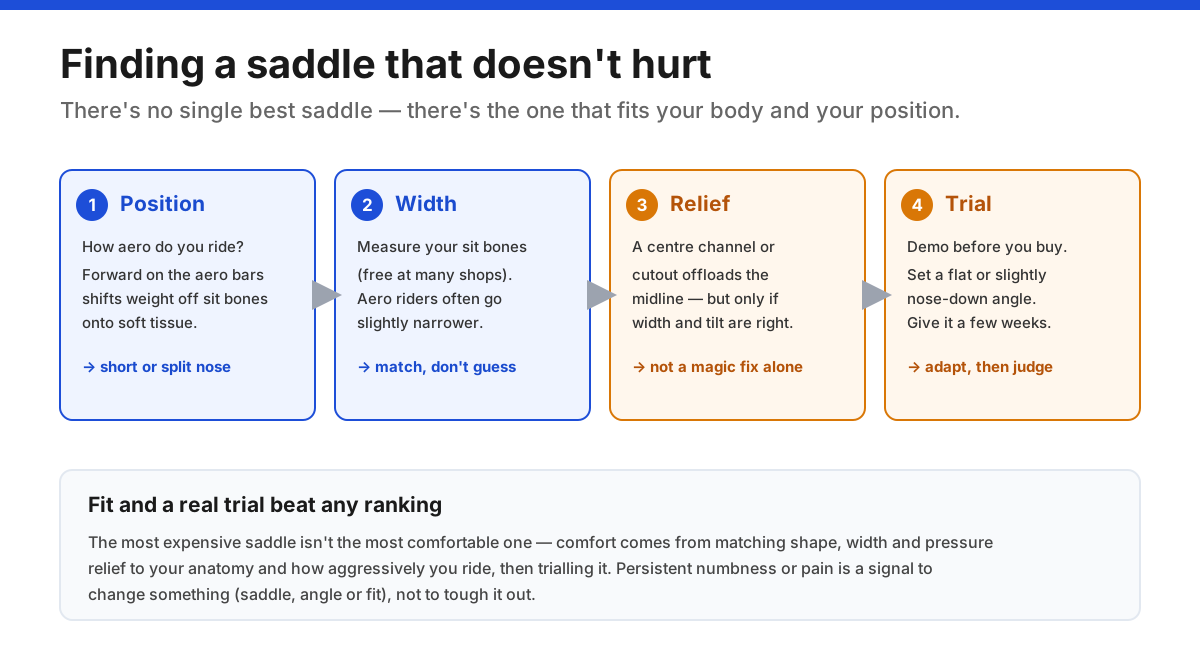
Saddle discomfort is the most common gear complaint in triathlon, and it's the one problem you can't buy your way out of with a bigger budget. The aero position rotates your pelvis forward and loads soft tissue that a road saddle was never meant to support, so the fix is a saddle whose shape, width and pressure relief match your body and your position — found through measurement and a real trial, not a ranking. This guide explains why tri saddles differ, how to choose across the trade-offs, and how to diagnose and fix the pain you may already have.
Key takeaways
- 1The 'best' saddle is individual: fit and a real trial beat any ranking or price tag
- 2The aero position shifts weight off your sit bones onto soft tissue — that's what tri saddles solve
- 3Match shape to your position, width to your sit bones, and relief (channel/cutout) to your anatomy
- 4Saddle angle and fore/aft often matter as much as the saddle itself — get a fit
- 5Women's anatomy needs a different shape; persistent numbness or pain is a signal to change something, not endure it
In this article
- 1Why there's no single 'best' saddle
- 2Why saddle pain is different in triathlon
- 3What actually makes a saddle 'tri-specific'
- 4The four saddle families, and who each suits
- 5Getting the width right
- 6It's not just the saddle: angle, fore/aft and fit
- 7Diagnose your saddle pain by symptom
- 8Women's anatomy needs a different shape
- 9What more money actually buys
- 10Five saddle-buying mistakes to avoid
- 11How to actually trial and choose
- ?Frequently asked questions
Why there's no single 'best' saddle
Search "best triathlon saddle" and you'll get ranked lists of models. Ignore them as a shopping method. Saddle comfort depends on the shape of your pelvis, the width of your sit bones, your flexibility, and how aggressively you ride — none of which a ranking knows about. A saddle that a magazine or a friend swears by can be genuinely painful for you, and vice versa.
So this guide won't hand you a podium of models. Instead it gives you the thing a list can't: a way to choose. Match the saddle's shape to your position, its width to your sit bones, and its pressure relief to your anatomy — then trial it before you commit. The 'best' saddle is simply the one that disappears under you on a long ride. It is very often not the most expensive one.
Why saddle pain is different in triathlon
On a road bike in an upright position, your weight sits on your sit bones (the ischial tuberosities) — the bony parts of your pelvis built to bear load. A road saddle is designed around exactly that.
In a triathlon aero position — forearms on the bars, torso low — your pelvis rotates forward. Your contact point rolls off the sit bones and onto the soft tissue of the perineum, which was never meant to carry weight. Sustained pressure there compresses nerves and blood vessels; reviews of cycling and urogenital health link this loading to the numbness, tingling and discomfort riders report, in both men and women. That's why a saddle that felt fine on upright weekend rides can become unbearable once you get aggressive on the aero bars — the load moved to tissue that can't take it.
Triathlon-specific saddles exist to solve this one problem: get the weight off soft tissue and keep you supported in the rotated-forward position.
What actually makes a saddle 'tri-specific'
Four design features address the forward-position problem, and it helps to know what each is for rather than treating them as marketing:
- A shorter nose. Less length out front means less friction and less to press into soft tissue when you're rotated forward. It's the single most recognisable tri-saddle trait.
- A centre channel or cutout. A groove or hole down the midline removes material from exactly where perineal pressure concentrates, offloading the nerves and vessels there.
- A wider, supported nose. In the aero position you're partly sitting on the nose, so it's built broader and more supportive than a road saddle's narrow beak.
- A flatter profile. A flat top matches a forward-rotated pelvis, where a curved road saddle would create a pressure ridge.
Not every good tri saddle has all four, and 'more cutout' isn't automatically better — a cutout can shift pressure to its edges if the width or tilt is wrong. The features are tools to match to you, not a checklist to maximise.
The four saddle families, and who each suits
Tri and aero-friendly saddles fall into four broad shapes:
Noseless / stub-nose. The nose is essentially removed. Maximum soft-tissue relief, and often the answer for riders with chronic numbness who've failed on everything else — but they can feel less stable and give you less to control the bike with when cornering or climbing out of the aero bars.
Short-nose. The most popular tri design: a normal-ish saddle with 20–30% of the nose trimmed. A strong balance of relief and control, and the sensible default to try first for most triathletes.
Split-nose (twin-prong). Two separate pads up front instead of a solid nose, so the midline is open by design. Good perineal relief while keeping more stability than a noseless saddle.
Road saddle with a cutout. A conventional saddle with a relief channel. Fine for athletes who ride only mildly aero or spend a lot of time on the base bar; less ideal the more forward and aggressive you get.
If you don't know where to start, a short-nose saddle in the correct width is the highest-percentage first trial.
Getting the width right
Width is where more saddle trials fail than any other single factor, and it's measurable rather than a guess.
Measure your sit bones. Many bike shops offer a free measurement using a memory-foam or gel pad you sit on; some brands publish a DIY corrugated-cardboard method. That number is your starting width — the saddle should support the sit bones, not leave them hanging off the edges or perched too wide.
Adjust for the aero position. Here's the nuance road guides miss: because your contact rolls forward off the sit bones in aero, many triathletes are comfortable on a saddle slightly narrower than a pure sit-bone measurement would suggest for upright riding. The forward roll changes what part of the saddle you're actually on.
Small changes matter. Pressure-mapping work shows even a modest change in width can move the peak pressure point between the sit bones and the perineum. That's why 'about right' isn't good enough and why a measurement plus a trial beats buying blind. If in doubt, start from the manufacturer's width recommendation for your measured sit bones, then trial around it.
It's not just the saddle: angle, fore/aft and fit
A surprising share of 'bad saddle' complaints are actually bad setup of a perfectly good saddle. Before you buy another one, check three things:
- Tilt. A nose-up saddle drives pressure straight into soft tissue and causes chafing; most triathletes are comfortable with the saddle flat or tilted very slightly nose-down. Tiny changes — a degree or two — transform comfort.
- Fore/aft. How far forward the saddle sits changes your effective reach and how your weight distributes in aero. Too far back loads the perineum; too far forward can overload your hands and quads.
- Height. Too high forces your hips to rock side to side, which chafes and stresses the soft tissue with every stroke.
Because these interact with your whole position, the highest-value move for persistent discomfort is a professional bike fit, which sets saddle choice, height, tilt and setback together. See bike fit for beginners — a good fitter treats the saddle as one part of the system, not a standalone purchase.
Diagnose your saddle pain by symptom
Different pains point to different fixes. Match your symptom before you spend:
- Numbness or tingling (perineal/genital): too much soft-tissue pressure. Try more relief (deeper channel or cutout, or a split/noseless shape) and check that the nose isn't tilted up. Numbness is a warning sign, not a badge — act on it.
- Chafing/saddle sores: friction, usually from a nose-up tilt, a saddle that's too wide, hip rock (saddle too high), or worn shorts. Chamois cream and a tilt/height check fix most of it — see how to prevent chafing.
- Sit-bone ache: width mismatch — too narrow (bones hang off) or too wide (bones unsupported, weight on tissue). Get measured.
- Only on long rides: partly adaptation. New saddles and new positions need a few weeks of progressive time. But if pain worsens rather than eases past ~4–6 weeks of consistent riding, the saddle or setup is wrong — don't wait it out.
- Only in the aero position: almost always a fit issue (tilt, fore/aft, or reach), not the saddle's shape. Address the position first.
Women's anatomy needs a different shape
Using a men's or 'unisex default' saddle is one of the most common and most fixable causes of saddle pain for women. On average, women have wider-spaced sit bones and different soft-tissue anatomy, and standard saddles are often too narrow, which forces weight onto tissue rather than bone.
This isn't cosmetic. Studies of female cyclists document meaningful rates of saddle-pressure-related soft-tissue and lower-urinary-tract symptoms, with severity tending to rise alongside years and hours of riding — a strong argument for getting the shape and width right early rather than enduring discomfort. Well-regarded women's designs typically offer a wider platform, a shorter nose, and pressure relief tuned to female anatomy.
The practical rule is the same as everywhere else on this page: 'it's just uncomfortable' is not a normal state to accept. A correctly shaped and sized saddle should feel neutral. If yours doesn't, that's information — change the saddle, the width, or the fit.
What more money actually buys
It's worth being clear about where spending helps and where it doesn't, because saddle pricing misleads a lot of buyers.
The things that determine comfort — shape, width options, and pressure-relief design — are available across the price range. A moderately priced saddle in the right shape and width will out-comfort an expensive one in the wrong shape every time.
What extra money mostly buys is weight and rail material: lighter carbon or titanium rails, lighter shells, more refined finishing. Those are real but marginal, and they don't make a saddle fit your anatomy any better. So the smart order is: get the shape and width right first at a sensible price, confirm it works over a real trial, and only then decide whether a lighter version of that same shape is worth it to you. Buying premium before you've confirmed the shape is how people end up with a drawer of costly saddles that all hurt.
Five saddle-buying mistakes to avoid
Most saddle regret traces back to the same handful of errors. Skip them and you'll save money and pain:
- Buying by ranking or by a friend's recommendation. Their pelvis isn't yours. A model that transformed their comfort can be the one that wrecks yours.
- Buying premium before confirming the shape. Carbon rails don't make the wrong shape fit. Get shape and width right at a sensible price first; upgrade the material later if at all.
- Ignoring tilt and fore/aft. A great saddle set nose-up or too far back feels terrible. Check setup — ideally with a fit — before blaming the saddle.
- Enduring pain as 'toughness'. Numbness and worsening pain are signals, not rites of passage. Persisting risks real soft-tissue and nerve problems.
- Skipping the trial. A two-minute sit in the shop tells you almost nothing. Real comfort only shows up after an hour in your actual aero position — use demo and return programs.
Avoid these five and the rest of choosing a saddle becomes straightforward.
How to actually trial and choose
Put it together into a process you can follow without gambling on a ranking:
- Measure your sit bones (shop or DIY) to get a starting width.
- Pick a shape for your position — short-nose is the sensible default; go split or noseless if you have a history of numbness.
- Set it up right — flat or slightly nose-down, sensible fore/aft and height — ideally as part of a bike fit.
- Trial it, not test-sit it. Many shops and brands (for example ISM and Specialized) run demo or return programs so you can ride a saddle for a week or two. A car-park sit tells you nothing; an hour in aero tells you everything.
- Give it a few weeks of progressive riding, then judge honestly: is it improving, plateauing comfortable, or getting worse? Improving or comfortable, keep it. Worse, change one variable and repeat.
Do this and you'll land on your best saddle — the one that fits your body and your position. For how the saddle sits within your wider setup, see triathlon bikes and what to wear on the bike.
Sources
Sources are listed so readers can verify consequential claims and dated details.
- Cycling-related urogenital problems: a systematic review — PubMed (accessed September 19, 2026)
- Saulicz et al. — Self-Assessment of Lower Urinary Tract Condition in Female Competitive Cyclists — Healthcare (Basel) (2024) (accessed September 19, 2026)
Frequently asked questions
Why do triathlon saddles look different from road saddles?
Triathlon saddles have shorter noses and center cutouts because the aero riding position shifts your weight forward onto soft tissue instead of sit bones. They're designed for this specific body position.
How do I know if my saddle is wrong?
Signs include numbness, chafing that doesn't resolve with chamois cream, pain that gets worse (not better) over weeks, and dreading the bike portion of training.
Do I need a triathlon-specific saddle?
If you ride in an aero position (aero bars or tri bars), a tri-specific saddle significantly improves comfort. For upright riding, a road saddle with a center cutout works fine.
Can I try saddles before buying?
Many bike shops offer demo saddle programs where you can test a saddle for 1-2 weeks. Online retailers like Specialized and ISM also offer trial periods.
Should I use chamois cream in a triathlon?
Yes, always. Apply to your skin or chamois pad before every ride over 30 minutes. It dramatically reduces chafing and friction.
Is the most expensive saddle the most comfortable?
No. Comfort comes from shape, width and pressure relief, all of which are available at moderate prices. Extra money mostly buys lighter rails and shells. Get the shape and width right first, confirm it over a trial, and only then consider a lighter version of the same shape.