Fueling Triathlon Training: Match Food to the Session
Learn when training may call for carbohydrate, how to plan food for long or double sessions, and why fluid needs and health concerns are individual.
By Lotte
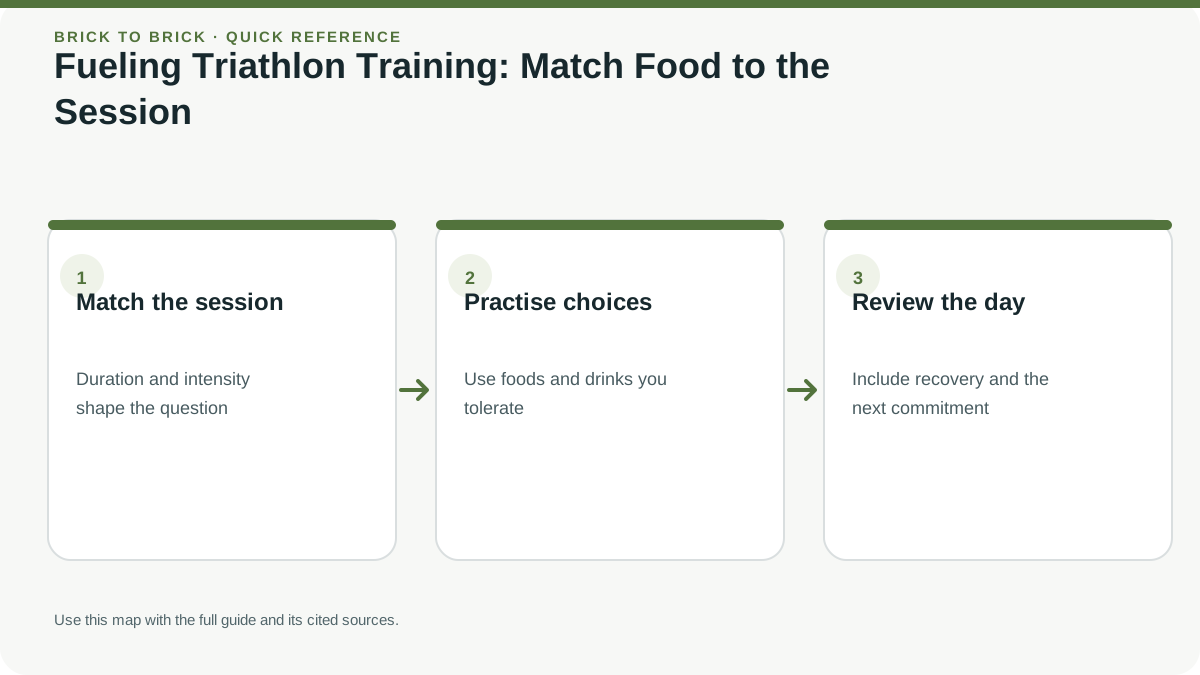
Fueling during triathlon training starts with the session's duration, intensity and purpose, then considers the rest of the day. General carbohydrate ranges can guide decisions for longer endurance sessions, but they are not universal prescriptions. Plan familiar food, separate fluid from fuel, and seek individualized advice when health or symptoms matter.
Key takeaways
- 1Not every swim, ride or run needs carbohydrate during the session; duration, intensity, purpose and prior meals all matter.
- 2AIS guidance gives broad duration-based ranges, including 30–60 g/hour for many 1–2.5-hour endurance sessions and up to 90 g/hour for prolonged ultra-endurance work.
- 3Practise a manageable plan in relevant training instead of abruptly increasing intake or forcing fuel through worsening symptoms.
- 4Food, carbohydrate products, fluid and sodium serve different roles; avoid overdrinking and seek tailored hydration advice when medically relevant.
- 5Persistent fatigue, recurrent injury or illness, unintentional weight change or other concerning signs need assessment rather than self-diagnosis or further restriction.
In this article
- 1Audit the day around the workout
- 2Choose a session-specific strategy
- 3Make the swimming plan practical
- 4Use rides to rehearse access, not just intake
- 5Plan the bridge between double sessions
- 6A rehearsal log that produces a decision
- 7Plan a workday with two sessions
- 8Use the recovery meal to bridge the next part of the day
- 9Use session duration to decide whether carbohydrate during exercise may help
- 10Match fuel to the purpose of a key session
- 11Keep hydration separate from carbohydrate planning
- 12Support the whole training day, not just the bottle
- 13Choose ordinary food or sports products for access and tolerance
- 14Change a gut-training plan gradually and respond to symptoms
- ⚖General AIS carbohydrate guidance by exercise duration
- ?Frequently asked questions
Audit the day around the workout
Write down when you last ate, when the session starts, its likely duration and when the next meal will be available. A short lunchtime swim followed by a normal lunch is a different problem from a long ride after an early start with no breakfast.
Separate everyday energy intake from food consumed during exercise. A perfectly measured bottle cannot compensate for consistently missing meals. Equally, a short easy session does not need a complicated race-fueling rehearsal every time.
The practical aim is a session you can complete and recover from, with enough flexibility to meet work and family commitments. Do not use persistent exhaustion as proof that training is effective.
Choose a session-specific strategy
| Session situation | Useful preparation | What to observe |
|---|---|---|
| Short, familiar, easy workout | Normal meals; drinks accessible | Hunger and recovery later that day |
| Longer endurance session | Carry a rehearsed fuel option | Amount consumed and late-session comfort |
| Hard session near a meal gap | Plan food before and after | Whether the final efforts stay controlled |
| Two sessions in one day | Bring a meal or snack between them | Energy entering session two |
| Race rehearsal | Use the intended products and carrying setup | Opening, taste, tolerance and access |
These are organisational choices, not fixed gram targets. Sports-nutrition guidance uses exercise duration and demands rather than treating every discipline as a different metabolism.
Make the swimming plan practical
Pools may restrict food and drinks on deck. Ask about the venue rules and keep any bottle where it cannot create a trip hazard. For a coached session, arrange drink breaks around the set rather than interrupting lane traffic.
A useful swim log records metres, elapsed session time and how much time was actually spent swimming. A 60-minute coached session with drills and rest is not identical to a continuous 60-minute swim.
For open water, food availability is constrained by the venue and safety cover. Do not extend a swim beyond your ability just because a tow float has storage. Prioritise the supervised plan and make the before-and-after food arrangements on shore.
Use rides to rehearse access, not just intake
A bike can carry more than a runner, making it useful for testing portions and bottles. Choose a route with safe stopping places. Before leaving, check that bottles stay secure and food does not interfere with steering or braking.
Record what remained when you returned. “Packed 120 g” is not the same as “ate 120 g.” Note whether you skipped food because of traffic, an awkward wrapper, sweetness or stomach discomfort; each points to a different solution.
The real food versus gels comparison can help you choose a format. Avoid buying an entire race-season supply before trying a small amount.
Plan the bridge between double sessions
Suppose you swim before work and run in the evening. Put breakfast and lunch into the calendar as deliberately as the workouts. Carry a backup snack for a delayed meeting, and know where you can refill a bottle.
For a back-to-back bike and run, distinguish a transition rehearsal from an exhausting race simulation. A short easy run may be enough to test whether your bike food sits comfortably. It does not need to become a hard run simply because you have fuel available.
Keep persistent hunger, worsening fatigue, unintentional weight change, recurrent injuries or menstrual changes in context. These can warrant professional assessment; do not solve them by restricting intake further.
A rehearsal log that produces a decision
Use columns for session, food beforehand, product, amount consumed, fluid, conditions, effort, symptoms and next change. Include timing: discomfort before starting has a different context from discomfort after several concentrated portions.
Repeat a promising combination before declaring it race-ready. Change one major variable at a time, and do not push intake upward when symptoms are worsening. The goal is a tolerable routine, not the highest number in the log.
For complex needs or recurrent gut problems, a qualified sports dietitian can connect training demands with the rest of your diet. Move to race fueling once you have a workable rehearsal result to turn into an event plan.
Plan a workday with two sessions
For an illustrative day with an early pool session and an evening ride, write down the gaps rather than copying a race-day intake target. Your note might read: familiar pre-swim snack if wanted; breakfast after the pool; lunch available despite meetings; an afternoon snack packed; ride supplies matched to the actual ride; dinner arranged.
The key failure point may be a missed lunch rather than insufficient carbohydrate during a short session. Keep an alternative that can survive your work setting: a packed meal, a known nearby option or suitable stored food. If the afternoon ride gets cancelled, normal meals still matter; exercise is not a requirement to earn food.
After a week, ask which arrangement reduced hunger, logistical stress and stomach discomfort. Record enough detail to distinguish a scheduling problem from a product problem. Persistent fatigue, unintentional weight change, recurrent illness or difficulty eating enough deserves professional assessment; adding another supplement is not a reliable way to explain those symptoms.
Use the recovery meal to bridge the next part of the day
A post-session meal has a practical job: provide food you can eat comfortably and help you return to the rest of the day. It should not depend on getting home exactly when planned. Before a long outing, decide whether food will be available at the finish or whether you need to bring it.
For a pool session before work, that might mean breakfast packed separately from wet equipment. For a weekend ride, it could mean a familiar meal ready to assemble rather than another errand while tired. If you have another session later, include the time between sessions in the plan instead of treating them as isolated workouts.
Do not make the entire recovery decision from an app's estimated calories. Those estimates have limitations and do not tell you everything about appetite, overall intake or individual needs. A regular pattern of meals and snacks can be easier to maintain than trying to precisely repay every workout. If you struggle to eat enough, have recurrent symptoms or need advice around a medical condition, a sports dietitian can help assess the wider pattern.
Use session duration to decide whether carbohydrate during exercise may help
Carbohydrate needs depend on the session's duration, intensity, purpose and what you have eaten, not simply whether the workout is a swim, ride or run. The Australian Institute of Sport (AIS) summarizes general sports-food guidance by exercise duration: brief exercise under about 45 minutes generally does not require carbohydrate during the session; sustained high intensity lasting roughly 45–75 minutes may use small amounts; endurance exercise around 1–2.5 hours is often discussed in the range of 30–60 grams per hour; and prolonged ultra-endurance work may use up to 90 grams per hour. These are broad population guidelines, not a prescription for every athlete or every workout.
Use those ranges as a prompt to ask whether fuel could support a key session, especially when it is long, demanding, starts after a long meal gap or is followed by another workout. A short technique swim, recovery jog or easy spin may have no need for a sports product during exercise when everyday meals are adequate. Eating more during every workout is not automatically better, and needing fuel is not a reason to make every session hard.
When planning higher intakes, AIS notes that products with multiple transportable carbohydrates can support absorption at higher rates. Tolerance and practice matter; do not jump to the top of a range because a calculator suggests it. Start with an amount and product you can manage, test it in relevant training, and seek help if gastrointestinal symptoms or medical needs complicate the plan.
These figures refer to carbohydrate, not total food weight, and they do not specify fluid or sodium needs. Check the current source guidance and connect any race plan to the race-fueling guide.
Match fuel to the purpose of a key session
Some workouts are intended to practise eating and drinking as well as to train. Others prioritize technique, easy movement or recovery. Decide the purpose before choosing fuel. A long weekend ride may be a sensible place to rehearse carrying food and opening packaging. A short easy swim may be better used to focus on technique, with normal meals around the pool session. A hard interval workout that begins after work may call for a familiar snack beforehand if the last meal was several hours earlier.
For a double day, consider the whole sequence. Ask how long the gap is, whether you can eat and drink between sessions, and what foods are practical at work or while travelling. Fuel between sessions can be a meal or snack that fits your routine; it does not have to be a branded recovery product. If a workout is unexpectedly shortened, continue to eat according to ordinary needs rather than treating food as a reward earned by exercise.
Training purpose can also affect whether you deliberately practise with lower carbohydrate availability. This is a specialized periodization choice, not a default weight-loss tactic or a reason to train through exhaustion. If a coach uses it, clarify which sessions are selected, how the rest of your diet supports health, and when the strategy should stop. Athletes with medical conditions, a history of disordered eating or signs of low energy availability need individualized professional advice.
For most age-groupers, the practical first step is simpler: avoid routinely starting important sessions hungry because of schedule gaps, and avoid carrying more products than the workout requires. Match the plan to the session you will actually do, then review comfort and recovery afterward.
Keep hydration separate from carbohydrate planning
Food and fluid are related, but they solve different problems. A gel or snack supplies carbohydrate without necessarily supplying fluid. A sports drink combines some carbohydrate with fluid and electrolytes. Plain water supplies fluid without a meaningful amount of fuel. Decide what each item contributes so that adding a drink does not unintentionally duplicate a gel or leave you without a way to drink it.
Fluid losses vary with weather, clothing, body size, intensity, acclimatization and individual sweat rate. There is no single millilitres-per-hour target that is safe and suitable for everyone. Both inadequate replacement and excessive intake can cause problems; sports-medicine consensus specifically warns that overdrinking can contribute to exercise-associated hyponatremia. Do not force fluid simply because a bottle is available, and do not deliberately restrict fluid to meet a weight or bathroom goal.
For ordinary training, make fluids accessible and learn how you respond in relevant conditions. More detailed sweat-loss assessment may help some athletes, but estimates change across sessions and should not be treated as exact requirements. Sodium needs also vary; electrolyte tablets are not a universal substitute for a suitable fluid strategy. If you have kidney, heart or blood-pressure conditions, take medicines that affect fluid balance, or have a history of electrolyte problems, ask a clinician or sports dietitian for individualized advice.
Stop exercise and seek urgent medical help for serious symptoms such as confusion, collapse, seizure, severe headache or repeated vomiting during or after prolonged exercise. Those signs are not something to diagnose or manage with a generic fueling article. For product-format choices, see electrolyte tablets versus drink mix.
Support the whole training day, not just the bottle
A fueling strategy is larger than the carbohydrates consumed during one workout. It includes ordinary meals and snacks, enough total energy for training and daily life, and time to eat between sessions. A bottle can be carefully measured while an athlete still misses breakfast, skips lunch, or arrives home with no practical food. If you repeatedly feel hungry or depleted, review the day's pattern rather than assuming that you need another supplement.
Low energy availability means that energy intake is not adequate relative to the energy used in exercise and the body's other functions. The International Olympic Committee's 2023 consensus on Relative Energy Deficiency in Sport (REDs) describes potential health and performance effects for athletes of different sexes. Symptoms such as persistent fatigue, recurring injuries or illness, changes in menstrual function, mood or bone health can have many causes; none confirms REDs by itself. Do not self-diagnose from a checklist or respond by restricting food further.
If signs concern you, speak with a clinician and a qualified sports dietitian, particularly if weight change is unintentional, training is increasing, eating feels stressful, or a medical condition affects intake. Seek timely assessment for serious symptoms. Young athletes, pregnant or breastfeeding athletes, and people with a history of eating disorders need individualized support rather than generic targets.
For practical planning, map the hours around training. Identify when a meal is available, whether a snack is useful before the session, what can be carried, and what you can eat afterward. This approach supports recovery and the next session without turning every meal into a calculation.
Choose ordinary food or sports products for access and tolerance
Carbohydrate can come from familiar foods, sports foods or a combination. The best format is one you can carry, open, chew or drink under the conditions of that session and which meets your nutrition needs. A banana, sandwich, rice cake or other ordinary food may suit an easy long ride with safe stopping options; a gel or drink may be more practical when pace is high or chewing is difficult. These are examples, not universally tolerated foods.
Consider the environment. A swim venue may not allow food on deck; an open-water route may restrict carrying; a run has less storage than a bike; cold conditions can make packaging harder to open. Test any bottle, belt, pocket or wrapper while moving in a safe setting. Do not look down at a package or eat in a way that reduces control on technical terrain or in traffic.
Check food labels for carbohydrate per serving, allergens, caffeine and directions for use. Some concentrated gels require water; others are formulated for different use. Sports products are convenient but not mandatory. A special product is also not automatically medically appropriate. For allergies, celiac disease, gastrointestinal conditions or medication concerns, check ingredients carefully and consult a qualified professional when needed.
Variety can help with taste fatigue over a long session, but adding many new products makes cause and effect difficult to understand. Choose one realistic option, test it more than once, and record the product and amount. Buy a small quantity until you know it suits your plan. The high-carbohydrate snack guide gives more ideas for meal gaps and travel.
Change a gut-training plan gradually and respond to symptoms
Gut comfort during exercise is influenced by many factors, including intensity, heat, stress, food timing, product concentration and individual health. If a familiar product is uncomfortable, do not assume that more exposure will always solve the problem. A training log can show whether symptoms appear with one product, a particular session, a concentration or the effort level, but it cannot diagnose an underlying condition.
When a clinician or sports dietitian agrees that practice is appropriate, change one manageable feature at a time. For example, keep the route and effort similar while testing a different package format, or practise opening the same product before changing its amount. Allow an easy setting for the first attempt. Do not force a larger dose through nausea, vomiting, abdominal pain or worsening symptoms to hit an hourly number.
If symptoms are severe, recur across different sessions, include blood, impair daily life or come with unexplained weight loss, dehydration or other concerning changes, seek medical advice. A race fueling target does not take priority over evaluation. People with diabetes, gastrointestinal disease, food allergy, a history of eating disorders or medication-related nutrition concerns should develop a plan with their care team.
Record what happened in plain language: food before, session duration and intensity, product and amount, conditions, symptom timing and how you recovered. Then decide whether to repeat, adjust or pause. The goal is a tolerable and practical strategy, not proving that you can consume the highest published range.
General AIS carbohydrate guidance by exercise duration
| Exercise duration and context | General carbohydrate guidance | How to apply it |
|---|---|---|
| Brief exercise under about 45 minutes | Carbohydrate during exercise is generally not needed | Consider normal meals and the session's purpose |
| Sustained high intensity around 45–75 minutes | Small amounts may be useful | The strategy can include small amounts or mouth sensing, depending on the session |
| Endurance exercise around 1–2.5 hours | About 30–60 g per hour | Practice a product or food plan that fits goals, gut comfort and access |
| Prolonged ultra-endurance exercise beyond roughly 2.5–3 hours | Up to about 90 g per hour may be used | Higher intakes need practice; multiple transportable carbohydrates are relevant above 60 g/hour |
Sources
Sources are listed so readers can verify consequential claims and dated details.
- Sports drinks: how and when to use them — Australian Institute of Sport (accessed September 24, 2026)
- Sports gels: uses and practical considerations — Australian Institute of Sport (accessed September 13, 2026)
- Sports gels: how and when to use them — Australian Institute of Sport (accessed September 24, 2026)
- Performance Nutrition HQ: training, competition and recovery nutrition — Australian Institute of Sport (accessed September 24, 2026)
- National Athletic Trainers' Association Position Statement: Fluid Replacement for the Physically Active — Journal of Athletic Training / PubMed (accessed September 24, 2026)
- Exercise-Associated Hyponatremia: 2017 Update — Frontiers in Medicine / PubMed (accessed September 24, 2026)
- 2023 International Olympic Committee consensus statement on Relative Energy Deficiency in Sport — British Journal of Sports Medicine / IOC (accessed September 24, 2026)
Frequently asked questions
Do I need to fuel every triathlon workout?
No. A short, familiar, easy workout may not need carbohydrate during the session. Longer or harder training, meal gaps and double sessions can change the decision. Start with the workout's purpose and your whole-day eating pattern.
How many grams of carbohydrate should I take during training?
AIS general guidance lists about 30–60 g/hour for endurance exercise lasting roughly 1–2.5 hours and up to about 90 g/hour for prolonged ultra-endurance work. These are broad ranges, not targets for every session or athlete; practise a suitable plan and seek individual advice when needed.
Can I use ordinary food instead of gels?
Often, yes. Familiar foods, sports products or a combination can provide carbohydrate. Choose by session intensity, carrying access, tolerance, ingredients and the product directions; no format suits every athlete.
How much should I drink during a long workout?
There is no single fluid volume that fits everyone. Conditions and individual losses vary, and excessive as well as inadequate intake can be harmful. Avoid forcing fluid and seek individualized clinical or sports-dietitian advice if medical factors affect hydration.
Should I train with low carbohydrate availability?
This is a specialized coaching strategy, not a default for weight loss or every workout. It should be planned in context of training, health and total nutrition. Athletes with symptoms or medical and eating-history concerns should seek qualified professional advice.