What to Eat Before Triathlon Training
Choose pre-training food by session duration, intensity, timing and gut tolerance, with practical options rather than one fixed meal.
By Lotte
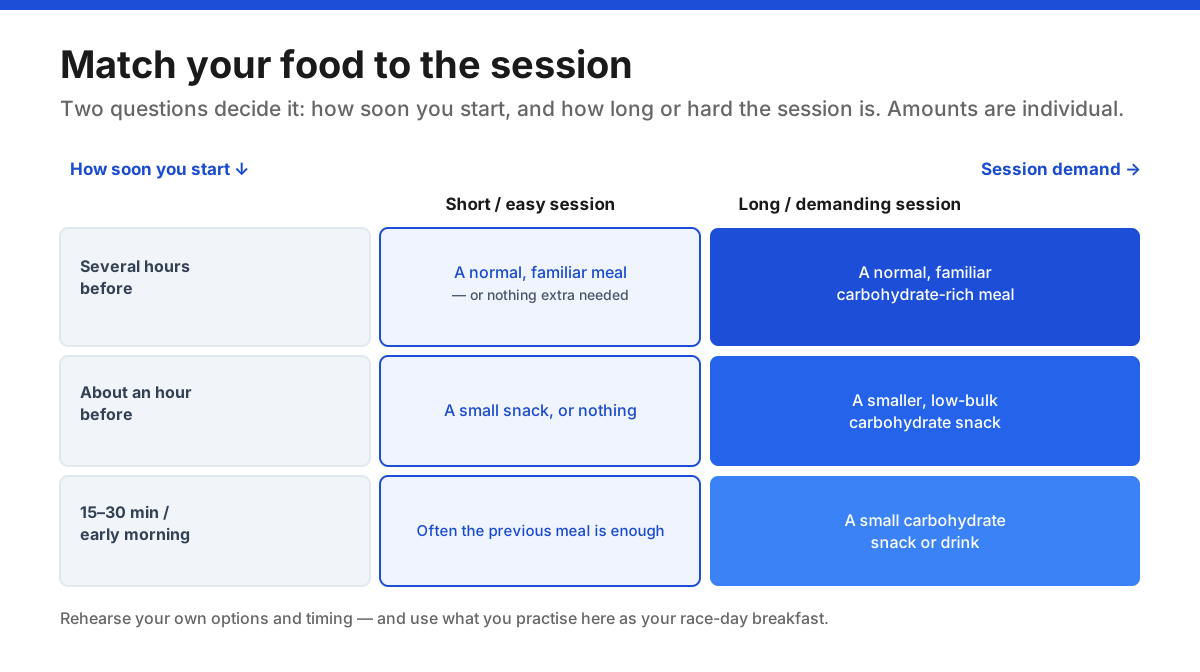
What to eat before a training session is not one fixed meal — it depends on how soon you start, how long and hard the session is, what you already ate, and what your gut tolerates. Further out, a normal familiar meal fits; closer in, a smaller low-bulk snack or a carbohydrate drink is easier; before a short easy session, the previous meal is often enough on its own. This guide gives a simple way to match food to the session, covers early-morning and fasted training honestly, and treats every everyday session as rehearsal for your race-day fuelling — while handing the race-day and during-session specifics to the guides that own them.
Key takeaways
- 1Match the amount to the session rather than eating the same thing before every workout — a short easy session may need nothing extra.
- 2Two things decide it: how soon you start, and how long or demanding the session is.
- 3Further from the session a normal familiar meal fits; closer in, a smaller low-bulk snack or a carbohydrate drink is usually easier.
- 4Fasted training is a tool, not a default, and is inappropriate when low energy availability, pregnancy, diabetes, medication or eating-disorder risk is relevant.
- 5Practise the exact pre-session food and timing you intend to use on race day — everyday training is your fuelling rehearsal.
In this article
- 1Quick answer: match the food to the session
- 2The two questions that decide it
- 3Use the time available
- 4Early-morning sessions: the real-world case
- 5Fasted training is a tool, not a default
- 6What to actually choose
- 7Every session is race-day rehearsal
- 8When to seek help
- ⚖Matching pre-training food to the session
- ?Frequently asked questions
Quick answer: match the food to the session
There is no single 'pre-training meal', and no requirement to eat a gel or a special sports food before every workout. For a demanding or prolonged session, choose a familiar carbohydrate-rich meal or snack and add other foods according to your appetite and how much digestion time you have. For a short, easy session, the meal you already ate may be all you need.
Everything below is a way of answering one question: given how soon I'm starting and how hard the session is, what will leave me fuelled and comfortable? The amounts and foods are yours to settle by rehearsal, not by a number printed here.
The two questions that decide it
Before a session, ask two things.
How soon do you start? The more time before you begin, the more you can eat and the more normal that food can be, because you have time to digest. The closer you are to starting, the smaller and simpler it should be.
How long and hard is the session? A long or high-intensity session draws more on carbohydrate, so it is worth arriving well-fuelled with familiar carbohydrate. A short, easy session makes far fewer demands, and your previous meal often covers it.
Those two axes — time available and session demand — are enough to guide almost every decision. The table below turns them into a simple starting map; treat it as a prompt to test, not a prescription.
Use the time available
With several hours before a session, a normal balanced meal usually fits comfortably. As the window shrinks, shift toward a smaller, lower-bulk snack or a carbohydrate-containing drink, which sits more easily and empties from the stomach faster.
These are options rather than exact deadlines — bodies differ, and 'two to three hours' is a common comfort window, not a rule. The reliable way to find yours is to rehearse the same food and timing across several sessions and notice how you feel: comfortable and fuelled, or heavy, hungry or unsettled. Adjust one thing at a time until it works, then keep it consistent.
Early-morning sessions: the real-world case
The hardest pre-training question for most triathletes is the early session, when there simply isn't time for a full meal to digest before starting. Several approaches work, and which suits you is individual.
Some athletes have a small, easily digested carbohydrate snack or a carbohydrate drink 15 to 60 minutes before starting — enough to top up without sitting heavily. Others find a short, easy morning session is fine on the previous evening's meal alone. Longer or harder morning sessions generally reward getting at least some familiar carbohydrate in beforehand. The wrong answer is to copy someone else's routine; the right one is the approach you have tested and that leaves you able to complete the session feeling steady rather than light-headed or flat.
Fasted training is a tool, not a default
Deliberately training with low carbohydrate availability is a real technique that some athletes periodize under professional guidance, usually for specific low-intensity sessions. But training without food is not automatically better for fat loss or endurance adaptation, and it should not be treated as a virtue in itself.
It can reduce the quality of harder sessions, and it is inappropriate — and potentially harmful — when low energy availability (RED-S) risk, pregnancy, diabetes, certain medications or any eating-disorder risk is relevant. If any of those apply to you, do not experiment with fasted training on your own; that is a conversation for a qualified professional. For most age-groupers, eating something familiar before a demanding session is the simpler, safer and more productive default.
What to actually choose
The practical guidance is deliberately about categories rather than a menu, because tolerance is individual. Build the pre-session choice around a familiar carbohydrate you know sits well — the everyday staples most people already use work fine, and there is nothing special required. Simple, low-bulk options are established sports-nutrition choices, which is the framing behind resources like the AIS sports-foods list.
Two adjustments help only if they help you: reducing fat, fibre or a large protein load close to a session tends to ease digestion for people whose stomachs are sensitive before exercise, but there is no need to strip them out if you tolerate them. The single most useful habit is to keep a short mental (or written) list of two or three pre-session options that reliably work for you at different time windows, so you are never improvising when a session comes around.
Every session is race-day rehearsal
The most valuable reason to get pre-training nutrition right is that it is where you rehearse race day. The rule that nothing should be new on race morning only works if you have already practised your race breakfast and timing in training — which is exactly what your ordinary pre-session meals are for.
So treat the food before your key sessions as a dress rehearsal: use what you plan to use before the race, at the same time offset, and refine it there where the stakes are low. The specifics of the race-day meal itself live in race-morning breakfast timing and, for the wider plan, race fueling; fuelling during longer sessions is covered in fuelling during training, and building your gut's tolerance in the gut-training guide. This page is simply the front end of all of them: get in the habit before the session, and race day inherits a routine you already trust.
When to seek help
Repeated nausea, reflux, diarrhoea, faintness, or a persistent inability to fuel your key sessions is worth assessing rather than tolerating. So is any situation where medical conditions, pregnancy, diabetes, medications or disordered-eating risk intersect with training nutrition.
A qualified sports dietitian can adjust your timing and food choices while protecting adequate overall energy and nutrient intake — which matters more than any single pre-session tweak. Getting individual guidance is a sign of taking your training seriously, not a failure to figure it out yourself.
Matching pre-training food to the session
| How soon you start | Short / easy session | Long / demanding session |
|---|---|---|
| Several hours before | A normal, familiar meal is fine | A normal familiar carbohydrate-rich meal |
| About an hour before | A small snack, or nothing extra | A smaller low-bulk carbohydrate snack |
| 15–30 minutes / early AM | Often the previous meal is enough | A small carbohydrate snack or drink |
| The guiding idea | Let the last meal do the work | Arrive fuelled with familiar carbohydrate |
Sources
Sources are listed so readers can verify consequential claims and dated details.
- Nutrition and Athletic Performance: joint position statement — Academy of Nutrition and Dietetics, Dietitians of Canada and ACSM (accessed September 1, 2026)
- AIS Sports Supplement Framework: Group A sports foods — Australian Institute of Sport (accessed September 1, 2026)
Frequently asked questions
Do I need to eat before every training session?
No. There is no requirement to eat a gel or special food before every workout. Before a short, easy session the meal you already ate is often enough, while a long or demanding session is worth arriving well-fuelled for with familiar carbohydrate. Match the amount to the session rather than eating the same thing every time.
What should I eat before an early-morning session?
It depends on the session and your own tolerance. For a short easy session, the previous evening's meal is often enough. For a longer or harder one, many athletes have a small, easily digested carbohydrate snack or a carbohydrate drink 15 to 60 minutes before starting. Test a couple of options in training and use the one that leaves you steady rather than light-headed.
Is fasted training better for fat loss or endurance?
Not automatically. Training with low carbohydrate availability is a specific tool some athletes periodize under guidance, but it is not inherently better for fat loss or endurance adaptation, and it can reduce session quality. It is also inappropriate when low energy availability, pregnancy, diabetes, certain medications or eating-disorder risk is relevant, so it should not be treated as a default.
How long before training should I eat?
There is no universal deadline. With several hours available a normal meal fits; closer to the session a smaller, low-bulk snack or a carbohydrate drink is usually easier to digest. A window of roughly two to three hours for a fuller meal is a common comfort guide, not a rule — rehearse your own timing and adjust to how you feel.
Why do I feel sick when I eat before exercise?
Pre-exercise stomach discomfort is common and usually a matter of amount, timing or food choice rather than anything wrong. Try eating a smaller, lower-bulk amount, leaving more time to digest, and reducing fat, fibre or a large protein load close to the session if those bother you. If nausea, reflux or diarrhoea persist despite adjustments, it is worth seeking individualized advice.