High-Carb Snacks for Triathlon: Choose, Portion and Pack
Choose carbohydrate snacks for work, travel and training with clear label maths, practical portions, storage checks and flexible examples.
By Lotte
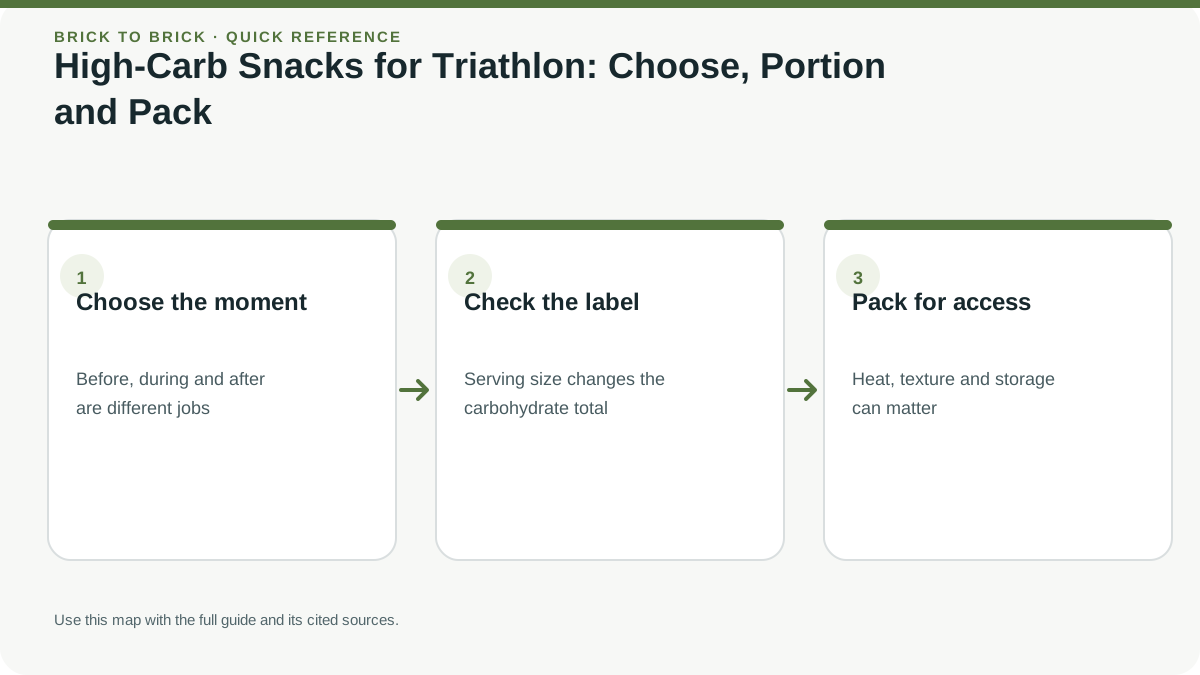
A useful high-carbohydrate snack fits the time available, your appetite and how you need to carry it. Compare total carbohydrate in the portion you will actually eat, follow storage guidance and test new foods in ordinary training.
Key takeaways
- 1Choose a snack for the job: before training, during a workout, between meals or travel.
- 2Calculate total carbohydrate for the portion you will eat, not package weight or sugar alone.
- 3Use familiar foods and account for personal tolerance, allergies and the next meal.
- 4Follow food-storage and travel rules for the country and event.
- 5For medical carbohydrate counting or persistent symptoms, follow qualified individual advice.
In this article
- 1Start with the reason you need a snack
- 2A practical shortlist by setting
- 3Read carbohydrate per portion, not per 100 g alone
- 4Match texture and portion to the time available
- 5Build a snack kit that survives the day
- 6Compare value without inventing a cheapest brand
- 7Work out the price of a useful carbohydrate portion
- 8Keep allergen and caffeine checks beside the carbohydrate calculation
- 9Choose a snack by appetite, access and the next meal
- 10Use a simple workday plan when meals and training are far apart
- 11Pack snacks for heat, humidity and long travel days
- 12Make label arithmetic inclusive and useful across countries
- 13Separate everyday snacks from sports fuel
- 14Use a simple snack plan for a two-session day
- 15Choose high-carbohydrate foods without moral labels
- 16Use familiar foods across different kitchens and budgets
- ?Frequently asked questions
Start with the reason you need a snack
You might be bridging an early breakfast and a lunchtime session, bringing food for a long ride, or avoiding a long wait for dinner after training. These are different jobs. Write the job down before choosing a product.
A snack eaten at a desk can include more variety and require utensils. A snack carried during a ride needs secure packaging and a safe place to eat. After training, a snack may bridge the gap until a meal rather than replace that meal.
Keep this page as a food-selection tool. For deciding whether to eat during a particular workout, use fueling during training.
A practical shortlist by setting
| Setting | Options to consider | Check before using |
|---|---|---|
| Before an early session | Toast with jam, cereal, a banana | Portion, time available and your tolerance |
| Between work and training | Bread roll, bagel, crackers, dried fruit | Label, appetite and access to water |
| During a long easy ride | A familiar bar, small sandwich, packaged waffle | Chewing, wrapper and storage |
| After training before a meal | Cereal with milk, yogurt with fruit, bread with a filling | Food safety and the rest of the meal plan |
| Travel day | Shelf-stable cereal, crackers, labelled snack bars | Border restrictions and allergens |
These are examples, not ranked products. Ordinary food can be convenient; specialist sports food can also be useful when compact portions and labels solve a real problem.
Read carbohydrate per portion, not per 100 g alone
Imagine a cereal bar label shows 64 g carbohydrate per 100 g and the bar weighs 35 g. One bar supplies 64 × 0.35 = 22.4 g carbohydrate. Two supply about 45 g. This hypothetical label illustrates the calculation; actual brands and flavours differ.
For a multipack, check whether “one serving” means one bar, two biscuits or half a packet. For a homemade recipe, add the carbohydrate contributed by the measured ingredients and divide by the number of equal portions.
Do not confuse food weight, sugar grams and total carbohydrate grams. A 50 g snack does not necessarily provide 50 g carbohydrate. Keep the original packaging until you know your usual portions.
Match texture and portion to the time available
Before training, use foods you already tolerate and leave a familiar gap. A large, unfamiliar high-fibre snack immediately before running may be uncomfortable, but that does not mean fibre is undesirable in the rest of your diet.
Try a smaller familiar portion when appetite is low rather than forcing a large meal. If you regularly cannot eat enough around sessions, review the overall schedule with a sports dietitian rather than treating appetite as something to ignore.
During exercise, consider chewing and breathing. Hard, dry or sticky food may be awkward even if its nutrition label looks ideal. Stop somewhere safe when eating competes with bike control.
Build a snack kit that survives the day
Keep one shelf-stable option in a work bag and replenish it after use. Separate food from tools, sunscreen and cleaning products. Use a sealed container if a snack crumbles or leaks, and check expiry and storage instructions.
Perishable foods need appropriate cooling. Do not leave cooked rice, dairy or meat fillings warm for hours in a car or transition bag. Follow the relevant food-safety guidance for preparation, cooling and storage; when this is impractical, pick another option.
For dietary restrictions, read the exact label every time a product or recipe changes. Similar packaging does not guarantee identical allergens or ingredients.
Compare value without inventing a cheapest brand
Calculate cost per usable portion, not just the cheapest multipack price. If a product repeatedly goes uneaten because of taste or texture, its apparent saving is misleading. For a carbohydrate comparison, divide price by total carbohydrate grams and multiply by 100 to find cost per 100 g.
Build a shortlist of two or three reliable options: one for home, one for travel and one for sessions where compact packaging matters. You do not need a different product for every training day.
Record the snack and how the next workout felt, but do not infer a health diagnosis from one good or bad session. Snacks support a varied overall diet; they are not a substitute for adequate meals or individual advice when symptoms persist.
Work out the price of a useful carbohydrate portion
Suppose a packet costs €2.40, weighs 240 g and lists 60 g carbohydrate per 100 g. The full packet contains 144 g carbohydrate. A 40 g portion supplies 24 g carbohydrate and costs €0.40. These are invented label figures to demonstrate the calculation, not a current product price.
Compare another food using the same unit: price divided by total carbohydrate, then multiplied by the amount you intend to pack. This avoids comparing one large packet with one small sachet as if they were equivalent servings. It still does not measure nutritional quality, suitability for allergies or ease of eating.
For a busy training day, keep two separate questions on the shopping list: what will I enjoy and tolerate, and what amount can I carry? A cheaper family-size package can work well when portioned at home. A more expensive sealed serving can be practical when you need reliable storage and a clear label during travel. Choose the format for the job.
Keep allergen and caffeine checks beside the carbohydrate calculation
Two snacks with similar carbohydrate figures can differ in allergens, caffeine and ingredients you find difficult to tolerate. Check the actual package, including the serving count and any preparation instructions. A familiar brand name does not guarantee that another flavour has the same ingredients.
Keep the original label when portioning food into smaller containers, or photograph it for your own reference. This is especially helpful when a supporter helps pack supplies. Labelled portions reduce the chance of mistaking a caffeinated product for an ordinary snack or using something unsuitable for your dietary requirements. Do not rely on a generic shopping list to resolve an allergy question.
Choose a snack by appetite, access and the next meal
A snack does not have to look like sports nutrition to be useful. Bread, cereal, fruit, yogurt, rice-based foods and packaged snacks can all contribute carbohydrate, but the best choice depends on what you enjoy, what is available and how soon you will eat again. A larger snack may make sense when a meal is far away; a small option may be easier when you are about to train or have limited appetite. Use the label to understand what a serving contains rather than calling a food “high-carb” based on its name.
Think about the three moments around training separately. Before a session, consider the time you have, your appetite and what has worked for you. During a workout, choose food that is easy to carry, open and chew safely at the effort you expect. Afterward, a snack can bridge the gap to a normal meal; it does not need to become a separate recovery ritual if you are eating soon.
Some higher-fibre foods are comfortable for one person and uncomfortable for another close to hard exercise. That is a question of timing and individual tolerance, not a reason to avoid fibre in an otherwise varied diet. Test portions in ordinary training rather than making a new snack part of a race-day plan. For specific guidance on food during exercise, use the separate fuelling during training guide, which addresses the session rather than the shopping choice.
Use a simple workday plan when meals and training are far apart
A predictable snack can make a workday easier without requiring a perfect eating schedule. Write down when you expect to finish work, travel to the pool or bike route, and eat your next full meal. Then choose one snack that can bridge the gap and a backup that is easy to store. This is a planning example, not a recommendation to eat a fixed number of snacks or to train after a specific meal interval.
For example, an athlete with an early evening run might keep a familiar bread-based snack in the office and carry a shelf-stable backup for a delayed commute. Someone heading straight to a pool might prefer a smaller item they already tolerate rather than an unfamiliar large portion. A long bike ride may call for several individually wrapped items because the athlete needs access while riding, but food should be handled only when bike control and the course make it safe.
Keep the plan flexible. If a session is postponed, you can eat normally rather than forcing the snack on a timetable. If you repeatedly reach training hungry, under-fueled or unable to eat afterward, review the overall pattern with a qualified sports dietitian. A snack list cannot fix inadequate total energy, disordered eating, persistent gastrointestinal symptoms or an underlying medical issue.
Pack snacks for heat, humidity and long travel days
A snack that is convenient in a cool kitchen may not be sensible after hours in a warm car or a transition bag. Follow the storage instructions on the package and use an insulated container or cooler when needed. Foods with meat, dairy or cooked ingredients may require temperature control; if you cannot maintain it, choose a shelf-stable alternative. The UK Food Standards Agency's home food fact checker explains safe storage and handling for its jurisdiction, and local food-safety advice may differ.
For a race or training day, separate the food you will eat before the event from the items intended for the course. Put labels and wrappers where a supporter or you can identify them quickly. Pack a spare option that you have eaten before, not a new product chosen at the expo. Check the event's rules about litter, personal bottles, aid-station access and bag storage.
Travel across borders adds another layer: fresh fruit, meat, dairy, nuts or homemade items may be restricted by the destination's customs rules. Check current government travel guidance for the country you are entering rather than assuming a snack can cross a border. Use sealed packaged foods when that is the simpler option, and keep allergy information available if someone else helps pack your food.
Make label arithmetic inclusive and useful across countries
Nutrition labels and serving conventions vary by country. One package may list carbohydrate per 100 g, another per serving, and a third for the product as prepared. Use one consistent unit: total carbohydrate in the amount you will actually eat. If the label gives values per 100 g, multiply the carbohydrate figure by your portion weight divided by 100. If a product is sold in multiple pieces, check whether one serving includes one piece or several.
Do not treat grams of sugar as the same number as total carbohydrate. Sugar is part of carbohydrate in many labeling systems, while starch and other carbohydrates can contribute too. Check the regional label and local definitions if you are comparing products from different markets. For packaged food, allergen statements and ingredients can also change between flavours or countries, so read the exact package every time.
If you count carbohydrate for a medical reason, follow the method recommended by your healthcare team and the labeling rules where you live. This article's examples are for general food planning; they are not a substitute for diabetes care, allergy advice or an individualized sports nutrition plan. If you have symptoms, a food restriction or a medical condition that affects eating around exercise, ask a qualified clinician or dietitian for help selecting appropriate foods.
Separate everyday snacks from sports fuel
A snack can contribute carbohydrate without being designed as a sports product. Bread, oats, fruit, cereal, rice, dairy foods and packaged snacks vary in carbohydrate, fluid, fibre, fat, protein, serving size and how easy they are to carry. A sports gel or drink is a packaged format chosen for convenience during exercise; it is not automatically a better snack before an ordinary session or at a desk.
The useful question is what the next few hours look like. Before a short easy session, a familiar ordinary snack may be enough for comfort or appetite. During prolonged exercise, the athlete may need a more portable fuel plan that has been tested in training. After a session, a snack may bridge to the next meal, but it does not need to replace a balanced meal if one is available.
Do not infer that a high-carbohydrate snack is appropriate for every person or every medical plan. People managing diabetes, gastrointestinal disease, food allergy or another condition should follow personalized advice from their clinician or dietitian. This page helps compare foods; it does not prescribe an eating plan.
Use a simple snack plan for a two-session day
On a day with two workouts, write down the session times, travel between them and the next full meal. Choose snacks that address the gaps and that you already tolerate. For example, an athlete commuting from work to a pool might bring a familiar bagel or cereal bar for the period before the swim and a separate snack for the trip home if dinner will be delayed. The foods are examples, not fixed portions or a recommendation to eat at set times.
If a session is demanding or lasts longer, a snack alone may not be enough to cover the day’s energy and fluid needs. Look at meals as well as the item in your bag, and avoid reducing the plan to “one snack before, one after.” A sports dietitian can help when training volume, appetite, health needs or gastrointestinal symptoms make eating difficult.
Keep a backup that fits your storage conditions. If work or training plans change, check whether the food is still safe to eat and whether you will have access to water. A realistic plan is more useful than buying many products that do not fit your appetite or routine.
Choose high-carbohydrate foods without moral labels
Carbohydrate content is one feature of a food, not a complete nutrition score. A packaged bar, fruit, toast or rice may each be useful in a different setting. Whole-diet needs include more than the carbohydrate in a single snack, and labels do not show whether a particular food feels good in your stomach or fits your culture, budget and preferences.
For everyday meals and snacks, variety can help meet broader dietary needs. Near a workout, an athlete may prefer a simpler or lower-fibre option for comfort, but this does not mean fibre-rich foods should be removed from the normal diet. Let the timing, appetite and personal tolerance guide the choice.
Avoid moral labels such as “clean” or “bad” for a snack. They do not help compare a useful portion or plan around training. If food choices are causing distress, restriction or repeated underfueling, seek support from a qualified health professional rather than adding more rules.
Use familiar foods across different kitchens and budgets
High-carbohydrate snacks do not need to come from a specialist sports aisle. Depending on local availability and your own preferences, options may include bread or flatbread, oats, cereal, rice-based snacks, fruit, potatoes, crackers or a packaged bar. Their carbohydrate content and serving size vary, so use the label or a food-composition resource when a quantity matters rather than assuming two versions are equivalent.
Think about the practical context: can the food be carried without crushing, does it need refrigeration, can you eat it before the next session, and is drinking water available? A food that works at home may be awkward during travel or on the bike. Test texture and packaging in advance, especially if you expect to eat while moving or in hot weather.
A short list of two or three familiar choices is often easier to shop for and use than a cupboard full of products. Culture, appetite, allergies, cost and medical needs belong in that decision. If you need a specific carbohydrate plan for long-course training, ask a qualified sports dietitian to help tailor it.
Sources
Sources are listed so readers can verify consequential claims and dated details.
- Sports foods in the AIS supplement framework — Australian Institute of Sport (accessed September 13, 2026)
- Home food fact checker — UK Food Standards Agency (accessed September 24, 2026)
- Sports Foods — Australian Institute of Sport (accessed September 24, 2026)
Frequently asked questions
What are good high-carb snacks before a triathlon workout?
Choose a familiar food that fits your appetite and the time you have, such as bread, cereal or fruit. Portion and timing vary; try the exact option during training rather than for the first time on race day.
How do I calculate carbohydrate in a snack?
Use the label for the amount you will eat. If the label gives grams per 100 g, multiply that value by your portion weight and divide by 100. Check the serving definition and regional label.
Can I eat ordinary food during a long ride?
Some athletes use familiar foods if they are safe to carry, easy to eat and tolerated at the effort. Practise the format and check course rules; never handle food when it compromises bike control.
Are high-carb snacks suitable for everyone?
Needs differ. If you manage diabetes, food allergies, gastrointestinal conditions or another medical issue, follow advice from your healthcare team or a qualified dietitian.
How should I store snacks for race day?
Follow package directions and local food-safety guidance. Use temperature control for perishable foods, and check customs restrictions when travelling internationally.