Real Food vs Gels: Choosing Long-Course Triathlon Fuel
Compare real food and gels for Ironman fueling. Learn portion math, gut training, bike and run logistics, food safety and how to practise a flexible plan.
By Lotte
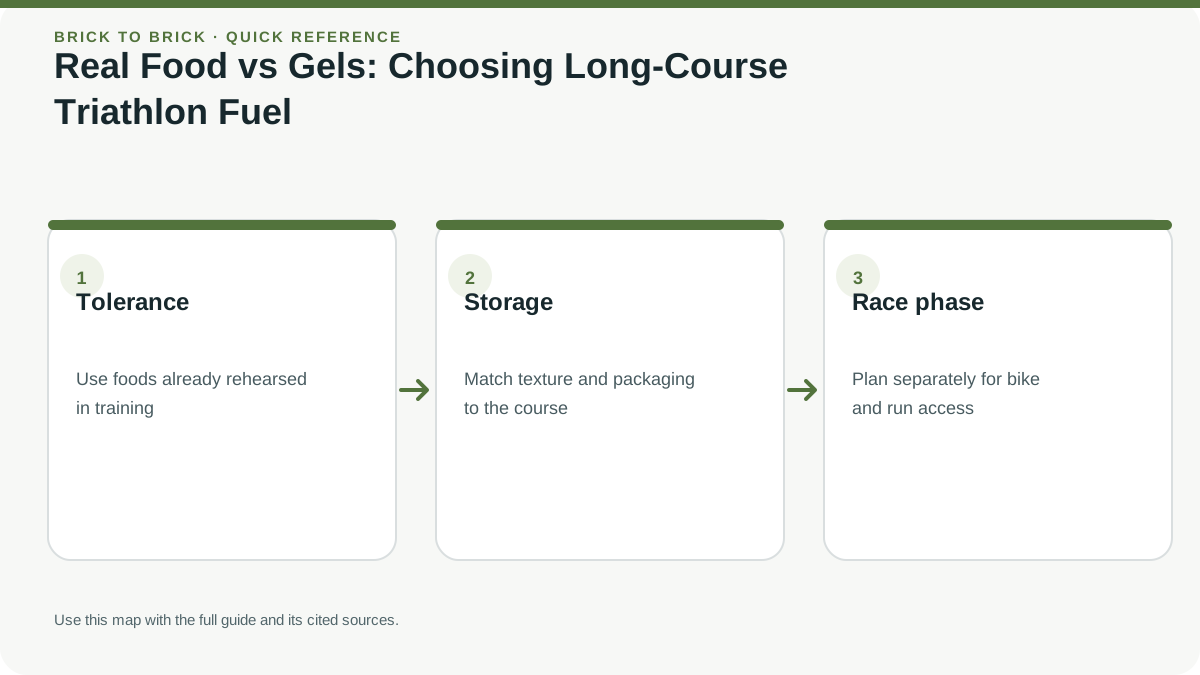
Real food and gels can both supply carbohydrate during long-course triathlon. Choose using tolerance, portion information, safe handling, storage and the event’s aid-station options; practise the plan before racing.
Key takeaways
- 1Count carbohydrate from drinks, gels and food together.
- 2Test one change at a time in training and keep a familiar fallback.
- 3A general intake range is not an individual prescription; health needs and tolerance matter.
In this article
- 1Compare the job each food needs to do
- 2Use a selection matrix before buying
- 3A mixed-food calculation with transparent assumptions
- 4Test food on the bike without making the bike unsafe
- 5Treat storage as part of the fueling choice
- 6Make the run choice from experience
- 7Choose the food for the location in the race
- 8Build the choice around the task, not the food label
- 9Translate an hourly plan into portions and timing
- 10Use the bike and run for different kinds of food
- 11Protect food safety and mouth comfort during a long event
- 12Use gut training and professional advice carefully
- 13Practise gut comfort as part of the plan
- 14Choose solid food for logistics as well as digestion
- ?Frequently asked questions
Compare the job each food needs to do
A gel is compact and usually has a clearly labelled carbohydrate quantity. A small sandwich, banana or rice-based snack may provide welcome variety, but size and recipe change its carbohydrate content. The first decision is practical: can you carry, open and consume it comfortably at the planned effort?
The Australian Institute of Sport describes sports gels as a convenient concentrated carbohydrate source and advises rehearsing tolerance. That does not make ordinary food inferior. Nor does “natural” mean a food will be gentler during exercise.
This page compares formats. For deciding an overall hourly plan, use race fueling; keep one central target rather than adding a separate allowance for each food type.
Use a selection matrix before buying
| Question | Packaged gel | Ordinary food |
|---|---|---|
| Can I count the carbohydrate? | Read the whole packet label | Weigh ingredients or use the specific food label |
| Can I consume it while moving safely? | Check opening and swallowing | Consider chewing and hand use |
| Will it survive the event? | Follow storage instructions | Consider heat, crushing and spoilage |
| Can I replace it on course? | Confirm brand and flavour | Confirm what the organiser supplies |
| Will I still want it late in the ride? | Test sweetness and texture | Test variety and portion size |
The table is a decision aid, not a laboratory digestion ranking. Products within a category differ substantially. A thick gel, a liquid gel and a caffeinated gel are not interchangeable just because all three use the same name.
A mixed-food calculation with transparent assumptions
Consider a two-hour training ride with a previously tolerated planning total of 120 g carbohydrate. An illustrative mix could be one bottle labelled 40 g, two gels labelled 25 g each, and a food portion calculated at 30 g: 40 + 50 + 30 = 120 g, or 60 g per hour.
The food portion is not “one banana” or “one rice cake” by default. Portion size matters. If a homemade batch contains 240 g carbohydrate and is divided evenly into eight pieces, the recipe estimate is 30 g per piece. Uneven pieces and incomplete eating reduce precision.
Fluid volume is a separate choice. Do not drink beyond your needs simply to finish a carbohydrate bottle. Rework the fuel combination when drinking preferences change.
Test food on the bike without making the bike unsafe
Begin on a familiar session, somewhere you can stop easily. Practise removing the food from its wrapper with the bike stationary first. Use small portions that fit the available storage and do not crumble into controls.
On the road, postpone eating on descents, in traffic, near junctions or wherever one-handed riding reduces control. Stopping safely can be the best solution. The fact that a race is long does not make eating while moving mandatory.
Notice whether the food remains appetising after being carried for the actual duration. A snack that tastes pleasant at home may become sticky, crushed or difficult to swallow late in a ride.
Treat storage as part of the fueling choice
Homemade foods need an appropriate food-safety plan; a top-tube bag is not a refrigerator. Cooked rice and perishable fillings should not sit warm for an extended race simply because other athletes use them. Follow local food-safety storage guidance and choose shelf-stable options when temperature control is impractical.
Do not mix nuts, dairy or other allergens into shared food without clear labelling. If travelling internationally, check restrictions on bringing food across the border and consider whether the same ingredients can be obtained at the destination.
Keep the preparation simple enough to reproduce for key rehearsals. A complicated recipe that changes every weekend makes comparison difficult.
Make the run choice from experience
Some athletes prefer gels or drinks on the run because there is less chewing and carrying. Others tolerate small solid portions. There is no universal effort threshold above which every solid food stops being absorbed, and no reliable minute-by-minute digestion table applies to everyone.
Test a small amount during a suitable familiar run before building it into a long race. Avoid adding caffeine automatically; count it across all products if you use it. Recurrent gastrointestinal symptoms deserve advice from a sports dietitian or clinician rather than repeated experiments with higher intake.
Compare costs using your own receipts: total price divided by total carbohydrate grams, multiplied by 100, gives cost per 100 g. Include waste and transport. The cheapest plan only has value if it remains safe, tolerable and practical.
Choose the food for the location in the race
Imagine three foods with the same labelled carbohydrate amount: a wrapped soft bar, a homemade rice portion and a gel. Equal carbohydrate does not make them interchangeable.
| Decision | Soft bar | Homemade portion | Gel |
|---|---|---|---|
| Can you verify the portion? | Check the wrapper | Calculate from recipe and actual batch yield | Check the sachet |
| Can you carry it hygienically? | Keep sealed until needed | Plan suitable storage and handling | Keep sachet intact |
| Can you eat it while running comfortably? | Requires your own test | Texture and chewing may be awkward | Test the product and fluid instructions |
| Can you replace a lost serving on course? | Only if available or carried | Usually requires your own reserve | Check the actual aid-station brand |
A sensible hybrid plan assigns foods to the sections where they are manageable. It does not alternate products merely to appear balanced. If a homemade option introduces refrigeration or packaging problems during travel, a familiar shelf-stable product may simplify that particular event even if you enjoy homemade food in training.
Build the choice around the task, not the food label
“Real food versus gels” is a false either-or for many long-course athletes. The useful question is what the item must do at that moment: provide a measured amount of carbohydrate, go down easily at race effort, fit in a pocket, be available at an aid station, or give a break from a sweet taste. A gel is a sports food designed for convenience and a labelled carbohydrate portion. An ordinary food can offer texture and variety, but its portion, ingredients and carbohydrate amount vary. Both can be useful; neither is automatically more effective for every athlete.
For a long race, decide the overall fueling plan before choosing individual products. Estimate how long you expect to be moving, identify the bike and run opportunities to eat, and set a conservative intake that you have already practised. Published sports-nutrition guidance commonly describes carbohydrate intake as a range that depends on duration, intensity, and the athlete’s tolerance. Higher hourly amounts are not a target everyone should copy. People differ, and increasing intake abruptly can cause gastrointestinal symptoms. If you have diabetes, gastrointestinal disease, a history of an eating disorder or another relevant condition, build the plan with a qualified clinician or sports dietitian.
Treat food and drink as a system. A gel may need water alongside it according to its label. A carbohydrate drink contributes to the hourly total too. A sandwich portion may have both carbohydrate and fat, affecting how it feels at race intensity. Count the carbohydrate from all sources together so that adding a snack does not unknowingly double a planned dose. Your practice notes should include what you consumed, when, the conditions, effort and any symptoms.
Translate an hourly plan into portions and timing
A label-based calculation is more reliable than choosing foods by appearance. Suppose an athlete and their sports dietitian have selected a previously tolerated plan of 60 grams of carbohydrate per hour for a steady bike session. This number is an illustration, not a universal Ironman prescription. If a bottle contains 30 grams and a gel contains 25 grams, those two items supply 55 grams; the athlete would then decide whether the remaining planned amount comes from another portion or a small food. If the session is shorter, easier, hotter or involves more running, the appropriate plan may differ.
| Item in one planned hour | Example label or calculation | Carbohydrate counted |
|---|---|---|
| Sports drink | 500 ml bottle labelled 30 g | 30 g |
| Gel | Whole packet labelled 25 g | 25 g |
| Small food portion | Weighed and checked from its label or recipe | 15 g |
| Total | 30 + 25 + 15 | 70 g |
That table only checks the sum. It does not establish that 70 grams per hour is right for the person, that the products are compatible or that they will be comfortable to consume. Distribute portions across the hour instead of trying to catch up after a missed dose. Write down whether the product requires water, whether the course provides it and where the athlete will safely access the item. Never make up an intake gap by swallowing several concentrated portions at once.
Use the bike and run for different kinds of food
The bike usually offers more carrying capacity and less impact than running, so it is often the place to test a wider mix of familiar foods. A soft bar, banana or rice-based portion may work for an athlete who prefers chewing and can handle the storage and packaging. A gel or drink may be easier to open and measure. Choose foods that stay edible at the expected temperature and remain secured in a pocket or bike bag. Keep fingers and attention available for safe handling; take food before a technical section or stop when required rather than reaching while steering or descending.
The run asks a different question. Carrying capacity is smaller, bouncing can change comfort and chewing may feel less practical at race effort. Some athletes use gels or sports drink, while others have rehearsed small solid portions. Aid-station foods differ by race, so never assume a familiar item will be there. Check the current athlete guide and practice with the products that are actually available to you.
A simple rehearsal compares the options under comparable conditions. On one long ride, use the planned gel and drink schedule. On a different, similarly easy ride, replace one portion with a familiar food while keeping the rest of the plan stable. Note taste, packaging, stomach comfort and handling. Do not trial several new products in a race simulation and then guess which caused a problem. For a practical food-versus-gel choice, isolate one variable at a time and keep your event nutrition plan within ranges that you have tolerated.
Protect food safety and mouth comfort during a long event
Homemade food needs a realistic storage plan. A sealed bag protects a snack from sweat and road grime but does not keep perishable ingredients cold. Cooked rice, dairy fillings, meat or other foods that normally need refrigeration should not be carried warm for hours without a food-safety method. Use shelf-stable ingredients and packaging appropriate to the conditions, follow local food-safety guidance, and discard anything that has leaked, become contaminated or been stored outside safe limits.
Concentrated gels and frequent sports drinks can also matter for dental comfort. The Australian Institute of Sport advises reducing prolonged contact between sugary gel and teeth and rinsing the mouth with water when practical. That does not mean you should compromise race safety to rinse while moving: use a safe and familiar opportunity, or choose a different fueling format with a professional if dental issues are a concern.
Heat changes texture and palatability. A bar that is manageable on a cool training ride can soften or melt; a gel can become harder to handle with cold fingers; a food that tastes appealing early can become unpleasant after several hours. Test the exact packaging and storage position. Put a backup in a separate compartment so one torn wrapper does not remove the whole plan.
If you have a known allergy, food intolerance, celiac disease or other dietary restriction, verify ingredient labels and cross-contact information each time. Product recipes can change. A familiar brand name is not a substitute for checking the current packet.
Use gut training and professional advice carefully
Sports nutrition organisations describe gut training as gradual practice with the amount, concentration and timing of carbohydrate in training. That is not permission to force a high intake through nausea. Start from what you already tolerate, change one element at a time, and record the result. Keep easy sessions and race-pace sessions distinct: what feels comfortable at low intensity may feel different when the bike is harder or the run begins.
Stop the experiment if it brings repeated vomiting, severe abdominal pain, blood in stool, signs of allergy or other concerning symptoms. Do not try to “train through” a medical warning. Seek qualified care for persistent problems, and consult a sports dietitian when fueling remains difficult, particularly if a long event, medical condition or history of disordered eating is involved. Event-day nausea can have multiple causes including intensity, heat, illness, medication and food; a single product is not always responsible.
Make the final choice by asking: can I count this portion; can I carry it securely; can I consume it at the effort I plan to race; is it safe in the expected conditions; and have I practised it? A mix of labelled sports foods and familiar foods often gives useful flexibility. The best plan is the one that is appropriate to the athlete, rehearsed in training and compatible with the course—not the one that follows a purity rule. For overall planning, pair this guide with race fueling, gut training and training-day fueling.
Practise gut comfort as part of the plan
Food choice is only one part of gastrointestinal comfort. Effort, heat, hydration, stress, recent meals, timing and individual health can all affect how a plan feels. A product that is comfortable at home may feel different during a long ride or run. Practise products and approximate timing during suitable training, begin conservatively and change one variable at a time. Record what happened rather than relying on memory afterward.
Do not force food when you are nauseated, confused, severely bloated or otherwise unwell. Reduce effort, move to a safe place and seek event medical support when symptoms are significant or worsening. Persistent or recurrent problems deserve assessment by a qualified clinician or sports dietitian, especially if there is blood, severe pain, repeated vomiting or an underlying condition. A race plan should never make an athlete feel obliged to ignore serious symptoms.
For a practical comparison, replace one planned serving while keeping the rest of the session similar. If testing familiar food instead of a gel, keep the drink schedule and effort steady. Note ease of opening, chewing, swallowing, taste, stomach response and whether the food stayed secure. On another day, test a different product instead of mixing several new items. Compare similar duration and conditions; a cool easy ride is not directly comparable with a hot race-pace run.
Build a fallback around products you already tolerate. An aid station can run out of a preferred item or provide a different flavor, so know what you can accept and what you will decline. Check labels when the event’s product differs from your usual choice. Practice cannot guarantee comfort, but it reduces the need to improvise under stress.
Choose solid food for logistics as well as digestion
Solid food can provide taste variety or a familiar texture, but it creates practical constraints. A bar may soften or harden in heat. A banana can bruise. Homemade food can leak, crumble or be hard to open with one hand. Packaging must be carried until a designated disposal zone, and local race rules may prohibit leaving wrappers elsewhere. Consider whether the food can be stored safely for the full time you expect to carry it.
Break food into portions you can open and eat without rushing. If you need to stop to chew, choose a safe place before handling the package. Keep food away from brake surfaces and do not leave loose wrappers near wheels or a drivetrain. On the run, carrying capacity and bounce matter; test the exact pocket, bag or belt you plan to use.
Check a nutrition label or consistent recipe when estimating carbohydrate. Food databases can differ, particularly for homemade portions. Weighing a training portion can help, but race day does not require gram-perfect tracking if that precision is stressful or inappropriate. Athletes with a history of disordered eating should discuss tracking with a qualified professional and may prefer a plan that avoids detailed calorie or body-mass monitoring.
Real food and sports products can coexist. An athlete might use familiar food early on the bike and a measured drink or gel later when chewing feels less convenient. That is a preference to test, not a universal sequence. Base the choice on the person, course, weather, availability and prior tolerance. The useful option is the one that fits the plan and can be consumed safely, not the one with the most natural-sounding label.
Sources
Sources are listed so readers can verify consequential claims and dated details.
- AIS sports gels guidance — Australian Institute of Sport (accessed September 24, 2026)
- Sports drinks: how and when to use them — Australian Institute of Sport (accessed September 13, 2026)
- Home food fact checker: rice — UK Food Standards Agency (accessed September 13, 2026)
- Nutrition and Athletic Performance position paper — Academy of Nutrition and Dietetics, Dietitians of Canada and ACSM (accessed September 24, 2026)
- IOC consensus on dietary supplements and high-performance athletes — International Olympic Committee (accessed September 24, 2026)
Frequently asked questions
Can real food replace gels during an Ironman?
It can for some athletes if the food is safe to store, practical to carry and tolerated at the planned effort. Check portions and labels, and rehearse the approach before race day.
Should a gel be taken with water?
Follow the exact product label. Concentration and water instructions differ, and drink from all sources should be considered together.