Exertional Heat Stroke in Triathlon: Signs, Cooling and Prevention
Recognize possible exertional heat stroke in athletes, activate emergency care, start safe rapid cooling and reduce heat risk before a triathlon.
By Lotte
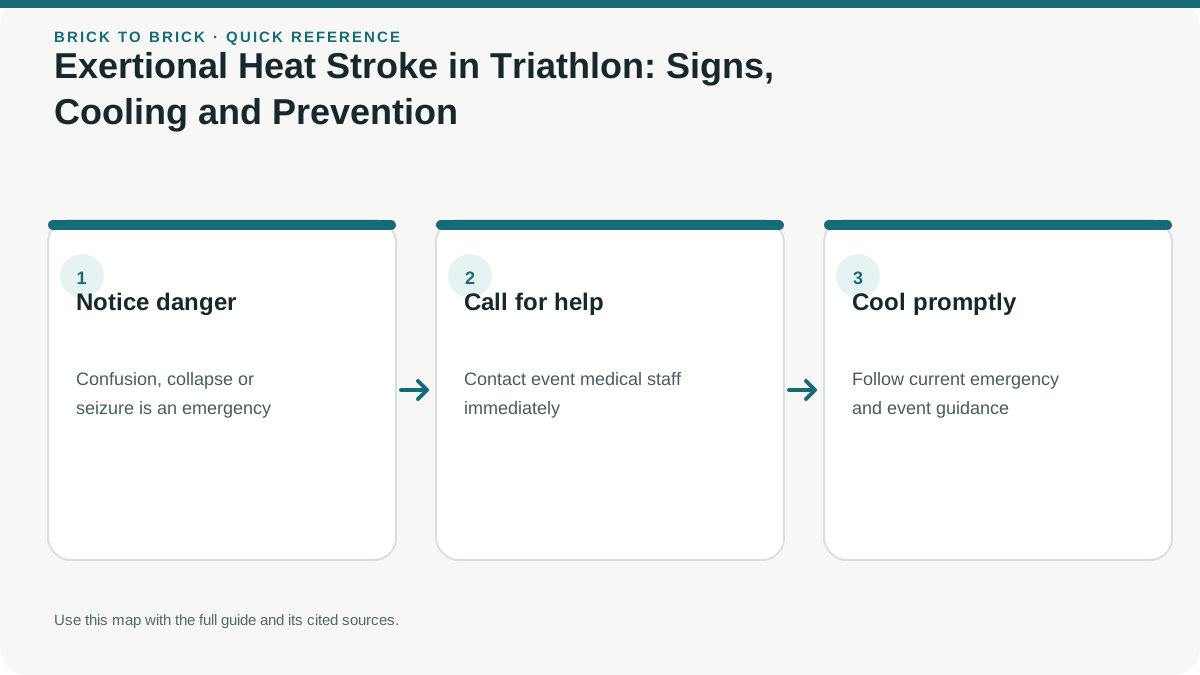
Exertional heat stroke is a life-threatening emergency. Altered mental status during exercise in heat should trigger emergency services and immediate safe cooling; sweating may continue. This guide explains bystander actions, cooling options, prevention and event planning.
Key takeaways
- 1Confusion, loss of coordination, collapse, seizure or unconsciousness during exertion in heat is an emergency.
- 2Call event medical staff or local emergency services and start safe active cooling immediately.
- 3Cold-water immersion is a preferred cooling method when it can be used safely with airway supervision.
- 4Sweating may continue during exertional heat stroke; do not wait for a thermometer or dry skin.
- 5Do not give fluids by mouth to someone who cannot swallow safely, and do not return an ill athlete to the course.
In this article
- 1Emergency answer: what should you do?
- 2Recognize the central nervous system signs
- 3Temperature and diagnosis
- 4Cool first while emergency care is activated
- 5What not to do
- 6Reduce risk before the event
- 7Why mental status matters more than a thermometer in the first moment
- 8Heat exhaustion, heat stroke and overlapping emergencies
- 9Cold-water immersion: the preferred option when it can be done safely
- 10Cooling when there is no tub or immersion setup
- 11Fluids, salt and medicines during a suspected heat stroke
- 12What happens after emergency services arrive
- 13Why a race or training partner should stay with the athlete
- 14Heat risk is more than the air-temperature forecast
- 15Acclimatization is gradual and does not guarantee protection
- 16Medication and health conditions can change heat tolerance
- 17Risk reduction in the weeks before a hot race
- 18Pacing and cooling during a warm event
- 19When heat illness is less severe but still needs attention
- 20Event organizers: make the emergency plan visible
- 21Returning to training after a heat illness
- 22A concise emergency checklist to remember
- 23Support crew: notice behavior, not only split pace
- 24Wearables, thermometers and thresholds have limits
- 25Heat policy changes and athlete withdrawal
- 26What training partners and spectators can do
- ?Frequently asked questions
Emergency answer: what should you do?
Stop the activity, call local emergency services and begin rapid whole-body cooling immediately. Move the athlete to a safe area, remove excess clothing and equipment, and use cold-water immersion when safely available with trained help. If immersion is not possible, use the most effective available combination of cold water, wet towels, ice and airflow while help is coming.
Recognize the central nervous system signs
Confusion, irrational behaviour, slurred speech, staggering, loss of coordination, collapse, seizure or unconsciousness during exertion in heat should trigger emergency action. A person does not need dry skin: exertional heat-stroke patients can continue sweating. Do not rely on how the athlete says they feel because judgment may be impaired.
Temperature and diagnosis
Exertional heat stroke is characterized by severe central nervous system dysfunction with marked hyperthermia. Trained medical teams use rectal temperature because skin, oral, ear and many wearable readings can be misleading during exercise. Bystanders should not delay emergency cooling while trying to obtain a perfect measurement.
Cool first while emergency care is activated
Clinical sport guidance prioritizes rapid cooling because outcome worsens as severe hyperthermia continues. Cold-water immersion provides the fastest practical whole-body cooling in many event settings. Keep the airway monitored and never leave the athlete alone. Event medical teams should follow their emergency action plan and local protocols.
What not to do
Do not tell the athlete to walk it off, wait 15 minutes, take salt or finish the course. Do not give oral fluid to someone who is confused, repeatedly vomiting, seizing or unconscious. Do not assume heat exhaustion merely because the skin is wet. Do not delay cooling solely to move the athlete elsewhere when immediate safe cooling is available.
Reduce risk before the event
Use progressive heat acclimatization when appropriate, adjust pace and warm-up to conditions, begin normally hydrated, make cooling and fluid accessible, and know the event's heat policy. Fever, illness, sleep loss, some medications and a history of heat illness can increase risk and warrant medical guidance.
Why mental status matters more than a thermometer in the first moment
A race volunteer, training partner or spectator may not have a reliable temperature reading, and ordinary forehead, oral, ear or wrist devices can be misleading during exercise. Do not wait for a particular number before calling for help when an athlete becomes confused, uncoordinated, unusually agitated, collapses, has a seizure or loses consciousness in heat. These changes can signal exertional heat stroke, but other emergencies can look similar. The action is the same at first: stop activity, activate event medical staff or local emergency services, and begin safe active cooling while help is coming. Trained clinicians may use core-temperature measurement to guide care; that is not a prerequisite for a bystander to act. Sweat, skin color and an athlete's previous fitness are not dependable ways to rule out a heat emergency.
Heat exhaustion, heat stroke and overlapping emergencies
Heat exhaustion can involve heavy sweating, weakness, headache, nausea, dizziness, thirst or feeling faint. Altered mental status, loss of coordination, collapse or seizure raises concern for heat stroke and makes the situation an emergency. Symptoms can overlap or change quickly, and an athlete may have another serious problem such as exercise-associated hyponatremia, cardiac illness, hypoglycemia, head injury or exertional rhabdomyolysis. A bystander should not try to decide which diagnosis is correct before seeking help. Stop exertion, keep the person with a responsible observer and contact event medical staff. Do not assume cramps, nausea or a headache are harmless parts of racing. Heatstroke can happen in a trained person, and a person can be in danger even if the weather does not feel exceptionally hot. The muscle-cramp guide explains why one symptom alone cannot diagnose dehydration or low sodium.
Cold-water immersion: the preferred option when it can be done safely
For exertional heat stroke, rapid whole-body cooling is a priority. Clinical guidance and first-aid guidelines identify cold- or ice-water immersion as a very effective method when available. At an organized race, trained medical staff should use their emergency action plan and manage the airway, monitoring and safe transfer. In an informal setting, a bystander should not put an unconscious or seizing person into deep water alone. If a tub or large container is available, get help, support the head and airway above water, keep the person continuously observed, and follow dispatcher or medical instructions. Do not delay calling emergency services while preparing cooling. If immersion cannot be arranged promptly or safely, use the most effective alternative available: remove excess clothing, wet the skin or clothing with cool water, apply cold wet towels or ice sheets, and circulate air. Continue active cooling as directed until qualified help takes over.
Cooling when there is no tub or immersion setup
If the event does not have a cooling tub, use available methods immediately while someone calls for medical help. Move the athlete to a safe shaded or cool place if doing so does not delay cooling. Remove excess clothing and equipment, keep the person supervised, wet as much skin as practical with cool water, and fan the wet skin. Cold wet towels or ice sheets can be applied over broad areas and refreshed as they warm. Commercial cold packs may be used as part of active cooling, but small packs on only the wrists or neck are not an equivalent substitute for whole-body cooling. Do not wrap the athlete in insulating blankets unless a medical team directs it. Keep the airway visible and ensure that cooling does not create a risk of drowning, slipping, traffic exposure or loss of access for responders. Ask the emergency dispatcher for instructions and relay what cooling has already started.
Fluids, salt and medicines during a suspected heat stroke
Do not give food, drink, salt tablets or supplements to someone who is confused, vomiting repeatedly, seizing, very drowsy or unconscious; they may be unable to swallow safely, and forced fluids can cause choking. Do not give fever-reducing medicines such as acetaminophen or ibuprofen to treat exertional heat stroke. Heat stroke is not an ordinary fever, and medication does not replace rapid cooling or emergency care. A person who is fully alert and able to swallow may be handled differently for a less severe heat illness, but a lay observer should follow medical advice and not use drinking as the response to altered mental status. Do not diagnose dehydration from a cramp, urine color or sweat pattern. Share any known medication or health information with emergency responders without delaying first aid.
What happens after emergency services arrive
Continue to follow the event medical team's directions and give a concise timeline: when symptoms began, the exercise and environmental conditions, what changed in behavior, whether the athlete fell or hit their head, and which cooling steps have been used. If possible, tell responders about relevant health conditions, medication, supplements and prior heat illness. Do not stop active cooling simply because the athlete appears calmer; follow the medical team's protocol. A serious heat illness may require hospital evaluation and monitoring for organ injury, even after the athlete's temperature and behavior improve. The race finish, timing cutoff or travel schedule should not influence that decision. Keep other athletes and spectators clear so staff can work. If the athlete is transferred, identify the event contact for family or support crew and share only the information necessary for care.
Why a race or training partner should stay with the athlete
Heat illness can impair judgment and behavior. A person may insist that they are fine, try to stand, remove cooling equipment or return to the course while still confused. Do not leave them alone or allow them to continue exercising. Ask another person to contact event medical staff while you remain with the athlete, protect the airway and follow emergency instructions. If the location is unsafe—such as a roadway, bike course or crowded transition—move only as far as needed to protect both of you and continue cooling. Note the athlete's race number so medical staff can document the incident. A buddy system is useful before symptoms appear: agree on a signal for stopping and on who will call for help. It is not a substitute for trained event medical coverage or an emergency action plan.
Heat risk is more than the air-temperature forecast
Air temperature is only one factor in heat stress. Humidity can limit evaporative cooling; direct sun and radiant heat add load; wind, clothing, pace, body size, terrain, acclimatization and duration also matter. A cool swim does not guarantee a cool run later, and a shaded transition does not change the exposure on an open bike course. Wet-bulb globe temperature (WBGT) can combine environmental factors more usefully than temperature alone, but how an event measures, communicates and acts on it varies. Follow the organizer's official heat policy, warnings, course modifications and medical instructions. Do not infer safety from a weather-app icon or a race's historic average. If the event becomes hotter or more humid than expected, reduce effort, use planned cooling and be ready to stop. Our race-in-heat guide covers participation decisions and event-day adjustments.
Acclimatization is gradual and does not guarantee protection
Repeated exposure to heat can produce physiological adaptations, but acclimatization takes time and differs between people. CDC/NIOSH guidance for workers describes a gradual 7–14-day exposure period; that timetable is not a personalized athlete-training prescription. Do not copy occupational percentage schedules into triathlon training, and do not deliberately exercise to exhaustion in hot conditions. Begin with lower intensity and duration, use recovery and cool-down opportunities, and stop for symptoms. A recent illness, travel, a break from hot conditions, medication or a previous heat illness can affect risk. Athletes with medical concerns should ask a qualified clinician about preparation. Fitness does not eliminate exertional heatstroke, and acclimatization does not make it safe to ignore the event's heat policy. It is one risk-management measure alongside pacing, shade, cooling access and a willingness to withdraw.
Medication and health conditions can change heat tolerance
Some health conditions and medicines can affect sweating, circulation, fluid balance, alertness or the body's ability to regulate temperature. This varies by medication and individual. Do not stop or change a prescribed medicine because of race weather or an online article. If you have a history of heat illness, a chronic condition, pregnancy, recent fever or medication questions, ask the prescribing clinician how to prepare and which warning signs matter for you. Bring a current medication list or medical ID if appropriate, and tell event medical staff about relevant information. Race organizers may publish a medical or medication policy, but it does not replace private clinical advice. A support person can help communicate if the athlete becomes confused. The goal is not to label an athlete unfit; it is to plan with accurate information and avoid guessing when medical risk is individual.
Risk reduction in the weeks before a hot race
Review the course, start time, exposed sections, aid stations, shade, cutoffs and event heat policy early enough to change the plan. Build training gradually and use safe, controlled sessions to practise effort and cooling. Avoid a sudden leap in duration or intensity in hot weather. Plan how you will carry or access fluids and cooling, but do not force a universal volume or sodium target; both too little and too much fluid can be harmful. Use familiar clothing and equipment, check whether a wetsuit or extra layer is required or permitted, and learn the organizer's process if conditions lead to a modified swim or shortened course. Make a personal “stop and seek help” threshold with your clinician or coach where relevant. See the hydration guide, race-morning routine and rain and wet-weather guide for condition-specific preparation.
Pacing and cooling during a warm event
A pace that felt controlled in training may become too hard in direct sun or high humidity. Use perceived effort and current conditions as well as any plan, and be willing to slow down before symptoms become severe. Follow event instructions on aid-station fluids and cooling. Shade, cold water on the skin, ice or cooling towels may improve comfort when offered, but none guarantees prevention. Do not pour water into equipment or onto a course in a way that creates a slip, traffic or electrical hazard. Do not wear extra clothing for “heat training” during a race. Monitor teammates for confusion, unusual behavior, stumbling or a sudden inability to follow instructions; an athlete may not identify these symptoms accurately. If anything suggests a severe heat illness, stop, call medical staff and begin safe cooling. Read this prevention guidance alongside the event's live heat policy, not in place of it.
When heat illness is less severe but still needs attention
A person who is alert but feels weak, dizzy, nauseated, unusually tired or develops a headache in heat should stop exercising, move to a cooler place, loosen excess clothing and be observed. Contact event medical staff for evaluation, especially if symptoms persist, worsen or recur. Offer cool fluids only if the person is fully alert and can swallow safely, and follow medical guidance. Do not send the athlete back onto the course because symptoms briefly improve. Severe symptoms—confusion, collapse, seizure, fainting, loss of coordination, repeated vomiting or inability to stay awake—require emergency response and active cooling. A mild-looking beginning can worsen, and it can be difficult for bystanders to distinguish heat exhaustion from other urgent conditions. A medical team should decide whether the athlete can resume participation.
Event organizers: make the emergency plan visible
An event heat plan should define who monitors conditions, who can modify or stop the race, how athletes receive alerts, where trained medical teams are located, how emergency services are contacted, and what cooling equipment is immediately available. Staff and volunteers should know how to recognize altered mental status, report an athlete's location, clear access for responders and activate the event medical plan. Open-water events need a separate plan for heat-related symptoms in the swim, including safe extraction and access to cooling. Spectators should be able to find medical tents and emergency contacts. Post-event plans matter too, because athletes may become ill after the finish. This guide cannot replace event-specific medical protocols or staff training. Athletes should read official updates and ask organizers where to seek help; organizers should communicate course changes clearly and early.
Returning to training after a heat illness
Do not use this article to decide when an athlete can return after heat exhaustion, suspected heat stroke or another serious illness. A clinician should evaluate significant symptoms and provide individualized return-to-exercise advice. After exertional heat stroke, medical follow-up and a gradual, supervised progression may be necessary; the timeline depends on the individual and the severity of the event. Do not train hard merely because the weather has cooled or a race is approaching. Note the conditions and symptoms, keep medical instructions, and involve a qualified coach in adjusting the training plan once the clinician approves activity. Recurrent heat illness, fainting or unexplained symptoms merit a broader review. Our training roadmap can help rebuild logistics and skills after the medical plan has been established.
A concise emergency checklist to remember
Altered behavior, confusion, loss of coordination, collapse, seizure or unconsciousness during exertion in heat: stop, call emergency services or event medical staff, and start safe active cooling immediately. Cold- or ice-water immersion is preferred when available and can be performed safely with trained help and airway supervision. If not, use broad-area cool-water wetting, cold towels or ice sheets and airflow while help is coming. Stay with the athlete. Do not wait for dry skin, a thermometer, salt, fluids or spontaneous improvement. Do not give anything by mouth to a person who cannot swallow safely. Follow dispatcher and medical-team instructions. If you remember only one distinction, altered mental status during exercise in heat is an emergency; call and cool.
Support crew: notice behavior, not only split pace
A supporter may see an athlete between aid stations or along a spectator route. Look for sudden confusion, an unsteady gait, unusual irritability, slurred speech, inability to answer a simple question or a collapse—not only a slower split. Do not assume the athlete is being dramatic or “bonking.” Move toward an event marshal or medical point, report the exact location and bib number, and stay nearby if it is safe. Do not encourage the athlete to keep racing, drink rapidly or walk alone to the finish. If the athlete can speak clearly and has no emergency signs but feels unwell, still tell event staff and remain with them. A timing app can estimate location, but it is not a medical alarm and may lag behind the athlete. Agree before race day on where supporters should seek help and how to contact the event team.
Wearables, thermometers and thresholds have limits
A wrist temperature, skin sensor, heart-rate display or phone weather app cannot confirm or exclude exertional heat stroke. Devices may lag behind changes, be affected by sweat or motion, or estimate skin rather than core temperature. A very high heart rate can occur during hard racing for many reasons, and a normal-looking number does not make altered behavior safe. Do not delay emergency action to find a better device or interpret a chart. Trained clinicians may use appropriate core-temperature methods as part of assessment and care. Race teams should set their monitoring thresholds and treatment steps in an event-specific medical protocol, not improvise from a wearable. For athletes, the important lay rule is simple: behavior and coordination changes during strenuous activity in heat are enough to stop, call for help and cool safely.
Heat policy changes and athlete withdrawal
An organizer may shorten, delay, modify or cancel a race when weather and medical risk require it. Follow the official event channel and course staff even if a personal forecast or training plan suggests conditions are manageable. A heat policy can include different start times, aid locations, cutoffs, wetsuit decisions, course changes or withdrawal instructions. These measures do not guarantee that every participant will remain safe. Athletes should know how to stop and reach medical support before the start, and should not continue merely to protect a personal best or justify an entry fee. Support crew should avoid pressuring a distressed athlete to finish. If a race is changed, adjust expectations and logistics rather than trying to recover a missed effort with a harder session later. Prioritize safe participation and follow any post-event medical advice.
What training partners and spectators can do
A training partner or spectator may notice a change in speech, behavior, balance or responsiveness before the athlete recognizes it. If someone exercising in heat seems confused, collapses, has a seizure or cannot coordinate normally, treat it as an emergency: contact event medical staff or local emergency services, stay with the person and follow instructions. Move them out of direct sun if this can be done safely, remove unnecessary outer layers and begin active cooling while waiting for help. Do not leave them alone to look for supplies, and do not give drinks to someone who is confused or cannot swallow reliably. If event staff are nearby, identify the location and the athlete's bib or number so responders can find them. Before a race, supporters can learn the event's medical contact route and how to reach an aid station. These steps support a response; they do not replace trained medical care.
Sources
Sources are listed so readers can verify consequential claims and dated details.
- IOC consensus statement on recommendations and regulations for sport events in the heat — International Olympic Committee consensus group (accessed September 25, 2026)
- National Athletic Trainers' Association position statement: exertional heat illnesses — National Athletic Trainers' Association (accessed September 1, 2026)
- Heat-related illnesses: symptoms and first aid — CDC / National Institute for Occupational Safety and Health (accessed September 25, 2026)
- 2024 American Heart Association and American Red Cross Guidelines for First Aid: Heat Stroke and Exertional Hyperthermia — American Heart Association and American Red Cross (accessed September 25, 2026)
- Society of Critical Care Medicine Guideline for the Treatment of Heat Stroke — Society of Critical Care Medicine (accessed September 25, 2026)
- National Athletic Trainers' Association Position Statement: Exertional Heat Illnesses — National Athletic Trainers' Association (accessed September 25, 2026)
- Acclimatization — CDC / National Institute for Occupational Safety and Health (accessed September 25, 2026)
Frequently asked questions
What are the signs of heat stroke during a triathlon?
Confusion, altered behavior, slurred speech, loss of coordination, collapse, seizure or unconsciousness during exertion in heat are emergency warning signs. The person may still be sweating.
What should I do if a triathlete collapses in the heat?
Stop activity, call event medical staff or local emergency services, and begin safe active cooling immediately. Stay with the athlete and follow dispatcher or medical-team instructions.
Should you give water to someone with heat stroke?
Do not give food or drink to a confused, vomiting, seizing, very drowsy or unconscious person because they may not be able to swallow safely. Activate emergency care and cool them.
Does sweating rule out exertional heat stroke?
No. An athlete with exertional heat stroke may still be sweating. Altered mental status and other emergency symptoms should trigger action regardless of skin moisture.
What is the fastest way to cool exertional heat stroke?
Cold- or ice-water immersion is a preferred rapid-cooling method when available and safe. Event medical teams should follow their emergency plan; use broad-area wetting and airflow if immersion is not safely available.
How long does it take to acclimatize to heat?
Adaptation varies. CDC/NIOSH describes gradual acclimatization over 7–14 days for workers, but that is not an individualized athlete prescription or guarantee of safety.
Can I return to training after heat stroke?
Do not decide from an online guide. Seek clinical evaluation and follow individualized return-to-exercise advice before resuming strenuous training.