Triathlon Muscle Cramps: What Current Evidence Shows
See what current research says about exercise-associated cramps, why symptoms cannot diagnose a nutrient problem, and when to ask for medical help.
By Lotte
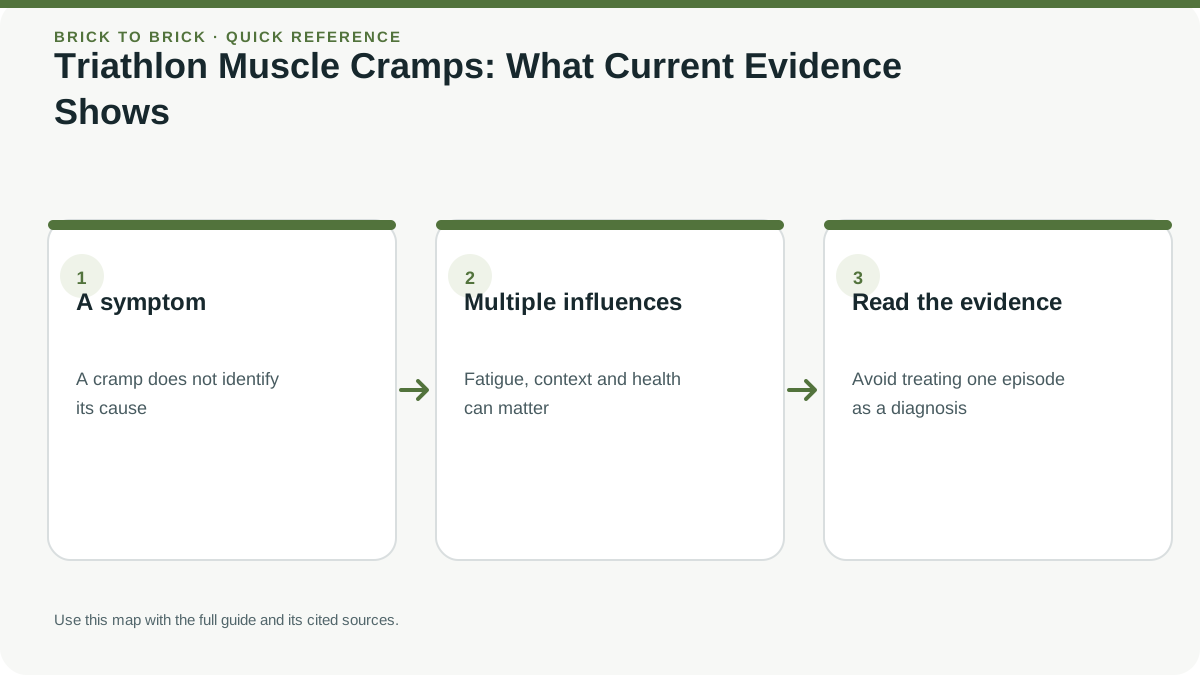
A 2026 meta-analysis found prior cramp history was the clearest measured association across nine longitudinal studies, but the evidence remains limited. A cramp itself does not diagnose hydration status, sodium loss or a treatment need. Recurrent, severe or systemic symptoms call for an appropriate professional assessment.
Key takeaways
- 1A cramp describes a painful contraction; it does not identify its cause or diagnose an electrolyte problem.
- 2A 2026 review found prior cramp history most consistently associated with later episodes, but it cannot predict one athlete's outcome.
- 3Evidence does not support one universal training, fluid or supplement formula for cramp prevention.
- 4Recurring, severe or systemic symptoms deserve assessment by a qualified professional.
In this article
- 1What a cramp can tell you in one sentence
- 2What researchers mean by an exercise-associated cramp
- 3What a 2026 systematic review found
- 4Why proposed mechanisms are not personal diagnoses
- 5A cramp is not a hydration or sodium test
- 6When repeated episodes deserve individual assessment
- 7When the question is urgent
What a cramp can tell you in one sentence
An exercise-associated muscle cramp is a real, painful involuntary contraction, but the symptom does not identify its cause. Current research does not provide a reliable way to read a cramp as a diagnosis of dehydration, low sodium, magnesium deficiency, overtraining or a particular bike-fit problem. The 2026 evidence review found that a history of prior cramps was the clearest measured association with later episodes, while results for most other risk factors were inconsistent. That finding helps set expectations; it is not an individual forecast or a prescription. This page explains what the evidence supports and where it stops. For on-course steps and preparation choices, use the separate triathlon cramp prevention guide.
What researchers mean by an exercise-associated cramp
Researchers describe an exercise-associated muscle cramp as a painful, involuntary contraction during or shortly after physical activity. It is a symptom category, not a single laboratory-confirmed disease with one known cause. A cramp can appear in a working muscle and temporarily change movement, yet similar pain or weakness can come from a strain, an illness or another problem. An athlete cannot reliably sort those conditions from a single sensation while racing.
The label also does not tell you what happened in the blood. Sodium concentration, hydration status and other clinical findings require the appropriate measurements and context; muscle location, salty clothing and the fact that a contraction occurred are not substitutes. This distinction matters because a confident-sounding explanation can lead to the wrong response, including unnecessary supplements or forced drinking.
What a 2026 systematic review found
A systematic review with meta-analysis published in September 2026 brought together nine longitudinal studies involving 11,274 participants. The researchers tested associations across 36 meta-analyses. A history of exercise-associated cramps was the clearest finding: people with a prior history had about 4.4 times the odds of another episode in the included data. This is a group-level association, not a 4.4-fold personal probability, a cause, or a claim that recurrence is inevitable. Read the 2026 systematic review for its methods and evidence ratings.
Only two other variables showed statistically significant associations: higher post-race serum potassium, supported by moderate evidence, and higher post-race magnesium, supported by limited evidence. These were measurements observed after events. They do not show that taking either mineral before a race prevents cramps, or that either measurement caused the episode. Do not turn an observational result into a supplement recommendation.
The review found strong evidence of no association with age, body mass or height. It did not find consistent results across the other examined hydration, metabolic, performance, training and routine factors. The authors also cautioned that most findings were supported by limited or very limited evidence and called for more high-quality research. The useful conclusion is narrow: prior cramp history is worth recording, but the research does not yet give triathletes a dependable risk calculator or universal prevention formula.
Why proposed mechanisms are not personal diagnoses
Earlier clinical reviews describe exercise cramps as potentially multifactorial. One commonly discussed model involves changes in neuromuscular control as an active muscle becomes fatigued. Workload, the task, individual susceptibility and environmental conditions may also be relevant. These ideas can help researchers design studies and professionals ask better questions, but they do not establish what caused one athlete's calf, hamstring or foot to cramp on a particular day. The 2022 evidence review discusses the proposed mechanisms and limits of the clinical literature.
The 2026 synthesis is useful alongside that earlier work because it examined risk factors across longitudinal studies. Its inconsistent results do not prove that fatigue, training or hydration never matter. They show that the factors commonly measured so far have not consistently predicted who cramps. A proposed mechanism, a risk-factor association and a treatment trial answer different questions; none should be presented as stronger evidence than it is.
For an athlete, this means avoiding certainty from a story that seems plausible. A cramp late in a race does not prove you went too hard, and a cramp in one muscle does not establish that your technique, shoe, saddle or gear was at fault. These are possible topics for a coach, bike fitter or clinician to assess if the pattern repeats.
A cramp is not a hydration or sodium test
A cramp cannot measure how much an athlete sweated, the sodium concentration of that sweat or the sodium level in the blood. Those are separate questions. Research on exercise-associated cramps has not established a universal sodium dose that prevents them, and one episode is not a reason to add salt capsules, magnesium or another supplement without an individual reason.
Fluid planning still matters for endurance sport, heat and general performance. It is also a separate safety issue: excessive hypotonic fluid intake during prolonged exercise can contribute to exercise-associated hyponatremia. A sports drink or extra sodium does not make overdrinking harmless. Confusion, repeated vomiting, unusual behavior, seizure or collapse during or after a long event warrants urgent medical attention; do not try to diagnose the problem from the cramp or self-treat it with more fluid or salt. See the exercise-associated hyponatremia review for clinical context.
For practical fluid decisions, read the triathlon hydration guide and sweat-rate testing guide. They cover what those measurements can estimate and what they cannot. Keep that planning separate from the evidence question answered here.
When repeated episodes deserve individual assessment
If cramps recur, happen at rest, affect several areas, become more severe, or come with persistent weakness or pain, discuss the pattern with a qualified clinician. A sports dietitian can help with nutrition questions within their scope; a coach can review training demands and a qualified bike fitter can assess position. These roles overlap only partly, so choose the professional whose expertise matches the question rather than treating a single theory as confirmed.
A short record can make that conversation more useful. Note the sport, approximate point in the session, what the muscle was doing, whether movement stopped, how long symptoms lasted, whether it has happened before and what else was going on. Include recent illness, medication or supplement changes when relevant, and bring the event or training context. A log helps describe a pattern; it cannot diagnose an electrolyte problem or replace an examination.
When the question is urgent
A localized cramp is not the only possible explanation for an athlete who becomes unwell. Stop exercise and seek urgent medical help for confusion, altered behavior, collapse, fainting, seizure, chest symptoms, severe weakness, repeated vomiting, dark urine with marked muscle pain, or symptoms that persist or worsen. Altered mental status or collapse during exertion in heat is an emergency. Follow event medical instructions or local emergency procedures rather than trying a supplement or forcing fluids. See current CDC guidance for athletes in heat.
This is a brief safety boundary, not a diagnostic checklist. The companion prevention and race-response guide gives practical on-course steps; the heat-illness guide explains why urgent symptoms need a different response from an uncomplicated local cramp.
Sources
Sources are listed so readers can verify consequential claims and dated details.
- Risk Factors for Exercise-Associated Muscle Cramps: A Systematic Review With Meta-Analysis — Muscle & Nerve (2026) (accessed September 30, 2026)
- An Evidence-Based Review of the Pathophysiology, Treatment, and Prevention of Exercise-Associated Muscle Cramps — Journal of Athletic Training (2022) (accessed September 30, 2026)
- Exercise-Associated Hyponatremia: 2017 Update — Frontiers in Medicine (accessed September 30, 2026)
- Heat and Athletes — U.S. Centers for Disease Control and Prevention (accessed September 30, 2026)
- Heat-related Illnesses — U.S. National Institute for Occupational Safety and Health (accessed September 30, 2026)