Can You Change Clothes During a Triathlon? Rules and When It's Worth It
Yes — you can change clothes during a triathlon, but only in a designated area. Learn the no-nudity rule, where you're allowed to change, when a full change is worth the time, and how to do it fast.
By Lotte
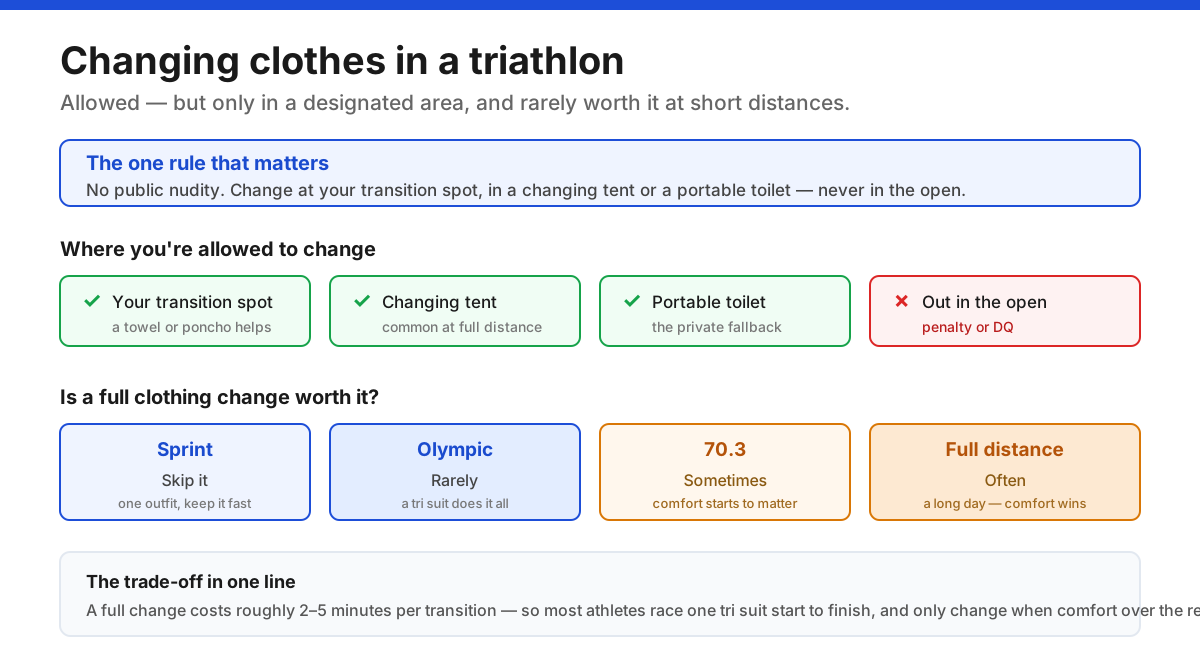
Yes, you can change clothes during a triathlon — but only in a designated area, and the one rule that really matters is no public nudity. Most athletes race in a single tri suit from start to finish because a full change costs a couple of minutes per transition; changing becomes genuinely worthwhile mainly at long-course events, where comfort over a long day outweighs the lost time.
Key takeaways
- 1You can change clothes, but it must happen in a designated area — your transition spot, a changing tent, or a portable toilet. Public nudity risks a penalty or disqualification.
- 2The exact rules and penalties vary by governing body and event, so always confirm your race's own athlete guide rather than assuming.
- 3Most athletes at every distance race in a single tri suit; a full outfit change is the exception, not the norm.
- 4Full-distance (Ironman) events usually provide changing tents in T1 and T2; sprint and Olympic races usually don't.
- 5A full change adds roughly 2–5 minutes per transition — trivial over a 12-hour day, significant in a one-hour sprint.
In this article
- 1The short answer
- 2The one rule that actually matters: no public nudity
- 3Where you're allowed to change
- 4What "changing" usually means in a triathlon
- 5The default: one tri suit, start to finish
- 6When a full clothing change is actually worth it
- 7How the full-distance changing tent works
- 8How to change fast if you decide to
- 9Changing for the weather
- 10Notes for women and other specifics
- 11The bottom line
- ⚖Should you change clothes? A quick guide by distance
- ?Frequently asked questions
The short answer
Yes — you can change clothes during a triathlon. It's allowed, and many long-course events even provide tents for it. But there's an important condition and a practical reality behind that yes.
The condition: you have to change in a designated area, not out in the open (more on that below). The reality: the vast majority of triathletes, from first-timers to professionals, wear the same outfit for the entire race. A tri suit is purpose-built to swim, bike and run in, so a full outfit change is usually unnecessary and simply costs time.
When athletes do change, it's for one of two reasons: comfort (dry, fresh kit for a long run leg) or temperature (adding or shedding layers for the conditions). This guide covers when each of those is actually worth it — and how to do it without wrecking your race.
The one rule that actually matters: no public nudity
Across the sport's rulebooks, the headline rule is the same: no public nudity. Exposing your torso or lower body in full view of other athletes and spectators can earn a penalty or disqualification, and it applies equally to everyone.
Both World Triathlon and USA Triathlon frame changing as something that happens within the transition area or a designated changing space, with nudity and indecent exposure treated as a conduct offence. What that means in practice is simple: getting fully changed is fine, but where you do it is not up to interpretation.
The important caveat is that specific wording, penalties and procedures vary between governing bodies and individual events — an independent series can set stricter or looser arrangements than a federation race. So treat this as the general principle and confirm the detail in your event's own athlete guide or competition rules. When in doubt, use a changing tent or a portable toilet and you'll never be on the wrong side of the rule.
Where you're allowed to change
There are three places you can reliably change without a problem:
- At your own transition spot. Swapping tops, adding arm warmers or changing shoes at your bike rack is completely normal. A towel around the waist or a changing poncho lets you manage underwear discreetly without exposure.
- In a changing tent. Full-distance events almost always provide gender-separated changing tents in T1 and T2, staffed by volunteers, where a complete change is expected and easy.
- In a portable toilet. The universal fallback when there's no tent and you need full privacy. Slower and cramped, but always available.
The one place you can't is out in the open. If your race has no changing tent (typical for sprint and Olympic), plan to either keep the same kit throughout or use a toilet for any full change. Knowing this in advance stops you from improvising something that gets you penalised. For the wider rulebook context, see the triathlon rules overview.
What "changing" usually means in a triathlon
It's worth separating two very different things people mean by "changing clothes," because they're governed by the same nudity rule but sit at opposite ends of how common they are.
Swapping equipment — pulling off a wetsuit, putting on a helmet and sunglasses, switching from bike shoes to running shoes, clipping on a race belt — happens in every triathlon and isn't really "changing clothes" at all. Nobody skips it, and it's the core of a good transition. The step-by-step of doing it fast lives in the T1 and T2 transition mastery guide.
Changing your actual clothing — taking off and replacing your tri suit, shorts, top, socks or sports bra — is the rarer case. It's what most people are asking about, and it's almost always a long-course or bad-weather decision rather than a default. Most of this guide is about that decision: whether it's worth the time, and how to do it well.
The default: one tri suit, start to finish
For most races at most distances, the fastest and simplest approach is to wear a single tri suit the whole way and change nothing but equipment:
- Swim: tri suit, with a wetsuit over the top if the water's cold and wetsuits are legal.
- T1: peel the wetsuit, helmet on, sunglasses, bike shoes — ride.
- T2: helmet off, running shoes on, race belt round — run.
Total clothing changes: zero. That's not a compromise — a good tri suit is designed with a slim, quick-drying chamois that swims, rides and runs without soaking up water or chafing. It's the single best purchase for simplifying race day, which is why it tops most first-triathlon gear essentials lists. If you're choosing one, the tri suit guide covers fit and pad-weight by distance, and what to wear during a triathlon covers the layers around it. Get the suit right and the question of changing clothes mostly disappears.
When a full clothing change is actually worth it
The decision comes down to one trade-off: the time cost of changing (roughly 2–5 minutes once you factor in wet skin, fiddly kit and a crowded tent) against the comfort benefit over the distance you have left. That balance shifts hard as races get longer:
- Sprint: essentially never. The whole race is about an hour; a change costs a meaningful chunk of your finish time for comfort you won't be racing long enough to need.
- Olympic: rarely. A tri suit handles two-to-three hours comfortably. The occasional athlete adds shorts, but it's uncommon.
- 70.3 (middle distance): sometimes. Five to seven hours is long enough that fresh, dry kit for the half marathon can be worth a couple of minutes to some athletes — especially in wet or cold conditions.
- Full distance (Ironman): often. Over a day that can stretch past twelve hours, comfort genuinely affects whether you finish well. Dry socks, fresh shorts and a clean top for the marathon are a common, sensible choice.
If you're not sure your race even suits your clothing plan, the broader pacing-and-comfort picture is in transition strategies, which treats these as decisions, not reflexes.
How the full-distance changing tent works
If you've never done a long-course race, the changing tent can be a surprise, so it helps to know the flow. After you rack your bike (or hand it to a catcher), you grab your run gear bag — pre-packed and hung on a numbered hook — and head into a gender-separated tent.
Inside, there are chairs, volunteers to help, and space to sit and change. You empty your bag, put on what you need, stuff your bike kit back into the same bag, and hand it off or leave it for collection. Volunteers are used to seeing tired, fumbling athletes and will help you find things, apply sunscreen, or refill bottles — but they can't make decisions for you, so know your plan.
Two tips: don't treat it as a rest stop. It's easy to lose ten minutes sitting down when you only needed three. And pack the bag in the order you'll use it — socks and shoes on top, nutrition where you can grab it. A tidy bag is the difference between a two-minute change and a ten-minute one. Your overall bag system is worth rehearsing alongside your race-day packing checklist.
How to change fast if you decide to
If a change is part of your plan, treat it like any other skill and rehearse it so race day isn't the first attempt:
- Practise it in training. Time yourself changing on tired legs. You'll discover that wet skin fights dry fabric and that socks are the slowest item.
- Lay the bag out in order. Know exactly where each piece is before you reach in. Fumbling is where the minutes go.
- Sit down for socks and shoes. Balancing on one leg after a long ride wastes time and risks a fall.
- Roll socks and pre-loosen shoes so they go on in one motion.
- Anti-chafe first. A quick reapplication of anti-chafe balm on fresh skin prevents the exact discomfort that made you want to change in the first place.
The goal isn't to change as little as possible — it's to make whatever change you've chosen deliberate and quick, so it's a net gain rather than lost time.
Changing for the weather
Temperature, not comfort, is the other reason to add or shed clothing — and it's the one where a small change pays off even at shorter distances:
- Cold starts: arm warmers, a gilet or a light packable jacket you can put on in T1 and then peel and stash (or drop at an aid station) once you warm up. These add seconds, not minutes.
- Cold, wet rides: a dry base layer or top for the bike can be the difference between staying functional and getting too cold to race well.
- Hot races: the bigger risk is over-dressing. Keep layers minimal, favour light colours, and don't add anything that traps heat — see racing a triathlon in heat for how conditions change your kit.
- Long, wet run legs: dry socks are the highest-value change of all — wet socks over a marathon are a blister guarantee.
As with everything on race day, the rule is nothing new: test any clothing swap in a brick session or long training day before you rely on it.
Notes for women and other specifics
A few common questions that sit under the same rules:
- Sports bra: wearing one under your tri suit is completely normal and won't affect the fit if the suit's sized right. Some women change into a dry sports bra in T2 for a long-course run — perfectly acceptable inside a changing tent.
- Two-piece kit and bathroom access: many long-course women choose a two-piece tri kit or a suit with a long rear zip specifically so a mid-race toilet stop is quick. That practical choice is covered in the tri suit guide.
- Period products: manage these in a toilet or changing tent like any other private task; there's nothing in the rules against it, and long-course changing tents are set up for it.
- Underwear: you don't wear any under a tri suit — the chamois replaces it — but if you're changing fully, a towel or poncho keeps you covered and compliant.
None of this is unusual to officials or volunteers. The only thing to plan is where, not whether.
The bottom line
You can change clothes during a triathlon, provided you do it in a designated area and never in the open. But for most athletes at most distances, the better answer is: don't. A single well-fitting tri suit, a good anti-chafe routine, and a fast equipment-only transition beat a full change on time every time.
Save clothing changes for where they earn their keep — long-course comfort, or genuine weather needs — and rehearse them so they're quick and deliberate. Then confirm the specifics for your event, because rules, penalties and whether a changing tent even exists all vary.
To build the rest of your race-day flow around this, see transition strategies for the decisions, the T1/T2 mastery guide for fast execution, what to wear during a triathlon for the kit itself, and what happens on race day for the full picture.
Should you change clothes? A quick guide by distance
| Distance | Changing tent typical? | Full change worth it? | What most athletes do |
|---|---|---|---|
| Sprint | No | Almost never | One tri suit, equipment-only transitions |
| Olympic | No / rare | Rarely | One tri suit start to finish |
| 70.3 | Sometimes | Sometimes | Usually one suit; dry kit if wet/cold |
| Full distance | Yes (T1 & T2) | Often | Fresh socks, shorts and top for the run |
Sources
Sources are listed so readers can verify consequential claims and dated details.
- World Triathlon Competition Rules 2026 — World Triathlon (accessed September 20, 2026)
- Multisport Competition Rules — USA Triathlon (accessed September 20, 2026)
Frequently asked questions
Will I get disqualified for changing clothes?
Not for changing itself — only for where you do it. Change at your transition spot, in a changing tent, or in a portable toilet and you're fine. Public nudity, meaning exposing yourself out in the open, can result in a penalty or disqualification. The exact penalties vary by event, so check your race's athlete guide.
Do Ironman and long-course races have changing rooms?
Yes. Full-distance events almost always provide gender-separated changing tents in both T1 and T2, with volunteers to help. Half-distance (70.3) events sometimes have them. Sprint and Olympic races usually don't, so you'd change at your rack or use a toilet.
Should I bring extra clothes to transition?
For sprint and Olympic, no — keep it simple with one tri suit. For long course, often yes: pack a run-gear bag with dry socks, fresh shorts or a top, and anti-chafe balm for T2. Pack it in the order you'll use it so the change is quick.
Can I change my shoes between disciplines?
Yes, and almost everyone does. Switching from bike shoes to running shoes in T2 is standard. Some beginners ride in running shoes to skip the change entirely, which is a perfectly valid time-versus-simplicity trade-off.
Is it faster to not change clothes?
Yes. A full clothing change adds roughly 2–5 minutes per transition. In a one-hour sprint that's a big share of your finish time; over a 12-hour Ironman it's trivial next to the comfort it buys. Match the decision to the distance.
How do I change clothes without breaking the nudity rule?
Use a changing tent or portable toilet for a full change, or a towel or changing poncho at your transition spot to stay covered. Never strip fully out in the open. When there's no tent, the toilet is your reliable private option.