Plant-Based Triathlete Nutrition: A Complete Vegan and Vegetarian Guide
How to fuel triathlon training and racing on a vegan or vegetarian diet: energy, protein targets and sources, iron, B12, calcium, vitamin D, omega-3, iodine, zinc and creatine, with a sample training day, race fuelling and a supplement checklist.
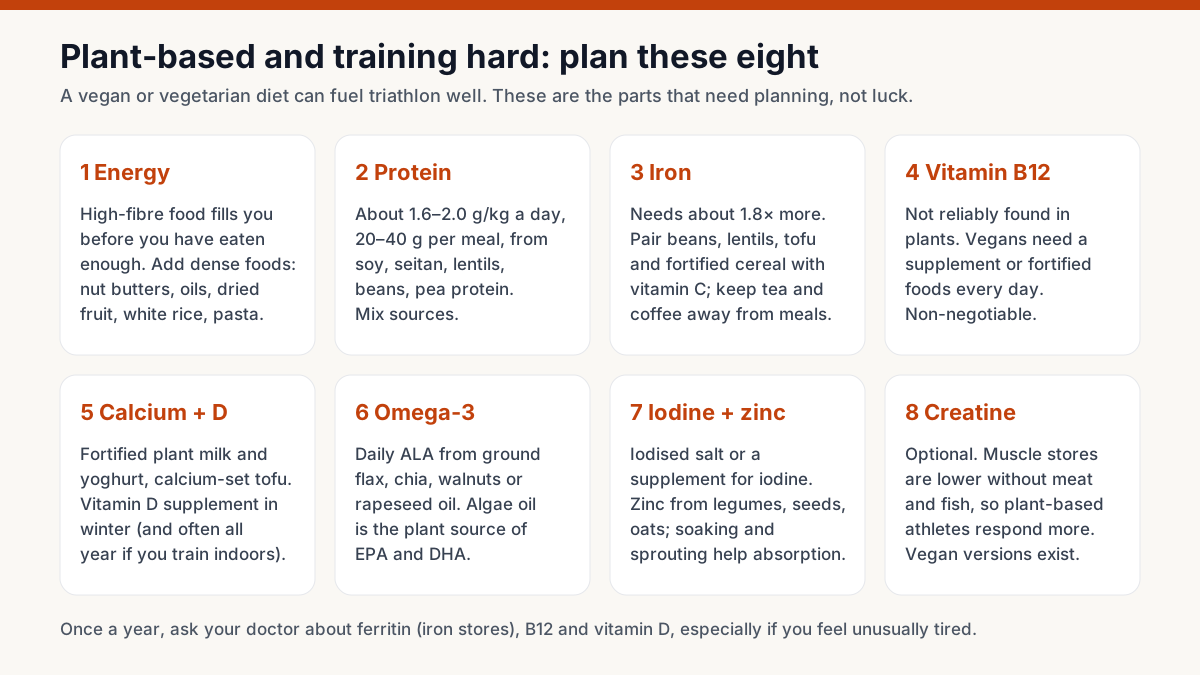
A well-planned vegan or vegetarian diet can fully support triathlon training and racing; the Academy of Nutrition and Dietetics states that appropriately planned vegetarian diets are suitable for athletes. Planning matters in eight places: eating enough total energy despite bulky, high-fibre food; getting about 1.6–2.0 g of protein per kg of body weight a day from mixed sources; iron (vegetarians need about 1.8 times the usual intake); vitamin B12, which vegans must take as a supplement or fortified food; calcium and vitamin D; omega-3 fats; iodine and zinc; and, optionally, creatine. Race fuel is largely plant-based already, but check chews, bars and recovery drinks for gelatine, whey and honey.
Key takeaways
- 1Appropriately planned vegan and vegetarian diets support endurance sport; the risk is an unplanned diet, not the absence of meat
- 2The most common problem is not eating enough: fibre-rich plant foods fill you up before you have met the energy cost of training
- 3Aim for roughly 1.6–2.0 g protein per kg a day, about 20–40 g per meal, from soy, seitan, legumes and pea or soy protein
- 4Vegetarians need about 1.8 times the usual iron intake; combine plant iron with vitamin C and keep tea and coffee away from iron-rich meals
- 5Vegans must take vitamin B12 as a supplement or from fortified foods; also plan iodine, vitamin D, calcium and omega-3
- 6Switch to lower-fibre carbohydrate in the day or two before a race to protect your gut
- 7Ask a doctor to check ferritin, B12 and vitamin D if you feel unusually tired, and get individual advice from a sports dietitian if you are restricting food or have lost periods
Quick answer: can you train for a triathlon on a plant-based diet?
Yes. A vegan or vegetarian diet can fuel everything from a first sprint to a full-distance IRONMAN. The Academy of Nutrition and Dietetics, the largest professional body of dietitians in the US, states in its position paper that appropriately planned vegetarian and vegan diets are healthful, nutritionally adequate and appropriate for athletes.
The key word is planned. Training for three sports increases your needs for energy, carbohydrate and protein, and a plant-based diet changes where some nutrients come from. Most problems plant-based triathletes run into are predictable and easy to prevent:
| What to plan | Why it matters | The short fix |
|---|---|---|
| Total energy | Plant foods are bulky and high in fibre, so you can feel full before you have eaten enough | Add energy-dense foods and an extra snack on big days |
| Protein | Plant proteins are slightly less digestible and lower in some amino acids | About 1.6–2.0 g/kg a day, 20–40 g per meal, mixed sources |
| Iron | Plant (non-haem) iron is less well absorbed | About 1.8× the usual intake; pair with vitamin C |
| Vitamin B12 | Not reliably present in plant foods | Supplement or fortified foods, every day (vegans) |
| Calcium and vitamin D | No dairy for vegans; little sun in winter | Fortified plant milk, calcium-set tofu; vitamin D supplement |
| Omega-3 | No oily fish | Flax, chia, walnuts, rapeseed oil; consider algae oil |
| Iodine and zinc | Low in many plant diets | Iodised salt or a supplement; legumes, seeds, wholegrains |
| Creatine | Lower muscle stores without meat and fish | Optional supplement |
The rest of this page explains each line, gives practical food amounts, a sample training day and race-week advice.
Vegan, vegetarian or "mostly plants": what changes
"Plant-based" covers a wide range of diets, and the planning needed depends on which one you follow:
- Vegan: no animal products at all. All eight points above apply, and B12 is essential.
- Lacto-ovo vegetarian: eggs and dairy, no meat or fish. Protein, B12, calcium and iodine are much easier; iron, omega-3 and creatine still need thought.
- Pescatarian: adds fish, which supplies omega-3, B12, iodine and good-quality protein. Iron is the main thing left to watch.
- Flexitarian or "mostly plants": occasional meat or fish. Usually few gaps if the diet is varied.
The more food groups you exclude, the more deliberately you need to plan. That is true of any diet, not just plant-based ones.
Energy first: the problem most plant-based athletes do not see
The most common nutritional problem in endurance athletes on any diet is simply not eating enough for the training they do. Plant-based athletes are at higher risk, for a simple reason: beans, lentils, wholegrains, vegetables and fruit are high in fibre and water, so they fill your stomach with relatively few calories. You can eat a big, healthy-looking plate and still be hundreds of calories short of what a long training day burned.
Long-term underfuelling has a name: relative energy deficiency in sport (REDs). The 2023 International Olympic Committee consensus statement describes how low energy availability affects hormones, bone health, immunity, mood, recovery and performance, in men as well as women. Warning signs include:
- Persistent tiredness, poor recovery and training that stops improving.
- Frequent colds or minor injuries, especially bone stress injuries.
- Irregular or absent periods (never a normal side-effect of training).
- Low libido, poor sleep, irritability, feeling cold.
- Unplanned weight loss.
How to make sure you eat enough on a plant-based diet:
- Include energy-dense foods every day: nut and seed butters, nuts, seeds, avocado, olive and rapeseed oil, dried fruit, tahini, hummus, coconut yoghurt, granola.
- Use some lower-fibre carbohydrate on big training days: white rice, pasta, white bread, couscous, potatoes without skins, rice cakes. Wholegrains are healthy, but you do not need every carbohydrate to be wholegrain.
- Drink some of your energy: smoothies with oats, banana, soy milk and peanut butter; fortified soy milk; recovery shakes.
- Add a snack for each extra hour of training. A three-hour Saturday ride needs more food that day, not the same food as a rest day.
- Watch the trend, not one day. If your weight drifts down over weeks of heavy training without that being your aim, you are underfuelling.
If you notice the warning signs above, or if you find yourself restricting food for weight or body-shape reasons, speak to a doctor and a sports dietitian. Our nutrition for a sensitive stomach guide also covers how to eat more when appetite or gut comfort is a limit.
Protein: how much and from what
Endurance athletes need more protein than inactive people to repair and adapt muscle. The ACSM, Academy of Nutrition and Dietetics and Dietitians of Canada joint position stand gives a range of 1.2–2.0 g per kg of body weight a day for athletes. Plant proteins are, on average, slightly less digestible and lower in some essential amino acids, particularly leucine and lysine, so many sports dietitians suggest plant-based athletes aim for the upper half of that range, around 1.6–2.0 g/kg. Our main protein requirements guide explains the full evidence.
For a 65 kg athlete, 1.6–2.0 g/kg is about 105–130 g of protein a day. Spread it out:
- 20–40 g at each main meal and 10–20 g in snacks.
- After hard or long sessions, about 0.3 g/kg (about 20 g for a 65 kg athlete, a little more from plant sources).
- Before bed, an optional 20–40 g protein snack such as soy yoghurt or a soy milk shake.
Mixing sources over the day covers the amino-acid differences. You do not need to combine proteins in the same meal; the old "protein combining" rule is outdated.
Typical protein in common plant foods (values vary by brand and recipe, so check labels):
| Food | Portion | Protein |
|---|---|---|
| Seitan | 100 g | about 20–25 g |
| Tempeh | 100 g | about 19–20 g |
| Firm tofu | 100 g | about 12–17 g |
| Edamame beans | 150 g | about 16 g |
| Lentils, cooked | 200 g | about 18 g |
| Chickpeas or beans, cooked | 200 g | about 14–17 g |
| Pea or soy protein powder | 30 g scoop | about 20–25 g |
| Soy milk | 250 ml | about 7–8 g |
| Soy yoghurt (high protein) | 150 g | about 8–15 g |
| Oats | 80 g dry | about 10 g |
| Wholemeal bread | 2 slices | about 8–10 g |
| Peanut butter | 2 tablespoons (32 g) | about 7–8 g |
| Pumpkin seeds | 30 g | about 9 g |
| Eggs (vegetarians) | 2 large | about 12–13 g |
| Greek yoghurt (vegetarians) | 150 g | about 15 g |
Soy is the most complete single plant protein and has the most research behind it for muscle protein synthesis. Normal dietary amounts of soy are considered safe for men and women; the old concerns about hormones are not supported at the intakes found in food. Pea protein is a good alternative for people who avoid soy, and pea-rice blends improve the amino-acid profile.
Leucine is the amino acid that most strongly triggers muscle protein synthesis. Plant proteins contain a little less of it, so slightly larger portions (for example 30–40 g rather than 20–25 g after a hard session) help reach a similar effect.
Carbohydrate: the easy part, with one trap
Carbohydrate is the main fuel for triathlon training and racing, and plant-based diets are naturally rich in it. Daily needs scale with training:
| Training day | Carbohydrate |
|---|---|
| Light (under about 1 hour, easy) | about 3–5 g/kg |
| Moderate (about 1 hour a day) | about 5–7 g/kg |
| Heavy (1–3 hours, some intensity) | about 6–10 g/kg |
| Very heavy (over 4–5 hours) | about 8–12 g/kg |
These ranges come from the ACSM joint position stand. The trap is fibre: meeting 7–10 g/kg of carbohydrate entirely from beans, wholegrains and vegetables can mean 60–80 g of fibre a day, which causes bloating and wind and makes it hard to eat enough. On heavy days, get a good share of your carbohydrate from lower-fibre sources: white rice and pasta, bread, potatoes, rice cakes, bananas, juice, dried fruit and sports products.
Iron: the nutrient to watch most closely
Iron carries oxygen in your blood. Endurance athletes lose more iron than inactive people, through sweat, the gut and the breakdown of red blood cells from foot strike in running. Women who menstruate lose more still. Our periods and triathlon guide explains how heavy periods affect iron and when to ask for a ferritin test.
Plant foods contain non-haem iron, which is absorbed less efficiently than the haem iron in meat. That is why the US Institute of Medicine, as summarised by the NIH Office of Dietary Supplements, sets the iron requirement for vegetarians at 1.8 times the usual amount: about 32 mg a day for women aged 19–50 and 14 mg for men, instead of 18 mg and 8 mg.
Good plant sources of iron include lentils, chickpeas, beans, tofu, tempeh, fortified breakfast cereals, oats, pumpkin seeds, quinoa, dark green vegetables and dried apricots. To get more of it into your blood:
- Add vitamin C to iron-rich meals: peppers, tomatoes, citrus, kiwi, strawberries, broccoli or a glass of orange juice can multiply non-haem iron absorption.
- Keep tea and coffee away from iron-rich meals. Their polyphenols reduce absorption. Leave about an hour.
- Soak, sprout or ferment grains and legumes where you can; it reduces phytates that bind iron.
- Calcium supplements taken with an iron-rich meal also reduce absorption; take them at another time.
Do not take iron supplements "just in case". Too much iron is harmful. If you are tired, short of breath, pale or your training has stalled, ask your doctor to check your ferritin (iron stores) and haemoglobin. Many sports doctors check ferritin once or twice a year in endurance athletes, especially women and plant-based athletes. If your stores are low, they will advise on a supplement and a recheck.
Vitamin B12: non-negotiable for vegans
Vitamin B12 is needed for red blood cells and the nervous system. It is made by bacteria and is not reliably present in plant foods; seaweed, spirulina and unwashed vegetables are not dependable sources. Deficiency develops slowly and can cause anaemia, fatigue and nerve damage that may not be fully reversible.
- Vegans need B12 every day from fortified foods (some plant milks, breakfast cereals, yeast extract, nutritional yeast) or a supplement. The NHS advises vegans to make sure they get it from one of these.
- Vegetarians get some from eggs and dairy, but many still benefit from fortified foods.
- The adult recommended intake is about 2.4 µg a day (NIH) or 1.5 µg (UK). Supplements usually provide much more because absorption from a single large dose is low; a daily or weekly supplement as recommended by a pharmacist or doctor is the simplest approach.
Calcium and vitamin D: bones under load
Running and long training weeks load your skeleton, and bone stress injuries are common in endurance athletes, particularly when energy intake is low. Calcium and vitamin D work together for bone health.
- Calcium: about 700 mg a day (UK) to 1,000 mg (US adults). Good vegan sources are calcium-fortified plant milks and yoghurts (shake the carton: the calcium settles), calcium-set tofu (check for calcium sulphate on the label), fortified bread in some countries, kale, pak choi, almonds, tahini and dried figs. Two glasses of fortified plant milk and a portion of calcium-set tofu cover most of a day's needs.
- Vitamin D: most people in northern latitudes cannot make enough from sunlight between about October and March. The NHS advises everyone in the UK to consider a 10 µg (400 IU) supplement in autumn and winter. Triathletes who train mostly indoors, cover up in winter, or have darker skin may need it all year. Many vitamin D3 supplements come from lanolin (sheep's wool); vegan D3 from lichen and vitamin D2 are available.
Omega-3 fats
Oily fish is the main dietary source of the long-chain omega-3 fats EPA and DHA. Plant foods provide ALA, a shorter omega-3 that the body converts to EPA and DHA only in small amounts.
- Include a daily source of ALA: a tablespoon of ground flaxseed, chia seeds, a handful of walnuts, or cooking with rapeseed (canola) oil.
- Consider an algae oil supplement, the plant source of EPA and DHA (fish get theirs from algae too), especially if you are vegan.
- Evidence that omega-3 supplements improve triathlon performance is limited. The reason to include them is general health, not a race-day effect.
Iodine, zinc and calcium's quieter partners
Iodine is needed for thyroid hormones, which govern metabolism. Dairy, fish and eggs are the main sources in many countries, so vegans are at higher risk of low intake. Options are iodised salt (where available; you only need a small amount), or a supplement with about 150 µg. Seaweed is not recommended as a regular source because its iodine content varies enormously and can be too high.
Zinc supports immunity and tissue repair. Plant foods contain zinc but also phytates that reduce absorption, and the NIH notes that vegetarians may need up to 50% more zinc than non-vegetarians. Good sources are legumes, tofu, tempeh, nuts, seeds (especially pumpkin and hemp), oats and wholegrains. Soaking, sprouting and leavened bread improve absorption.
Creatine: an optional extra with a stronger case for plant-based athletes
Creatine is stored in muscle and helps with short, high-intensity efforts. Meat and fish provide some, so vegetarians and vegans tend to have lower muscle creatine stores, and studies reviewed by Rogerson (2017) found that they respond more strongly to supplementation.
For triathlon, the benefit is mainly in the gym, in sprint sessions and possibly in recovery, not in steady endurance. Creatine also commonly causes 1–2 kg of water-weight gain, which is a downside for climbing and running. If you want to try it, a common approach is 3–5 g a day of creatine monohydrate (which is made synthetically and is vegan). Choose a product that is batch-tested for banned substances if you race under anti-doping rules. Our supplements by evidence guide puts creatine in context with caffeine, nitrate and other options.
A sample plant-based training day
This is an example for a 65 kg vegan athlete on a heavy day: a 60-minute morning swim and a 90-minute evening ride with intervals. It provides roughly 2,900–3,100 kcal, 450–500 g of carbohydrate (about 7 g/kg) and 115–125 g of protein (about 1.8 g/kg). Your own needs may be higher or lower.
| When | What | Protein (approx.) |
|---|---|---|
| Before the swim | Banana and a slice of toast with jam | 4 g |
| Breakfast after the swim | 80 g oats cooked in 300 ml fortified soy milk, with berries, 1 tbsp ground flax and 1 tbsp peanut butter | 25 g |
| Mid-morning | Soy yoghurt with granola | 12 g |
| Lunch | Wholemeal wrap with 100 g smoked tofu, hummus, salad and peppers; an orange | 28 g |
| Afternoon | Rice cakes with peanut butter and banana | 9 g |
| During the ride | 500 ml sports drink and one gel (about 50–60 g carbohydrate) | 0 g |
| After the ride | Recovery shake: 30 g pea protein, 300 ml soy milk, banana, oats | 30 g |
| Dinner | Lentil and chickpea curry with white rice, spinach and tomatoes | 22 g |
| Supplements | B12; vitamin D in winter; iodine; algae oil (optional) |
Notice the lower-fibre choices around training (white rice at dinner, toast before the swim), the vitamin C with the iron-rich lunch and dinner, and the protein spread across five eating occasions.
For more recovery meal ideas, see post-workout recovery meals and the recovery nutrition guide.
Race week and race day on plants
Carb-loading. In the two days before a long race, many athletes raise carbohydrate to about 8–12 g/kg a day for races over 90 minutes. On a plant-based diet, this is the time to deliberately cut fibre: white pasta, white rice, white bread, potatoes without skins, juice, sports drinks and low-fibre cereals, with smaller portions of beans, lentils and raw vegetables. A gut full of fibre on race morning is the most common plant-based race-day problem. Our carb-loading guide explains the full method.
Race breakfast. Familiar, low-fibre and low-fat: porridge made with water or plant milk, white toast with jam or banana, a rice pudding, or a bagel with syrup.
During the race. Most gels and sports drinks are already vegan, but check the labels:
- Chews and gummies often contain gelatine (from animals). Vegan versions use pectin.
- Some gels and bars contain honey, which some vegans avoid.
- Recovery drinks are often made from whey or milk protein.
- Bars may contain milk chocolate, whey or collagen.
- Cola and aid-station drinks are usually fine; check the race's sponsor products in advance.
Plan your race nutrition, including real-food options like rice cakes and potatoes, with the race nutrition calculator, and see homemade race food recipes for vegan options you can make yourself.
Supplements checklist and blood tests
A practical starting list for a vegan triathlete:
| Supplement | Who | Notes |
|---|---|---|
| Vitamin B12 | All vegans | Daily or weekly, as advised by a pharmacist or doctor |
| Vitamin D | Most people in autumn and winter; some all year | 10 µg (400 IU) is the UK public-health advice; check vegan source |
| Iodine | Vegans without iodised salt | About 150 µg; avoid seaweed supplements |
| Algae oil (EPA/DHA) | Optional | For general health |
| Iron | Only if a blood test shows low stores | Under medical advice; recheck |
| Calcium | If intake from fortified foods is low | Take away from iron-rich meals |
| Creatine | Optional | Batch-tested for banned substances if you race under anti-doping rules |
Supplements are less regulated than medicines and some have been found to contain banned substances. If you compete under anti-doping rules, choose third-party tested products.
A sensible routine is to ask your doctor for a blood test once a year that includes ferritin, haemoglobin, B12 and vitamin D, and at any time you feel unusually tired or your training stalls without an obvious reason.
Common mistakes plant-based triathletes make
- Replacing meat with vegetables, not protein. Taking meat off the plate and adding more salad leaves a protein and energy gap. Replace it with tofu, tempeh, seitan, legumes or a protein-rich meat alternative.
- Eating "clean" but not enough. A diet of salads, wholegrains and vegetables can be very healthy and still far too low in energy for 10 hours of training a week.
- Skipping B12 because you feel fine. Deficiency can take years to show.
- High fibre on race morning. A big bowl of bran cereal and beans is not race fuel.
- Relying on ultra-processed meat substitutes for everything. They can be useful, but vary a lot in protein and salt; whole foods like legumes, tofu and tempeh should do most of the work.
- Self-prescribing iron. Test, then treat.
When to see a professional
Get individual advice from a registered sports dietitian if you are new to a plant-based diet and training for a long race, if you have lost weight or periods, if you have a history of disordered eating, if you have a medical condition such as coeliac disease, IBS or anaemia, or if you are pregnant. A dietitian can also help you work out your own energy and protein needs rather than relying on general ranges.
Sources
Sources are listed so readers can verify consequential claims and dated details.
- Position of the Academy of Nutrition and Dietetics: vegetarian diets (2016) — Journal of the Academy of Nutrition and Dietetics (accessed November 21, 2026)
- Nutrition and athletic performance: ACSM, AND and DC joint position statement (2016) — Medicine & Science in Sports & Exercise (accessed November 21, 2026)
- Vegan diets: practical advice for athletes and exercisers (Rogerson, 2017) — Journal of the International Society of Sports Nutrition (accessed November 21, 2026)
- 2023 IOC consensus statement on relative energy deficiency in sport (REDs) — British Journal of Sports Medicine (accessed November 21, 2026)
- Iron fact sheet for health professionals — NIH Office of Dietary Supplements (accessed November 21, 2026)
- Vitamin B12 fact sheet for health professionals — NIH Office of Dietary Supplements (accessed November 21, 2026)
- Zinc fact sheet for health professionals — NIH Office of Dietary Supplements (accessed November 21, 2026)
- The vegan diet — NHS (accessed November 21, 2026)
Frequently asked questions
Can you do an IRONMAN on a vegan diet?
Yes. Many vegan athletes complete and compete at full distance. The keys are eating enough total energy during heavy training, meeting protein and micronutrient needs, and practising a vegan race-fuelling plan in training.
How much protein does a vegan triathlete need?
Roughly 1.6–2.0 g per kg of body weight a day, at the upper end of the 1.2–2.0 g/kg range for athletes, spread across meals of about 20–40 g. For a 70 kg athlete that is about 110–140 g a day.
Do vegan triathletes need supplements?
Vegans need vitamin B12 from a supplement or fortified foods. Most people in northern countries also benefit from vitamin D in winter, and vegans should consider iodine and possibly algae-based omega-3. Iron should only be supplemented after a blood test.
Are energy gels vegan?
Most gels and sports drinks are vegan, but some contain honey, and many chews contain gelatine. Recovery drinks often contain whey. Check each label.
Is soy safe for male and female athletes?
Yes. At the amounts found in normal diets, soy foods have not been shown to cause hormonal problems in men or women, and soy is one of the best plant protein sources for athletes.
Will a plant-based diet make me faster?
There is no good evidence that a plant-based diet improves triathlon performance on its own, or that it harms it when well planned. Choose it for your own reasons, and plan it well.