Triathlon Wetsuits: How Yours Should Fit and How to Use It
How a triathlon wetsuit should fit, how to put it on without tearing it, how to strip it fast in T1, and the water-temperature rules that decide when you can wear one.
By Lotte
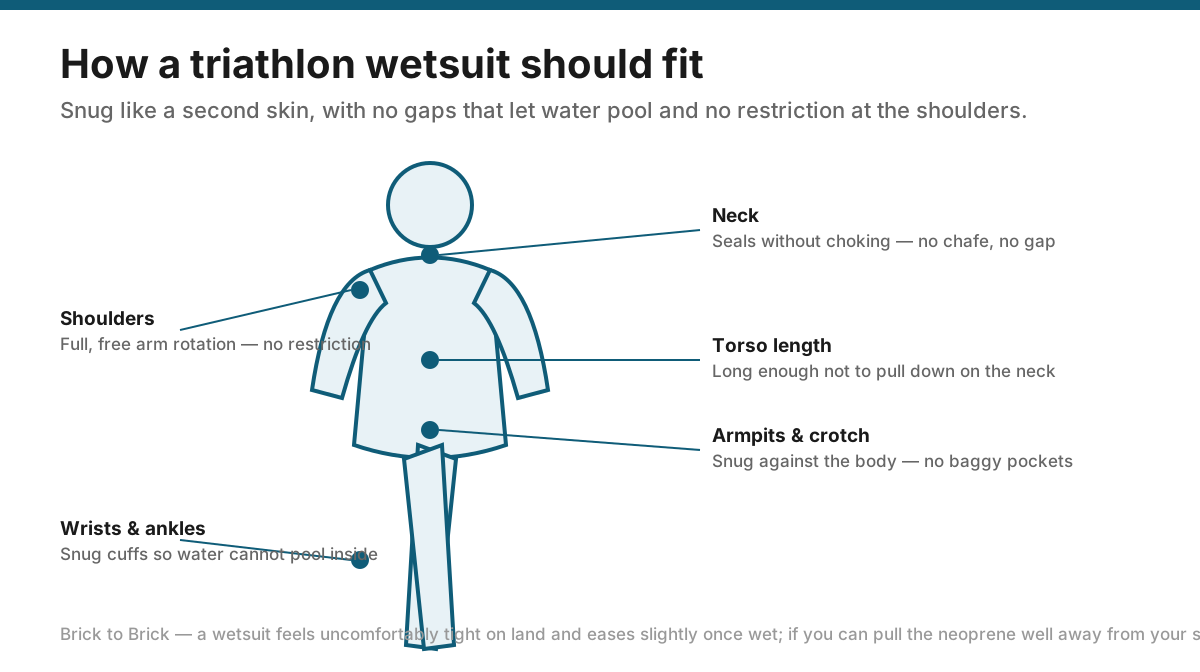
A triathlon wetsuit only helps if it fits and you can use it. Fit is the one thing you cannot fix later: it must be snug everywhere with no gaps, yet let your shoulders rotate freely. Once it fits, the skills that matter are putting it on without tearing the neoprene, stripping it fast in T1, and knowing the water-temperature rules that decide whether you're even allowed to wear it. This page covers fit and use; the deeper buying, thickness and speed questions have their own dedicated guides.
Key takeaways
- 1Fit is the only thing you can't correct afterwards: snug with no gaps, but free at the shoulders — a suit that's too big flushes with water and slows you down
- 2Put it on slowly in stages and lift with your fingertips, not your nails — most expensive wetsuit damage happens in the changing room, not the water
- 3You can lose a minute in T1 fighting a wetsuit; unzip and peel to the waist as you run, then step out
- 4Governing-body rules cap thickness at 5mm and set water-temperature bands that make a wetsuit mandatory, optional or banned — the referee confirms on race morning
- 5This is the fit-and-use guide; use the linked buying, thickness and speed guides for the purchase decision
In this article
- 1What this guide covers (and where to go for the rest)
- 2When you're allowed to wear one: the temperature rules
- 3Why fit matters more than anything else
- 4What a correct fit feels like — checkpoint by checkpoint
- 5Diagnosing common fit problems
- 6How to put a wetsuit on without wrecking it
- 7Getting it off fast in T1
- 8Warm-up, safety and your first swim in it
- 9Make it last — and know when to replace it
- ⚖Full-sleeve vs sleeveless: the fit-and-use trade-off
- ?Frequently asked questions
What this guide covers (and where to go for the rest)
A triathlon wetsuit does three things: it adds buoyancy that lifts your legs and improves body position, it provides warmth in cold open water, and it slightly reduces drag. Those benefits only materialise if the suit fits and you can get in and out of it under race conditions — which is what this page is about.
If you're still deciding what to buy, start with the dedicated guides instead:
- Choosing and sizing a suit: the triathlon wetsuit buying guide.
- How thick, and full-sleeve vs sleeveless: the wetsuit thickness guide.
- How much time it actually saves: how much faster a wetsuit makes you.
- Rent or buy first? wetsuit rental vs buying.
Everything below assumes you have a suit in hand and want to make it work.
When you're allowed to wear one: the temperature rules
Wetsuit use is governed by water temperature, not preference, and the rules are set by the sanctioning body — so check the ones for your event.
Under World Triathlon rules, a wetsuit may not exceed 5 mm thickness (with a small tolerance) and must not cover the face, hands or feet. Whether you may wear one depends on temperature bands: for age-group athletes on standard-distance swims, a wetsuit is broadly mandatory below about 16°C and forbidden at roughly 22–24.6°C and above, with the exact upper cutoff depending on swim distance and age category. Ironman-brand events use similar thresholds — wetsuits are legal up to about 24.5°C (76.1°F), mandatory in cold water, and in a narrow warm band you may still swim in one but forfeit awards and rankings.
Two practical points matter more than memorising numbers:
- The official water temperature is measured on race morning and announced by the head referee, often about an hour before the start. A borderline forecast can flip the call either way, so pack for both.
- "Wetsuit-optional but non-ranking" is a real category in warm water. If you're racing for a place or a qualification slot, wearing a wetsuit in that band can disqualify your result even though you finish.
Because thresholds vary by governing body, distance and year, always confirm against your event's official athlete guide rather than a general chart. For the full tables — each federation's exact bands, how the official temperature is measured, the cold-air adjustment that can lower it, and what you may wear if the swim is declared non-wetsuit — see triathlon wetsuit rules by water temperature.
Why fit matters more than anything else
You can upgrade neoprene later; you cannot fix a badly fitting suit. Fit is the single biggest determinant of whether a wetsuit helps or hurts.
- Too big is the more common and more dangerous mistake. Gaps let water flush in and out as you swim, adding weight and drag, killing the buoyancy advantage, and — with a loose neck — allowing cold water down your back, which can trigger the gasp reflex and panic.
- Too small restricts your shoulders and chest. A suit you can barely rotate your arms in will wreck your stroke and leave you fighting for breath, and it stresses the seams every time you reach.
The target is a suit that grips evenly everywhere yet lets your shoulders move freely. On land it should feel uncomfortably tight and slightly hard to breathe deeply in — that eases the moment you're horizontal in the water. If you can pinch and pull the neoprene several centimetres away from your skin, especially at the lower back or chest, it's too big for you.
What a correct fit feels like — checkpoint by checkpoint
Do this fit check standing, before you ever get in the water. Work top to bottom.
| Checkpoint | What good looks like | Warning sign |
|---|---|---|
| Neck | Seals lightly against the skin, no chafe, no gap | Chokes you, or you can slide a finger easily all the way round |
| Shoulders | Full arm rotation; you can swing both arms overhead | Straining or "held back" at the top of the reach |
| Torso length | Long enough that raising your arms doesn't drag the neck down | Crotch sits low / suit pulls the collar into your throat |
| Chest & back | Neoprene flat against the skin | Loose folds or pockets that could hold water |
| Armpits & crotch | Snug, pulled up fully into place | Baggy — you didn't work the suit high enough |
| Wrists & ankles | Snug cuffs, sit above the joint | Loose openings that will scoop water |
The most common self-inflicted problem is not pulling the suit high enough into the crotch and armpits during dressing, which leaves the torso short and the collar tight. That's a donning error, not a sizing error — fix it before you conclude the suit is wrong.
Diagnosing common fit problems
Match the symptom to the cause before you decide the suit is the wrong size.
| Symptom in the water | Most likely cause | What to do |
|---|---|---|
| Water pooling in the lower back or legs | Suit too big, or not pulled up | Re-dress pulling it higher; if it still pools, size down |
| Can't get a full breath | Chest/torso too small, or collar too high | Loosen the zip a touch; if persistent, the suit is too small |
| Shoulders tire fast / stroke feels short | Shoulders too tight | Try a more flexible suit or a sleeveless cut |
| Cold water rushing down the neck | Loose neck seal (suit too big or torso too short) | Pull the torso higher; a correctly sized suit seals here |
| Chafing at the neck | Seam rubbing; dry skin | Use wetsuit-safe lubricant on the neck (see care guide) |
If shoulder freedom is your recurring problem, a sleeveless suit trades a little buoyancy and warmth for much more range of motion, and it's faster to remove. If you're warm enough and have limited mobility, that's often the better choice; the thickness guide covers that trade-off in full.
How to put a wetsuit on without wrecking it
Most costly wetsuit damage — fingernail punctures and torn panels — happens during dressing, not swimming. Give yourself 10–15 minutes and go slowly.
- Protect the neoprene from your nails. Lift and adjust with your fingertips and palms, never your nails. A plastic bag over each foot and hand helps you slide through cuffs without snagging.
- Start dry and work in sections. Roll the suit down to the waist first. Feed one leg in at a time, pulling the fabric up in small increments until the crotch sits high and snug, then repeat with the arms.
- Get the length high before the zip. Hitch the whole suit up into the crotch and armpits so there's slack across the shoulders — this is what prevents the neck pulling tight later. A little glide-on lubricant at the ankles, wrists and neck makes this easier.
- Zip last, seal the flap. Most tri suits are back-zip with the pull at the bottom; close the collar flap so it doesn't flush. Do a few big arm swings to check shoulder freedom before you're satisfied.
Use wetsuit-safe, non-petroleum lubricant only — petroleum jelly degrades neoprene. For rinsing, drying and storage that keep the suit alive for years, see how to care for a triathlon wetsuit.
Getting it off fast in T1
A wetsuit you can't remove quickly gives back the time it saved in the water. Practise this before race day.
- Start while you're still moving. As you exit the swim, reach back and pull the zip cord, then peel the suit off your shoulders and down to your waist while running or walking to transition.
- Roll, don't drag. Push the neoprene down over your hips and thighs, turning it partly inside out. Rushing straight for the ankles is where people get stuck and hop around.
- Free the ankles with a step-on. Pull one leg out, then stand on the opposite ankle cuff with your free foot and pull your leg straight up and out.
- Use wetsuit strippers if the race offers them. At many events volunteers will yank the suit off in one motion — lie down, point your toes and let them.
Smooth wetsuit removal is a transition skill worth rehearsing alongside the rest of T1; see transition strategies to shave the surrounding seconds too.
Warm-up, safety and your first swim in it
A wetsuit changes how the water feels, so don't let race day be the first time you wear it.
- Swim in it beforehand. Neoprene alters your balance and rotation; a few open-water or pool sessions let you adjust your stroke and confirm the fit under load.
- Acclimatise to the neck seal. The tight collar and cold water can feel alarming at first. Splash water inside the suit and put your face in before the gun so the cold-shock response settles.
- Expect a little flush at the neck and wrists even with a good fit; that's normal and not the same as a suit that's too big.
If open water itself is the worry rather than the suit, the first-time wetsuit swimming tips and open-water swimming guides cover breathing, sighting and calming nerves.
Make it last — and know when to replace it
Treated well, a quality wetsuit lasts several seasons; treated badly, the seals go and the panels stiffen within one. The essentials: rinse in fresh water after every use, dry it in the shade (never direct sun or a dryer), and store it flat or over a wide hanger rather than folded. The full routine is in the wetsuit care guide.
Replace or re-fit a suit when the neck or cuff seals stretch and start flushing, when panels crack or lose flexibility, or when your body has changed shape enough that the fit checkpoints above no longer pass — a suit that fit at one weight can flush or restrict at another. If you're not sure a wetsuit is worth owning yet, rent one first and use these fit checks on the rental. When you're ready to choose, the wetsuit selector matches a suit to your water, budget and mobility.
Full-sleeve vs sleeveless: the fit-and-use trade-off
| Factor | Full-sleeve | Sleeveless |
|---|---|---|
| Buoyancy & warmth | Maximum | Slightly less |
| Shoulder freedom | Depends on fit / neoprene | More, always |
| Ease of removal in T1 | Slower (arms to strip) | Faster |
| Best if you have… | Good shoulder mobility, colder water | Tight shoulders, warmer legal water |
| Flushing risk | Lower with a good fit | A little more at the arm openings |
Sources
Sources are listed so readers can verify consequential claims and dated details.
- World Triathlon Competition Rules — wetsuit thickness, coverage and water-temperature use — World Triathlon (accessed September 16, 2026)
- The competition rules every triathlete should know heading into the 2026 season (World Triathlon wetsuit temperature bands) — Triathlon Magazine Canada (accessed September 16, 2026)
- Triathlon wetsuit rules explained (Ironman-brand temperature cutoffs) — T100 Triathlon (accessed September 16, 2026)
Frequently asked questions
How tight should a triathlon wetsuit be?
Very snug — like a second skin, with no loose folds or air pockets anywhere. It should feel uncomfortably tight and slightly restrict a deep breath on land, then ease once you're horizontal in the water. If you can pull the neoprene several centimetres away from your lower back or chest, it's too big and will flush with water.
Why does my wetsuit fill with water when I swim?
Flushing means water is getting in through a gap — usually a suit that's too big or one that wasn't pulled high enough into the crotch and armpits when you put it on, leaving the neck loose. Re-dress it, hitching the torso up fully so the collar seals. If it still floods after a proper fit check, the suit is too large for you.
How do I put a wetsuit on without ripping it?
Go slowly and lift only with your fingertips and palms, never your nails, which cause most punctures. Put a plastic bag over each foot and hand to slide through the cuffs, work the suit up in small sections, and use wetsuit-safe (non-petroleum) lubricant at the ankles, wrists and neck. Get the length high into the crotch and armpits before you zip up.
How do I take a wetsuit off quickly in transition?
Start as you leave the water: pull the zip cord and peel the suit to your waist while moving. Then roll it down over your hips and thighs, pull one leg out, and stand on the other ankle cuff to free it. If the race offers wetsuit strippers, lie down, point your toes and let the volunteers pull it off in one motion.
At what water temperature can I wear a wetsuit?
It depends on the sanctioning body. Under World Triathlon rules a wetsuit is broadly mandatory below about 16°C and forbidden once the water reaches roughly 22–24.6°C (the exact upper limit varies by distance and age group); Ironman-brand events allow one up to about 24.5°C. Maximum thickness is 5mm, and the official temperature is measured and announced by the referee on race morning, so always confirm your event's rules.