How to Choose the Right Triathlon Wetsuit (Size, Type & Budget)
The complete triathlon wetsuit buying decision: whether you need one, full-sleeve vs sleeveless vs swimskin, how to size and fit it, and how much to spend — with links to the details.
By Lotte
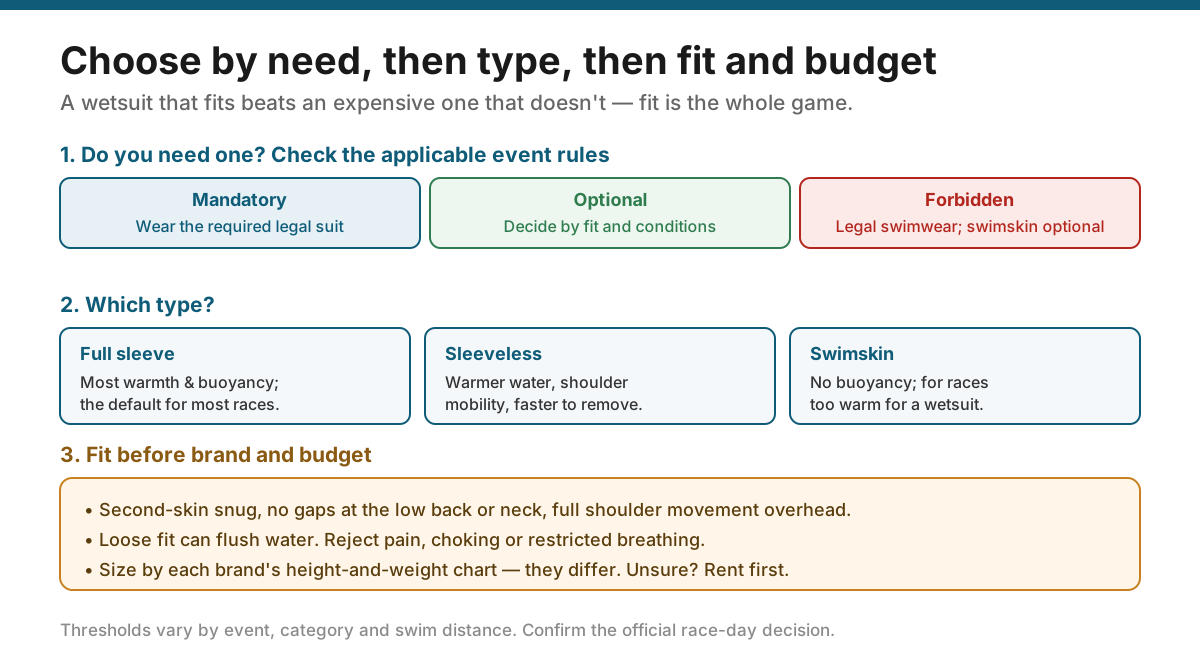
Choosing a triathlon wetsuit comes down to four questions in order: do you even need one (the water temperature decides), which type suits your conditions and body, how do you get the fit right (the single most important factor), and how much should you spend versus rent. This guide is the buying decision itself — it walks those four questions and then hands you to the dedicated pages for thickness and construction, the rent-versus-buy cost breakdown, care, and your first open-water swim. Get the fit right and almost any suit works; get it wrong and the most expensive suit will fail you.
Key takeaways
- 1Whether you need a wetsuit is set by water temperature and your event's rules, not preference
- 2Fit is the whole game — a suit that fits beats a pricier one that doesn't; size by each brand's height/weight chart
- 3Full-sleeve is the versatile default; sleeveless suits warm water and shoulder mobility; a swimskin is for non-wetsuit races
- 4Buy new only after deciding new vs used vs rent — renting is often the smartest first-race move
- 5Spend on fit first; extra money buys flexibility and buoyancy tuning, not the ability to finish
In this article
- 1Quick answer: how to choose a wetsuit
- 2Do you even need a wetsuit?
- 3The types of triathlon wetsuit
- 4Fit is everything — how to size a wetsuit
- 5Thickness and construction — the short version
- 6How much should you spend?
- 7Rent, buy used, or buy new?
- 8Before you buy: try it, then protect it
- 9Your wetsuit decision, step by step — and where to go next
- ⚖Which type of wetsuit fits you?
- ?Frequently asked questions
Quick answer: how to choose a wetsuit
Work through four questions in order, and the decision gets simple:
- Do you need one? The water temperature and your event's rules decide, not preference (see the next section).
- Which type? A full-sleeve suit is the versatile default; sleeveless suits warm water or restricted shoulders; a swimskin is for races too warm for a wetsuit.
- Does it fit? This matters more than brand, price or features — a suit must fit like a second skin with no gaps and full shoulder movement.
- New, used or rent? For a first race, renting or buying used is often smartest; buy new once you know you'll keep racing.
The rest of this page is the buying decision in depth, and it links out to the dedicated guides for the details — thickness and construction, the rent-versus-buy cost breakdown, and wetsuit care — so this stays the front door, not a repeat of all of them. You can also let the wetsuit selector tool narrow it down.
Do you even need a wetsuit?
First check which rules govern your event, your race category and your swim distance. There is no single worldwide temperature band for wetsuit use. The head referee's race-day announcement controls whether a suit is mandatory, permitted or forbidden, and adverse conditions can change the swim itself.
For example, the World Triathlon age-group FAQ lists wetsuits as mandatory at 15.9°C and below; its forbidden threshold is 22°C for swims up to 1,500 m and 24.6°C for longer swims. These are World Triathlon age-group examples, not universal IRONMAN, elite or national-federation rules. Check the current athlete guide for your own event rather than applying this example automatically, and see triathlon wetsuit rules by water temperature for each governing body's full tables and how the official temperature is measured.
If wetsuits are optional, the decision includes comfort, conditions and a fit you have rehearsed. If they are forbidden, a legal tri suit or swimsuit may be enough: buying a swimskin is optional, and its legality must also be checked. A wetsuit adds buoyancy but is not a lifejacket or a substitute for swimming ability and supervised open-water practice. Renting can be sensible while you learn what fits, provided you have time to rehearse in that suit.
The types of triathlon wetsuit
Triathlon wetsuits come in a few distinct types, and picking the right type matters more than picking a brand:
- Full-sleeve: the versatile default. Arms and legs covered for the most warmth and buoyancy, and it is what most triathletes race in across cool-to-moderate water. Modern arm panels are far more flexible than the old reputation suggests.
- Sleeveless: bare arms for unrestricted shoulders and a quicker exit in transition. A sensible pick for warmer water, for swimmers with shoulder-mobility limits, or for those who overheat — at the cost of some warmth and buoyancy.
- Swimskin: not a wetsuit at all — a thin, non-buoyant suit worn in races too warm for neoprene, where it reduces drag without adding flotation.
The choice between full-sleeve and sleeveless is really about warmth and shoulder freedom for your water and body; the deeper mechanics of panels and neoprene sit in the thickness and construction guide. Note too that a triathlon wetsuit is purpose-built for freestyle — surfing suits vary in panel thickness and flexibility, so assess the actual suit for freestyle mobility, fit and race legality.
Fit is everything — how to size a wetsuit
If you take one thing from this guide, make it this: fit outranks brand, price and every feature. A triathlon wetsuit should fit like a second skin. Too big and water can flush through and folds can add drag, reducing warmth and comfort; too small and it restricts your breathing and stroke, which is both slower and, in open water, genuinely unsettling.
How to get it right:
- Size by the manufacturer's height-and-weight chart, not by clothing size — and expect charts to differ significantly between brands, so a medium in one is not a medium in another.
- Check the fit points: snug with no loose folds or gaps at the lower back, behind the knees or around the neck, and a collar that seals without choking.
- Test the shoulders: you should be able to swing both arms fully overhead without the suit pinning them down. Restriction may reflect poor positioning, the wrong size or cut, or panel construction; adjust the suit and reassess before choosing.
- Buy snug, with unrestricted breathing: take a deep breath and move your arms overhead after carefully seating the suit at the hips and shoulders. Do not accept chest compression, pain or choking on the assumption it will disappear in water.
- Mind the cut: brands offer men's and women's specific cuts and sometimes tall/short options — the right cut for your torso length prevents crotch gaping and neck chafe.
Whenever you can, try before you commit. If a shop or race offers rentals or a try-on, use it — the fit you confirm in person beats any online guess.
Thickness and construction — the short version
Wetsuit performance comes from how the neoprene is built, but you do not need to master it to buy well. The essentials: suits use thicker, buoyant panels through the core and legs to lift your hips into a better swimming position, and thinner, more flexible panels in the arms and shoulders so your stroke is free. More expensive suits generally use higher-grade, stretchier neoprene and smarter panel placement rather than simply more rubber, and competition rules cap neoprene at 5mm thick.
That is enough to shop with. If you want to understand which panels matter for your body, why thicker is not automatically better, and how construction interacts with fit and buoyancy, the wetsuit thickness and construction guide covers it in full — this page deliberately keeps it brief so the two do not repeat each other.
How much should you spend?
You do not need a top-end suit to race well, so match the spend to how much you'll use it rather than to the highest price on the wall. Think in tiers rather than exact prices (which move constantly — check current pricing):
- Entry-level: does everything a beginner needs — legal, buoyant and warm — for sprint-to-70.3 racing. The right first suit for most people.
- Mid-range: more flexible neoprene and better panel design, noticeably nicer to swim in if you race several times a year.
- Premium: the stretchiest neoprene, the most refined buoyancy and shoulder freedom, aimed at frequent and long-course racers.
The honest rule: spend on fit first. A well-fitting entry-level suit beats an ill-fitting premium one every time, and past the essentials your money buys comfort and flexibility, not the ability to complete or pace a swim. Decide how many races you realistically have coming up, and buy the cheapest tier that fits well and suits your water.
Rent, buy used, or buy new?
Buying new is not the only option, and often not the best first move:
- Rent for a first race or an occasional event — it is cheap per use and lets you try a suit before committing to one.
- Buy used for good value if you can inspect it: check for tears, delamination and dried-out, cracking neoprene, and confirm it fits you before paying.
- Buy new once you know you'll keep racing and want a suit sized and chosen for you.
Which one wins depends on how often you'll swim in it and the full cost over a season or two — the rent-versus-buy cost breakdown works that maths honestly so you can decide, rather than defaulting to a purchase you may not need yet.
Before you buy: try it, then protect it
A wetsuit is a big enough purchase to de-risk. Wherever possible, try the suit on (ideally with a short test swim, or at least a full shoulder-mobility check on land) and buy from somewhere with a sensible returns or exchange policy for fit — a suit you can't move in is worthless however good the deal looked.
Once you own one, a little care makes it last for years: rinse it in fresh water after every swim, dry it out of direct sun, store it without hard folds, and keep your fingernails from puncturing the neoprene. The full routine — and how to fix small tears — is in the wetsuit care guide. And before race day, get comfortable actually swimming in it: the sensations of neoprene and open water take rehearsal, covered in first-time wetsuit swimming tips.
Your wetsuit decision, step by step — and where to go next
Pulling it together: confirm the water temperature allows (or requires) a wetsuit, choose the type that suits your conditions and shoulders, get the fit right above all else, then pick the cheapest good-fitting tier — renting or buying used first if you are new or unsure. That order keeps you from overspending on the wrong thing.
This page is the front door to the swim-gear cluster, so use the spokes for the depth: the thickness and construction guide for how suits are built, the rent-versus-buy breakdown for the cost decision, how much faster a wetsuit makes you for the performance question, using and removing your wetsuit for what to do once you own one, wetsuit care to make it last, and first-time wetsuit swimming tips for the water itself. The wetsuit selector tool can pull your answers together into a shortlist.
Which type of wetsuit fits you?
| Type | Best water | Warmth & buoyancy | Flexibility / transition | Best for |
|---|---|---|---|---|
| Full-sleeve | Cool to moderate | Most | Good (premium) / slower to remove | The versatile default for most racers |
| Sleeveless | Warmer | Moderate | Excellent shoulders / fast to remove | Warm water, shoulder mobility, hot-runners |
| Swimskin | Too warm for neoprene | None (no buoyancy) | Excellent / fast | Non-wetsuit-legal races |
| Surfing suit | n/a | High but stiff | Poor for freestyle | Not recommended for triathlon |
Sources
Sources are listed so readers can verify consequential claims and dated details.
- World Triathlon age-group wetsuit rules — World Triathlon (accessed September 23, 2026)
- Wetsuit fitting tips — blueseventy (accessed September 23, 2026)
- World Triathlon competition rules (wetsuit use and water-temperature limits) — World Triathlon (accessed September 22, 2026)
- Wetsuit use during open water swimming: does it "suit" everybody? A narrative review — International Journal of Sports Physiology and Performance (2021) (accessed September 22, 2026)
Frequently asked questions
Do I need a wetsuit for a triathlon?
It depends on your event, category, swim distance and the official race-day decision. Temperature thresholds vary, so check the applicable rules. If wetsuits are forbidden, a legal tri suit or swimsuit may suffice; a swimskin is optional.
How should a triathlon wetsuit fit?
Like a second skin — snug with no loose folds or gaps at the lower back, knees or neck, and full shoulder movement overhead. Too loose can allow flushing and add drag; too tight can restrict breathing. Use the manufacturer's size chart, seat the suit correctly and reject a fit that causes pain, choking or restricted breathing.
Full-sleeve or sleeveless — which should I buy?
Full-sleeve is the versatile default, with the most warmth and buoyancy, and is what most triathletes race in. Choose sleeveless for warmer water, if you have shoulder-mobility limits, if you overheat, or if you want a faster transition. If you're buying a single all-round suit, full-sleeve is usually the safer choice.
Should I rent, buy used, or buy new?
For a first or occasional race, renting is often smartest — cheap per use and a chance to try a suit before committing. Used offers good value if you can inspect it for tears and dried-out neoprene and confirm it fits you. Buy new once you know you'll keep racing; the rent-versus-buy guide breaks down the full cost so you can decide.
How much should I spend on a triathlon wetsuit?
Only as much as your usage justifies, and always on fit first. An entry-level suit does everything a beginner needs; mid-range and premium suits buy more flexible neoprene and refined buoyancy, which matter mainly if you race often or long. A well-fitting cheaper suit beats an ill-fitting expensive one every time.
Can I use a surfing wetsuit for triathlon?
Possibly, if the actual suit meets your event's rules and permits comfortable swimming. Surfing suits vary; test fit and shoulder movement rather than assuming all are alike. A swimming-specific suit is designed around freestyle mobility and buoyancy placement.