Wetsuit Thickness Explained: How Neoprene Panels Actually Work
How wetsuit thickness really works: what the 5/3mm notation means, why thick panels go on the legs and thin panels on the shoulders, and how buoyancy, warmth and flexibility trade off.
By Lotte
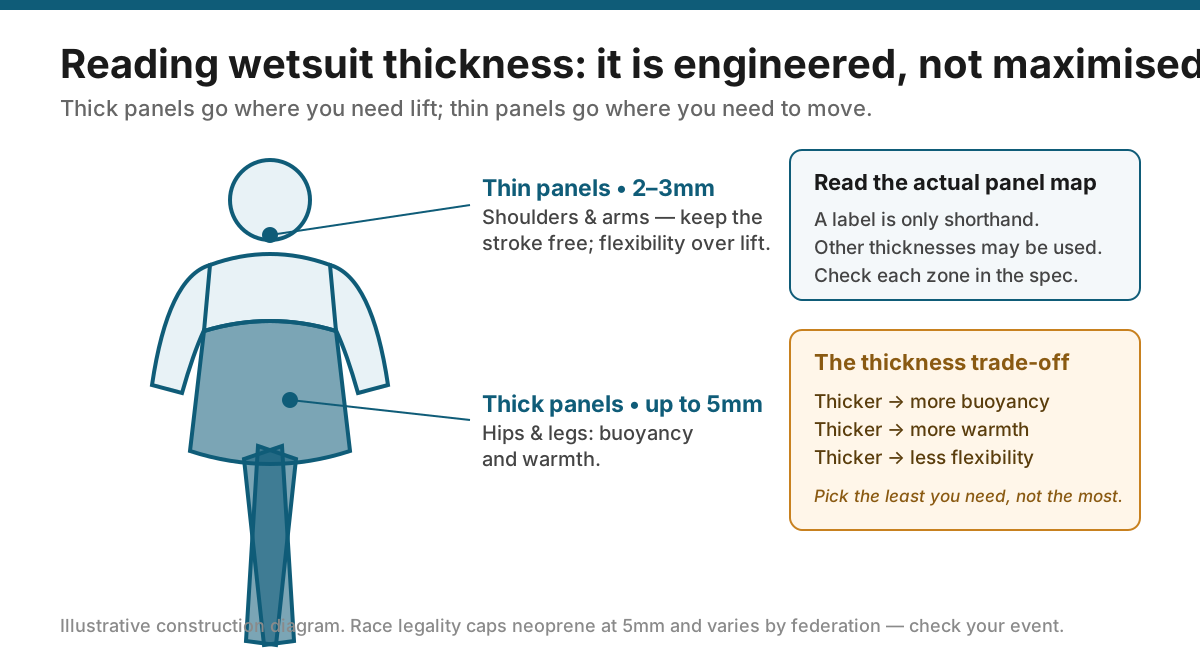
Wetsuit thickness is the most misunderstood spec in triathlon. It is not a temperature dial — it is an engineering trade-off between buoyancy, warmth and flexibility, distributed panel by panel across your body. This guide explains what the '5/3mm' notation actually means, why the thick neoprene goes on your hips and legs while the thin neoprene goes on your shoulders, how neoprene grade changes the picture, and why more thickness is not automatically faster. Once you can read a spec, choosing between suits — a job this guide hands off to the buying guide — becomes straightforward.
Key takeaways
- 1Thickness is a trade-off: more neoprene adds buoyancy and warmth but removes flexibility
- 2A label such as '5/3mm' is shorthand; check the manufacturer's panel map for actual thicknesses
- 3Thick panels sit on the hips and legs to lift the lower body and cut drag; thin panels free the stroke
- 4World Triathlon caps neoprene at 5mm, and temperature legality varies by federation — check your event
- 5Foam, lining, seams and fit affect the finished suit; grade numbers alone do not rank performance
In this article
- 1Quick answer, and why thickness is the wrong first question
- 2The three jobs of neoprene — and why they fight each other
- 3How to read a wetsuit spec: what "5/3" actually means
- 4Where the thick panels go — and why (body position)
- 5Who gains most from buoyancy — and who gains least
- 6The flexibility cost: why thicker is not automatically better
- 7Neoprene grade vs thickness — the spec people confuse
- 8Full-sleeve vs sleeveless as a construction choice
- 9Thickness, warmth and the rules: the 5mm ceiling
- 10How thickness interacts with fit and age
- 11Putting it together: matching construction to you
- ⚖Illustrative panel layouts — verify each model’s actual panel map
- ?Frequently asked questions
Quick answer, and why thickness is the wrong first question
A common swimming-wetsuit design combines buoyant core and leg panels with thinner shoulder panels. The right combination depends on fit, water conditions and your swimming; no single thickness label is a universal default. But picking a number is not really the decision.
Thickness is not a temperature setting you dial in. It is an engineering trade-off — every millimetre of neoprene you add buys buoyancy and warmth while taking away flexibility — and it is distributed differently across different parts of your body. Understanding that trade-off helps you interpret a spec sheet, but a safe test swim is still needed to judge comfort and movement.
This page is the construction explainer. It deliberately does not repeat the jobs the rest of the wetsuit cluster already does: for sizing and which suit to actually buy see the wetsuit buying guide; for how much time a suit saves see how much faster a wetsuit makes you; for renting versus owning and model picks see wetsuit rental vs buying; and to answer everything at once, the wetsuit selector tool walks you through conditions and rules.
The three jobs of neoprene — and why they fight each other
Neoprene is foam full of tiny nitrogen-filled cells. Those cells do three useful things, and thickness affects all three at once:
- Buoyancy. The trapped gas is lighter than water, so more foam lifts you higher. This is the main reason a wetsuit makes swimming easier — it raises the parts of you that tend to sink.
- Warmth. The same cells insulate. A thin film of water warms against your skin and the foam slows heat loss, which is why a suit that is warm enough matters more than most beginners expect.
- Flexibility. Here is the catch. Thicker foam is stiffer. More neoprene across a joint means more resistance every time you bend it — most obviously at the shoulders during the catch and recovery of your stroke.
So the three jobs pull against each other: the thickness that makes you float and keeps you warm is the same thickness that fights your stroke. A wetsuit is not trying to be as thick as possible. It is trying to put the right thickness in the right place — which is exactly what the panel layout is for.
How to read a wetsuit spec: what "5/3" actually means
A triathlon wetsuit usually combines different panel thicknesses. Surfing suits can also use multiple thicknesses, so this construction is not unique to triathlon; what matters is how the panels support swimming and allow freestyle movement.
A label such as 5/3 mm is shorthand for thicknesses used in a suit. Do not assume it identifies every panel, a universal body-to-arm layout, or the absolute thinnest material. Manufacturers may use additional thin shoulder, underarm or cuff panels that the headline label does not describe.
Read the full panel map. For example, ZONE3's wetsuit guide describes designs with 5 mm buoyant body panels and 1.5–2 mm shoulder or arm panels. That illustrates the construction principle; it does not prescribe those dimensions for every swimmer or every model.
Compare three things: the position and area of thicker panels, the construction around moving joints, and the amount of coverage. Two suits with the same headline thickness can distribute lift differently. A thinner shoulder panel may feel restrictive if the suit is badly positioned or the cut is wrong, while a different lining or seam pattern may change how a similar thickness moves.
The table below uses illustrative layouts to explain trade-offs. It is not a manufacturer specification chart or a legal-temperature guide. Confirm the exact model's documentation before using a number in a buying decision.
Where the thick panels go — and why (body position)
The single most valuable thing a wetsuit does is fix your body position. Most swimmers' legs and hips sink; the drag from a trailing lower body is large. Put the thickest, most buoyant neoprene on the hips, seat and thighs and you lift that lower body, flatten your line, and cut the form drag that was costing you the most.
This is measurable, not marketing. A classic study directly measuring drag during front-crawl found a triathlon wetsuit reduced drag by roughly 12–14% at typical swimming speeds, with the effect coming chiefly from the improved horizontal body position rather than a slippery surface alone. Later work reached the same conclusion from the energy-cost side: the advantage traces back to buoyancy and drag reduction, not to any change in your engine.
That is why panel placement, not raw thickness, is the real design skill. Thin, flexible neoprene sits over the shoulders and arms so your catch and recovery are barely restricted; the thick, buoyant neoprene concentrates where lift does the most for your body line. Thick or poorly positioned shoulder panels may increase resistance to your stroke; the effect depends on the material, cut and swimmer.
Who gains most from buoyancy — and who gains least
More buoyancy is not equally valuable to everyone, which is the honest reason there is no single "best" thickness.
Swimmers whose legs sink — often those carrying less body fat, with heavy or inflexible legs, or a weak kick — gain the most from thick, buoyant panels, because the suit fixes a problem their body cannot. A naturally buoyant swimmer with a strong kick and a flat position already has good body position, so extra foam adds less and can start to feel like it is getting in the way of their stroke.
There is also a ceiling. A narrative review of open-water wetsuit use concluded plainly that a wetsuit does not "suit" everybody equally, and that buoyancy benefits have limits and depend on the individual's body composition and swimming ability. In other words, past a point, adding thickness stops giving you free speed and starts costing you flexibility.
How much time any of this saves you is a separate question with a real answer elsewhere — see how much faster a wetsuit makes you. The takeaway here is directional: the weaker your natural flotation, the more thickness earns its place; the stronger it is, the more you should weigh flexibility.
The flexibility cost: why thicker is not automatically better
Because stiffness rises with thickness, the shoulders are where a suit is won or lost. If a suit fights your stroke, you shorten your reach, your rate creeps up, and you arrive at the bike already fatigued in the exact muscles you need for the swim — a bad trade for a little extra float.
This is why shoulder and underarm construction deserves attention: thinner neoprene there, higher-grade foam, and stretch-oriented linings. It is also why some strong swimmers deliberately choose a thinner suit, or a sleeveless cut, and accept a little less buoyancy and warmth in exchange for a stroke that feels like their own.
The practical rule that falls out of the trade-off: choose the least thickness that solves your actual problem, not the most your budget allows. If you sink and get cold, prioritise buoyant, warm panels. If you float, feel restricted, or race warm, prioritise flexibility. A suit that keeps you warm and afloat but wrecks your stroke has failed at the one thing swimming rewards.
Neoprene grade vs thickness — the spec people confuse
Thickness measures the amount of material; a grade or trade name describes a material formulation or product family. A larger grade number is not a universal score for buoyancy, quality or speed, and different manufacturers' labels are not automatically comparable.
Foam density, stretch, lining, seams and panel area all influence the finished suit. You cannot conclude that a 4 mm panel floats better than a 5 mm panel simply because it carries a more expensive trade name. That comparison would require relevant material data and the actual construction, not just two labels.
For shopping, ask what the claimed grade changes in the part of the suit you care about. Is there documented stretch information? Is the shoulder panel lined differently? Does the panel map change the amount of material around your hips? Does the suit fit without pulling on your neck? These questions are more useful than ranking every suit by grade number.
blueseventy's explanation of shoulder construction describes how lining and seams can affect movement alongside neoprene. Treat this as manufacturer guidance about construction, not independent proof that its products outperform competitors. The buying guide helps turn the fit and construction information into a purchase decision.
Full-sleeve vs sleeveless as a construction choice
Sleeves are a thickness-and-coverage decision more than a style one. Full-sleeve neoprene adds warmth, a little extra buoyancy through the forearms, and slightly cleaner water flow along the arms; it is the standard cut and the warmer choice. Sleeveless removes the arm panels entirely, which frees the shoulders completely, sheds warmth, and comes off faster in transition.
Read through the trade-off triangle, the logic is consistent with everything above: sleeves are more buoyancy and warmth bought with less shoulder freedom. So a sleeveless suit makes most sense when your limiter is mobility or heat rather than flotation or cold — a swimmer with tight shoulders in warm, wetsuit-legal water, for example.
This guide keeps the construction view deliberately short because the decision of which one to buy for your body and races belongs with the buying guide, and getting comfortable actually swimming and removing either cut is covered in first time swimming in a wetsuit.
Thickness, warmth and the rules: the 5mm ceiling
Thickness is capped by the rulebook, not just by comfort. Under World Triathlon competition rules, neoprene may not exceed 5mm at any point — which is exactly why the buoyant panels top out at 5mm rather than going thicker. The limit applies to the actual material at any point, including overlapping parts, rather than prescribing a particular panel layout.
Whether a wetsuit is allowed, optional or mandatory is governed by measured water temperature, and the exact thresholds vary by federation, distance and event, and can change on race morning with the conditions. Warmer water above the legal ceiling means no wetsuit (a legal tri suit or swimsuit; a permitted swimskin is optional); colder water can make a suit mandatory or, if it is too cold, cancel the swim entirely for safety. Because the numbers differ between governing bodies and events, treat thickness as not a universal temperature prescription — always confirm the wetsuit policy in your specific race's athlete guide.
The federation-by-federation thresholds, the way the official water temperature is measured and the cold-air adjustment that can lower it are set out in triathlon wetsuit rules by water temperature. Actually acclimatising to and racing in genuinely cold water is its own skill, covered in the cold water swimming guide; the rules landscape more broadly sits in triathlon rules.
How thickness interacts with fit and age
Fit determines how comfortably you can use the suit and how much water flushes through it. The foam remains buoyant even when the fit is poor. A thick suit that is too loose lets water flush through at the neck, wrists and lower back, so it floods, chills you, and drags — you can end up colder and slower than in a well-fitted thinner suit. In that sense fit is upstream of thickness: no amount of neoprene helps if water is moving freely underneath it. The full fit-check belongs in the buying guide.
Neoprene also changes over time. The gas-filled cells that create buoyancy and flexibility slowly compress and stiffen with use, sun, heat and rough handling, so an old suit is effectively thinner in performance than its printed spec — less lift, less stretch — long before it visibly fails. How fast that happens is mostly down to care: rinsing, drying out of direct sun and storing it flat or on a wide hanger rather than folded. The wetsuit care guide covers how to keep a suit performing close to its rated thickness for years.
Putting it together: matching construction to you
You now have everything to read a suit instead of guessing at a number. Run the decision in this order:
- Your flotation. Do your legs sink? Favour buoyant 5mm core and leg panels. Do you float and kick well? You can go thinner and prioritise feel.
- Your mobility. Tight or easily fatigued shoulders push you toward thinner shoulder panels, higher-grade foam there, or a sleeveless cut.
- Your conditions. Consistently cold, wetsuit-legal water rewards more coverage and warmth; warm, borderline-legal water rewards less.
- Construction and fit. Compare the actual materials, seams and comfortable fit rather than ranking suits by a grade number or headline thickness.
That is the whole logic of thickness: put lift where you sink, put flexibility where you move, buy the least you need, and never let the first number override grade and fit. When you are ready to convert this into an actual purchase, hand off to the wetsuit buying guide or let the wetsuit selector tool match it to your race, and browse the wider wetsuit hub for the rest of the cluster.
Illustrative panel layouts — verify each model’s actual panel map
| Panel layout | Thick panels | Thin panels | Built for | The trade-off |
|---|---|---|---|---|
| 5/3mm | 5mm core & legs | 3mm shoulders | Maximum legal lift + warmth | Check flexibility, lining and fit |
| 4/3mm | 4mm core & legs | 3mm shoulders | Balance of lift and feel | A little less flotation and warmth |
| 3/2mm | 3mm core & legs | 2mm shoulders | Feel and mobility, warmer water | Lower buoyancy — best for floaters |
| 2/2mm / thin | 2mm throughout | 2mm throughout | Closest to unaided, still legal | Minimal lift and warmth |
| Sleeveless | 3–5mm core & legs | No arm panels | Shoulder freedom, warm water, fast T1 | Sheds warmth and forearm buoyancy |
Sources
Sources are listed so readers can verify consequential claims and dated details.
- Wetsuit panel construction guide — ZONE3 (accessed September 23, 2026)
- Shoulder construction, seams and lining — blueseventy (accessed September 23, 2026)
- Age-group wetsuit rules — World Triathlon (accessed September 23, 2026)
- Toussaint et al. — Effect of a triathlon wet suit on drag during swimming — Medicine & Science in Sports & Exercise (1989) (accessed September 22, 2026)
- Wetsuit use during open water swimming: does it "suit" everybody? A narrative review — International Journal of Sports Physiology and Performance (2021) (accessed September 22, 2026)
- World Triathlon competition rules — World Triathlon (accessed September 22, 2026)
Frequently asked questions
What does "5/3mm" mean on a wetsuit?
It is shorthand for thicknesses used in the suit, not a universal map of every panel. Check the model’s panel diagram: shoulders, underarms or cuffs may use additional thicknesses omitted from the headline label.
Is a thicker wetsuit always faster?
No. Thicker neoprene adds buoyancy and warmth but also stiffness, and buoyancy has diminishing returns once your body position is already flat. Swimmers whose legs sink gain the most from thickness; strong, buoyant swimmers often prefer thinner, more flexible suits. The right thickness depends on you, not on a bigger number.
What is the maximum wetsuit thickness allowed in triathlon?
World Triathlon competition rules cap neoprene at 5mm at any point on the suit, including overlapping parts of a two-piece suit; the rule does not specify a standard panel layout. Whether a wetsuit is allowed at all depends on measured water temperature, and those thresholds vary by federation, distance and event — always check your race's athlete guide.
Can a thinner wetsuit be more buoyant than a thicker one?
Thickness alone cannot rank whole suits: density, panel area and coverage also matter. A higher grade number is not proof that a thinner panel is more buoyant. Compare actual construction data and fit, and avoid assuming a price or trade name establishes performance.
Does thickness matter more than fit?
No — fit comes first. A thick suit that fits loosely floods with water at the neck, wrists and lower back, so it can lose warmth and add drag. A well-fitted thinner suit will out-perform a poorly fitted thick one. Sort fit first, then optimise thickness and grade.