Triathlon Compression Socks: What the Evidence Says and How to Choose
Do compression socks help triathletes? An honest look at the evidence — modest for recovery, little for race speed — plus how to choose by graduated pressure, fit and your event's rules.
By Lotte
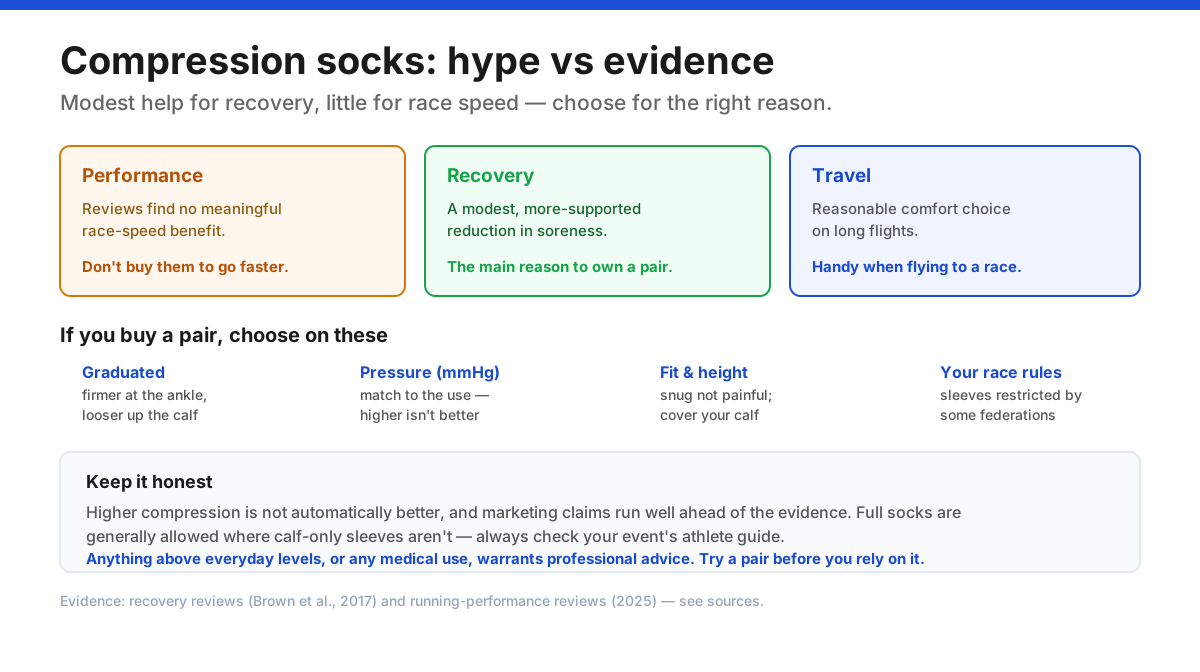
Compression socks come up in every triathlon discussion, wrapped in marketing that runs well ahead of the science. The honest picture: reviews find little meaningful benefit for race-day performance, a modest but better-supported benefit for recovery, and a reasonable comfort rationale for long-haul travel. This guide separates the evidence from the hype and then explains how to choose a pair by graduated pressure, fit, height and your event's rules — rather than by a brand ranking.
Key takeaways
- 1The evidence for a race-day performance benefit is weak — a large review found no meaningful improvement in running performance, so don't buy them to go faster.
- 2The recovery evidence is more supportive but still modest — reviews find a moderate reduction in muscle soreness, which is the main reason to own a pair.
- 3Graduated compression (firmer at the ankle, looser up the calf) is the design that matters; higher pressure is not automatically better.
- 4Choose by graduated design, a pressure level (mmHg) that suits the use, a snug-not-painful fit and the right height — not by a brand's marketing.
- 5Race rules vary: some federations restrict calf-only sleeves while full socks are generally allowed, so always check your event's athlete guide.
In this article
- 1Do compression socks actually work? The honest answer
- 2What compression socks are — and graduated pressure
- 3Match the pressure and type to the use
- 4How to choose a pair
- 5Race rules: sleeves vs full socks
- 6When (and whether) to wear them on race day
- 7Recovery and travel: where they earn their place
- 8Care, fit checks and when to replace
- 9The bottom line
- ⚖Compression socks: what the evidence supports, by use
- ?Frequently asked questions
Do compression socks actually work? The honest answer
Compression socks are one of triathlon's most marketed products, and the claims — faster, fresher, fewer cramps — run a long way ahead of the evidence. Here's the honest split, because why you'd wear them changes whether they're worth it:
- For race-day performance: the evidence is weak. A large, updated systematic review and meta-analysis of compression garments during running found no meaningful improvement in performance — so buying them to ride or run faster isn't well supported.
- For recovery: the evidence is more encouraging, though still modest. Reviews of compression garments and recovery report a moderate reduction in muscle soreness and a somewhat faster return of muscle function after hard exercise. This is the strongest reason to own a pair.
- For travel: wearing graduated compression on a long flight is a reasonable, comfort-based choice, and a familiar recommendation for reducing leg swelling from prolonged sitting.
So the useful framing isn't "do they work?" but "work for what?" Most of the genuine value is after the race and on the plane, not during the event. This page is an evidence-limited buying guide, not medical advice — for the wider picture, see recovery after a race.
What compression socks are — and graduated pressure
A compression sock applies pressure to your lower leg, and the design detail that actually matters is graduation: the sock is firmer at the ankle and gradually looser up the calf. That gradient is what's intended to support the return of blood toward the heart; a sock that squeezes uniformly (or worse, tighter at the top) doesn't do the same job and can feel worse.
So the first thing to check on any pair is that it's graduated compression, not just "tight."
The amount of pressure is measured in millimetres of mercury (mmHg), and — crucially — higher is not automatically better. Very high pressures belong to medical garments used under professional guidance, not to something you self-prescribe for racing. For athletic use, moderate graduated compression is the norm; think of the mmHg figure as a use-case label rather than a "more is stronger" dial, and treat anything at medical levels, or any use tied to a health condition, as a reason to get proper advice.
Match the pressure and type to the use
Rather than chase a specific number, match the general level to what you're using them for:
- Everyday and travel wear uses lighter graduated compression — enough to feel supportive on a long flight or a day on your feet.
- Training and racing socks tend to sit in a moderate graduated range designed to be comfortable while you move.
- Recovery socks are often a little firmer, meant to be worn at rest for a few hours after a hard session or race.
- Medical-grade compression is a different category entirely — prescribed for venous conditions and not something to pick off a shelf for sport.
The practical takeaway: buy for the use (train/race, recover, or travel), confirm it's genuinely graduated, and don't assume a firmer sock is a better one. If you have any circulatory condition, diabetes, or you're pregnant, check with a clinician before using anything beyond everyday levels — this is where a general guide stops and individual advice begins.
How to choose a pair
Once you've decided why you want them, the actual buying decision comes down to fit and construction more than brand:
- Graduated design — confirmed firmer at the ankle, easing up the calf.
- Fit and sizing — sized by shoe size and calf circumference on most brands. Too loose does nothing; too tight is uncomfortable and can leave deep marks or restrict circulation. It should feel snug and supportive, not painful.
- Height — a true sock covers the foot and calf; make sure it actually reaches up your calf (taller athletes especially should check the size chart).
- Material and breathability — for racing or hot weather, a thinner, more ventilated knit is more comfortable; recovery socks can be a bit more substantial.
- Seams and toe box — flat seams and a comfortable toe matter if you'll run in them.
Because fit is so individual and varies between brands, treat any "best sock" list with caution and, where you can, try a pair before you rely on it for a race. A well-fitting moderate sock beats an expensive one that doesn't suit your calf.
Race rules: sleeves vs full socks
One practical point that catches triathletes out: calf-only compression sleeves (no foot) are restricted under some governing bodies, while full compression socks are generally allowed. Rules differ between World Triathlon, national federations such as USA Triathlon, and independent series, and they can differ by discipline within a race.
Rather than memorise a list that changes, follow two safe habits:
- Full socks are the low-risk choice. Because sleeves are the item that gets restricted, a full compression sock (covering foot and calf) is generally permitted where a sleeve might not be — and it offers the same calf support.
- Check your event's athlete guide. The organiser's current rules are the authority, and if you're unsure, ask the race director before the day rather than risk a penalty.
This is the same "read your race" principle that runs through the triathlon rules overview — apparel rules vary, so confirm rather than assume.
When (and whether) to wear them on race day
Given the weak performance evidence, wearing compression socks during a race is largely a matter of comfort and preference rather than a proven speed gain — and that's a fine reason, as long as you're honest that it's comfort, not watts.
A few practical points if you do:
- They're a run-leg item. Most who wear them put them on for the run; there's little rationale for compression on the bike, where they mainly add heat.
- Rehearse putting them on. Pulling a snug sock onto wet, tired feet in transition is fiddly and slow — practise it, or you'll lose more time than any benefit is worth.
- For short races, they're rarely worth it. Over a sprint or Olympic run, the faff of getting them on outweighs any marginal comfort; they make more sense (if at all) over the long run legs of 70.3 and full-distance racing.
- Nothing new on race day. As with all kit, only wear socks you've trained in — a new pair that rubs or bunches is a self-inflicted problem.
If your goal is genuinely faster running, your time is far better spent on pacing, run training and shoes than on socks.
Recovery and travel: where they earn their place
This is where compression socks make the most sense, and where the evidence is on firmer ground.
For recovery, wearing graduated compression socks at rest for a few hours after a hard session or race is a low-risk way to feel a bit less sore — the reviews suggest a modest benefit, and many athletes value the comfort even where the effect is small. Slip them on once you've showered and changed post-race, and wear them around the house or overnight if that suits you. Treat them as one small tool alongside the things that matter more — sleep, food and easy movement — covered in recovery after a race, the sleep and recovery guide and foam rolling.
For travel, a long flight to a destination race is exactly the scenario graduated compression is traditionally recommended for — reducing the leg swelling that comes from hours of sitting still. If you're flying with your bike, they're an easy, sensible addition to your travel kit.
Care, fit checks and when to replace
Compression socks are a technical garment, and they lose their compression over time — so a little care keeps them working:
- Wash them as the maker directs (usually a cool, gentle wash) and avoid high heat, which breaks down the elastic fibres that provide the compression. Air-dry rather than tumble-dry.
- Check the fit stays right. As the elastic ages, the sock loosens and the graduated pressure fades; if it slides down or no longer feels supportive, it's past its best.
- Watch for warning signs. They should never leave you with numbness, tingling, discoloured toes or deep painful marks — if they do, they're too tight or the wrong size, and you should stop wearing them and reassess.
Like any elasticated kit, they're a wear item, not a lifetime buy. When the compression's gone, so is the point of the sock — replace rather than persevere with a stretched-out pair.
The bottom line
Compression socks are neither a scam nor a miracle. The evidence says they won't make you meaningfully faster, offer a modest help with post-exercise soreness, and are a reasonable comfort choice for long flights. Buy them for recovery and travel, not for race-day speed — and if you like how they feel on a long run leg, that's a valid comfort reason as long as you're clear-eyed about it.
When you do buy, choose on graduated design, a pressure level that suits the use, and a genuinely good fit, check your event's rules on sleeves versus full socks, and treat higher compression or any medical use as a reason for professional advice.
For the bigger recovery picture they fit into: recovery after a race, recovery boots, foam rolling and the sleep and recovery guide — most of which matter more than any sock.
Compression socks: what the evidence supports, by use
| Use | What the evidence says | Worth it? |
|---|---|---|
| Race-day performance | No meaningful benefit found in reviews | For comfort only, not speed |
| Recovery / soreness | Modest, moderate reduction in soreness | Yes — the main reason to own a pair |
| Long-haul travel | Reasonable for reducing leg swelling | Yes — handy when flying to a race |
| Medical / venous use | Effective, but a clinical decision | Only under professional guidance |
Sources
Sources are listed so readers can verify consequential claims and dated details.
- Brown, Gissane, Howatson, van Someren, Pedlar & Hill — Compression Garments and Recovery from Exercise: A Meta-Analysis — Sports Medicine (2017) (accessed September 21, 2026)
- Do compression garments enhance running performance? An updated systematic review and meta-analysis — PubMed (accessed September 21, 2026)
Frequently asked questions
Do compression socks make triathletes faster?
The evidence doesn't support it. A large, updated systematic review of compression garments during running found no meaningful improvement in performance. Any race-day benefit is best treated as comfort or feel rather than measurable speed — so don't buy them expecting to go faster. Your time is better invested in pacing, run training and shoes.
Do compression socks help with recovery?
Modestly, and this is where the evidence is more supportive. Reviews of compression garments and recovery report a moderate reduction in muscle soreness and a somewhat faster return of muscle function after hard exercise. Worn at rest for a few hours after a hard session or race, they're a low-risk, comfort-friendly tool — just one part of recovery alongside sleep, food and easy movement.
What's the difference between compression sleeves and full socks?
Sleeves cover the calf only, with no foot; full socks cover both. It matters for racing because calf-only sleeves are restricted under some governing bodies while full socks are generally allowed. Since sleeves are the item that gets limited, full socks are the low-risk choice — but always confirm your event's current rules.
How tight should compression socks be?
Snug and supportive, but never painful. They should feel firm without cutting in, and shouldn't leave deep painful marks, numbness, tingling or discoloured toes — those are signs they're too tight or the wrong size. Most brands size by shoe size and calf circumference, so measure your calf and follow the chart rather than guessing.
What does mmHg mean, and is higher better?
mmHg (millimetres of mercury) is the pressure rating. Higher is not automatically better — light graduated compression suits travel and daily wear, moderate levels suit training and racing, and firmer levels are used for recovery. Very high, medical-grade pressures are prescribed for venous conditions and aren't something to self-select for sport.
Can I wear compression socks on the flight to a race?
Yes — a long flight is exactly the scenario graduated compression is traditionally recommended for, to reduce the leg swelling that comes from sitting still for hours. If you're travelling with your bike to a destination race, they're an easy, sensible addition to your kit.