Triathlon Training While Working Remotely: Boundaries and Setup
Use remote-work flexibility without losing meals, meetings or recovery, with a realistic lunch-break calculation and home-training checklist.
By Lotte
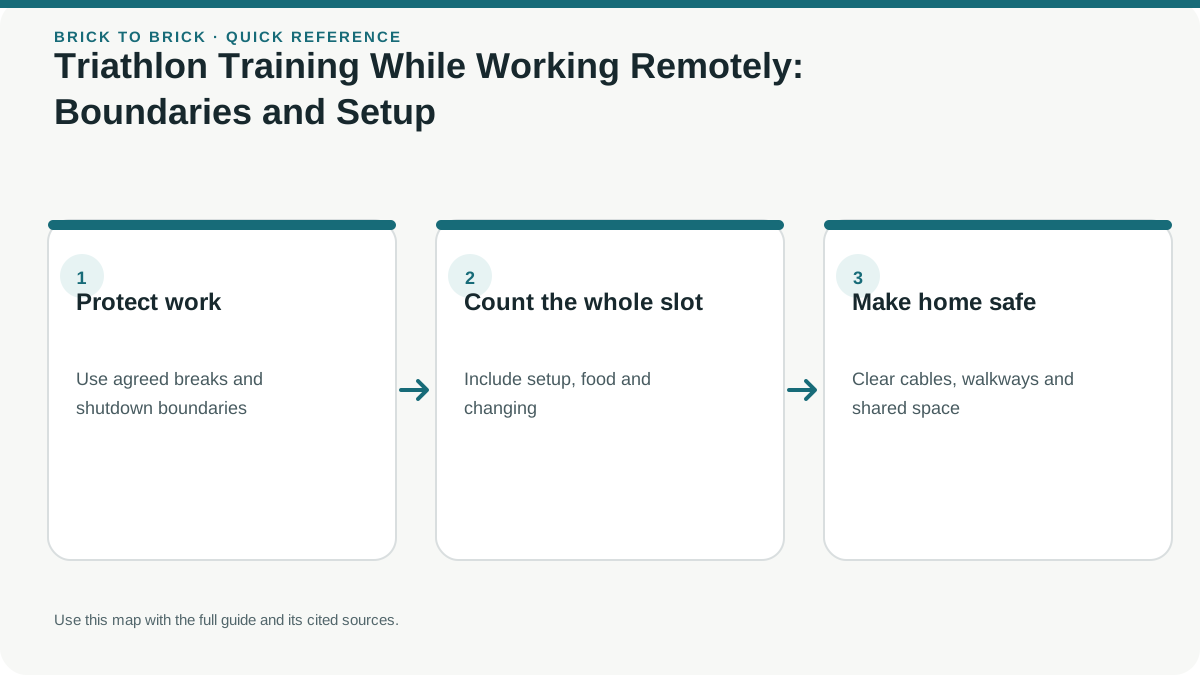
Remote work can make training access easier, but it does not create unlimited free time. Define working hours, count the full session turnaround and set up the home environment so exercise fits agreed responsibilities.
In this article
- 1Distinguish saved commuting time from available work time
- 2Calculate a realistic lunch session
- 3Set up indoor training for the room you have
- 4Protect transitions between work and exercise
- 5Use flexibility to improve consistency, not to add endless sessions
- 6Review one remote-work week
- 7Create a lunch-session shutdown checklist
- 8Make an indoor setup convenient enough to use and safe enough to leave
- 9Build a calendar that includes the whole session
- 10Choose key sessions around the week you actually have
- 11Protect breaks and meals from becoming hidden work time
- 12Use split sessions only when they fit the training plan
- 13Keep the home training area separate from work hazards
- 14Manage noise, neighbors and shared household space
- 15Make meeting days lighter by design
- 16Keep a plan for travel and office days
- 17Use boundaries to keep work from consuming recovery
- 18Review workload across work and training together
- 19Make routines visible to household members
- 20Set an interruption rule before the week becomes stressful
- 21A Friday review can improve next week without overplanning
- ?Frequently asked questions
Distinguish saved commuting time from available work time
A shorter commute may create a useful training slot before or after work. It does not mean paid working hours are automatically available for exercise. Use the flexibility agreed with your employer or clients.
Mark meetings, focused work and meal breaks before adding sessions. A calendar block should include the time needed to stop working, train, shower and return ready to work.
For the broader household and employment planning, use training with full-time work. This page focuses on remote-specific boundaries and the home setup.
Calculate a realistic lunch session
Suppose you have a 60-minute break. If changing takes 5 minutes, showering and dressing take 15, and lunch needs 15, only 25 minutes remain for exercise. A 45-minute workout does not fit unless another part of the schedule changes.
This is an illustrative calculation. Time your own routine and include travel if leaving home. Keep food in the plan rather than treating lunch as expendable.
Choose a session that can end on time. A route with a fixed return point is safer for the calendar than riding outward until half the break has passed.
Set up indoor training for the room you have
Check stable equipment placement, ventilation, cooling, floor protection, electrical safety and manufacturer requirements. Consider neighbours and other household members when choosing session times.
Keep sweat away from work electronics and ensure cables do not create trip hazards. Store equipment so it does not obstruct normal movement through the room.
Do not assume buying a trainer solves every constraint. Compare the cost, space and setup time with an outdoor session or nearby facility that you can access reliably.
Protect transitions between work and exercise
Finish the current task or leave a clear note before starting the workout. On return, use a short reset: dry clothing, food, water as needed and a check of the next obligation.
Avoid turning every break into training. Time away from the desk can also mean an ordinary walk, preparing lunch or resting. General movement and a structured workout serve different purposes.
If a meeting overruns, use a preselected shorter version or skip the session. Do not allow a late workout to silently consume sleep or an agreed household commitment.
Use flexibility to improve consistency, not to add endless sessions
A remote worker may be able to move an easy run around weather or book a quieter pool slot. Use that advantage to make the existing plan more repeatable before adding doubles.
Keep track of total work. A short morning ride, lunch run and evening strength session can become a demanding day even when each fits into a gap.
If fatigue or concentration worsens, review the combination of work and training. A productivity claim from another athlete does not establish what will work for you.
Review one remote-work week
Record planned and actual session times, turnaround time, missed meals, disrupted meetings and sleep. Look for a recurring bottleneck rather than judging one unusual day.
Choose one change: a shorter lunch session, a pre-work swim, a quieter indoor time or fewer optional workouts. Keep the change compatible with your employment arrangements.
Use the minimum busy-week plan when deadlines rise. Remote flexibility is most useful when it supports clear boundaries and a schedule you can maintain.
Create a lunch-session shutdown checklist
Before beginning a remote-work lunch session, leave a brief note identifying the next work task and close any meeting dependencies. Set a return deadline that includes cooling down, changing, eating and restarting work.
For an illustrative 60-minute break, a 35-minute ride plus 10 minutes changing and 15 minutes eating uses the whole hour. There is no hidden time left for equipment problems or a late meeting. Reduce the workout or use a different window when that margin is unrealistic.
Keep the training area safe for the home: clear the floor, manage cables, provide appropriate ventilation and consider noise. Do not combine hard exercise with work that needs careful judgement merely because both happen in the same room. A clean boundary can improve the reliability of each activity.
Make an indoor setup convenient enough to use and safe enough to leave
A remote-work training area should not create a daily obstacle for the rest of the home. Decide where the bike or mat goes, how cables and equipment are stored, and how you will manage ventilation, noise and cleaning. Leave walkways clear and keep children, pets and other household members away from moving equipment during use.
Test the full setup and shutdown once outside a busy workday. Time the actions you actually need: moving furniture, connecting equipment, changing clothes, cleaning and returning the room to work use. If setup takes fifteen minutes, that belongs in the lunch calculation.
Keep water and any suitable session supplies accessible without putting them near electrical equipment. Follow the trainer and bicycle manufacturers' installation and use instructions. A permanent-looking arrangement still needs ordinary mechanical checks, and an unstable mount is not made acceptable by a short workout.
If the room is shared, agree when exercise noise is acceptable. Remote work can remove commuting time while adding shared-space constraints; neither should be assumed away. A nearby outdoor route or a shorter session elsewhere may work better on some days.
Review whether the arrangement makes work breaks more usable or simply encourages you to add sessions whenever a meeting disappears. Flexibility is useful when it supports a coherent plan. It is less useful when every unexpected gap becomes another demand on recovery.
Build a calendar that includes the whole session
A workout occupies more than the time on the training plan. Include changing, bicycle setup, travel to a pool or route, showering, food and the transition back to work. A 45-minute session can take much longer if the venue is not nearby or equipment is not ready. Calculate the real block before promising a meeting immediately afterward.
Leave a buffer for calls that run long and for unexpected equipment problems. If the day has no buffer, shorten or move the session rather than beginning already behind. The purpose of remote-work flexibility is to make the week more manageable, not to fill every open space with training.
Choose key sessions around the week you actually have
At the start of the week, identify work deadlines, family commitments, travel, pool hours and recovery days. Place the sessions that matter to your current plan where they are most realistic, then leave optional work flexible. A calendar block is a proposal; it may need to change when workload or health changes.
Do not use a generic “anchor session” template as a mandatory schedule. The right priorities depend on race distance, training history, coach guidance and available time. If you cannot fit the plan, speak with a coach about adapting volume instead of repeatedly borrowing time from sleep or meals.
Use split sessions only when they fit the training plan
Remote work may make it possible to split a workout or train twice in one day, but convenience does not automatically make extra sessions beneficial. Two sessions create additional warm-up, changing and recovery demands. Some athletes may benefit from split sessions under a coach's plan; others do better with one manageable workout or a rest day.
Do not break a long session into shorter parts and assume the training effect is identical. The purpose, intensity and recovery between bouts matter. If a session is split, record both parts and tell your coach. Stop if fatigue, injury or sleep problems are building.
Keep the home training area separate from work hazards
Position the trainer so the bicycle cannot hit a desk, door or walkway. Keep liquids away from electrical connections and work equipment. Use a mat and towel, secure the bicycle according to the trainer instructions, and check that the room has adequate ventilation and a stable surface. Store tools and weights so other household members will not trip over them.
Do not participate in video meetings while riding unless the setup is designed for safe use and your employer permits it. Looking at a screen can distract from balance, effort and equipment. Clear the area before and after each session, and follow manufacturer guidance for mounting, cleaning and maintenance.
Make meeting days lighter by design
Back-to-back calls leave little room for a safe workout transition. On a meeting-heavy day, choose an easier or shorter session only if it fits the training plan, or schedule rest. Do not start a hard interval with the expectation that you can end it instantly if a call begins; allow time to cool down and return to work.
Use calendar blocks that colleagues can understand without disclosing private details. If your organization has norms for availability, follow them. Training should not require an athlete to remain constantly reachable while exercising or create pressure to work through the evening after every session.
Keep a plan for travel and office days
A hybrid week may include office commutes, client visits or travel. Put sessions near days when travel is predictable, but do not assume every remote day will remain open. Pack only equipment that solves a likely problem and confirm access to a safe pool, gym or route before relying on it.
The separate triathlon training while traveling guide addresses facility and schedule changes away from home. For a temporary busy block, see training during busy periods. These pages focus on distinct constraints so you can choose the right adjustment without duplicating a full training plan.
Use boundaries to keep work from consuming recovery
Remote work can blur the end of a workday, making it easy to add training late and postpone meals or sleep. Set a shutdown cue, close the laptop and move work materials before beginning a home session. Afterward, decide when work is actually complete instead of returning automatically to email.
If work stress is high, consider whether rest or an easy session better supports the week. Training is not always the right response to stress. Persistent exhaustion, sleep disruption or low mood deserves support; adding workouts can make the situation worse.
Review workload across work and training together
Training load is not the only demand on recovery. A deadline, caregiving change, poor sleep or long commute can make a familiar session feel harder. A simple weekly check can record planned sessions, actual sessions, work peaks, sleep opportunity and how you feel. The record is not a diagnostic tool; it helps you notice when several stressors arrive together.
Share important changes with a coach so the plan reflects current life demands. Do not use a readiness score to prove that you can ignore stress. If health symptoms or injury appear, seek qualified care.
Make routines visible to household members
A predictable schedule can help partners, children and housemates plan around shared responsibilities. Agree on when equipment is used, who handles household tasks and what happens when a meeting or childcare need changes the plan. Do not assume that another person will absorb the disruption so a session can happen.
Some athletes will train best before the household wakes; others may need an evening session or a club. The workable option depends on the whole household and the athlete's recovery. A shared calendar can make the trade-offs visible and reduce last-minute friction.
Set an interruption rule before the week becomes stressful
Decide what gets shortened, moved or skipped when a work emergency appears. For example, you might protect a key planned session, drop an optional workout and preserve a rest day, subject to your coach's advice. The exact rule depends on the training plan. The important point is to choose deliberately rather than fitting every missed session into the remaining gaps.
If interruptions continue for several weeks, the plan may no longer fit the season. Talk with a coach about a lower-load or more flexible structure. There is no universal number of sessions that guarantees fitness maintenance for every triathlete.
A Friday review can improve next week without overplanning
At week's end, note which blocks worked, what was disrupted and whether the schedule left enough time for food, rest and work. Carry forward one useful change, such as packing pool gear the night before or avoiding a hard workout on a meeting-heavy day. Do not treat every missed item as a debt to repay.
If the week felt unsustainable, simplify the next one. Repeated overcommitment is a signal that the routine needs adjustment. The home-office training-space guide covers equipment and room safety; this page focuses on scheduling around remote work.
Sources
Sources are listed so readers can verify consequential claims and dated details.
- Sleep and the athlete: expert consensus — British Journal of Sports Medicine (accessed September 24, 2026)
- WHO guidance on physical activity and sedentary behaviour — World Health Organization (accessed September 24, 2026)
Frequently asked questions
Can I stay on a work call during an indoor workout?
Consider the demands of both tasks, workplace expectations and safety. A demanding session can impair attention and make communication difficult. Prefer a clear break for purposeful training rather than assuming multitasking creates extra time. Never take work calls while riding in traffic.