IRONMAN Training Hours: Plan Your Weekly Time Commitment
There is no weekly training-hours minimum that fits every IRONMAN athlete. Learn to budget sessions, travel, long workouts and recovery, and assess whether a plan fits your life and event.
By Lotte
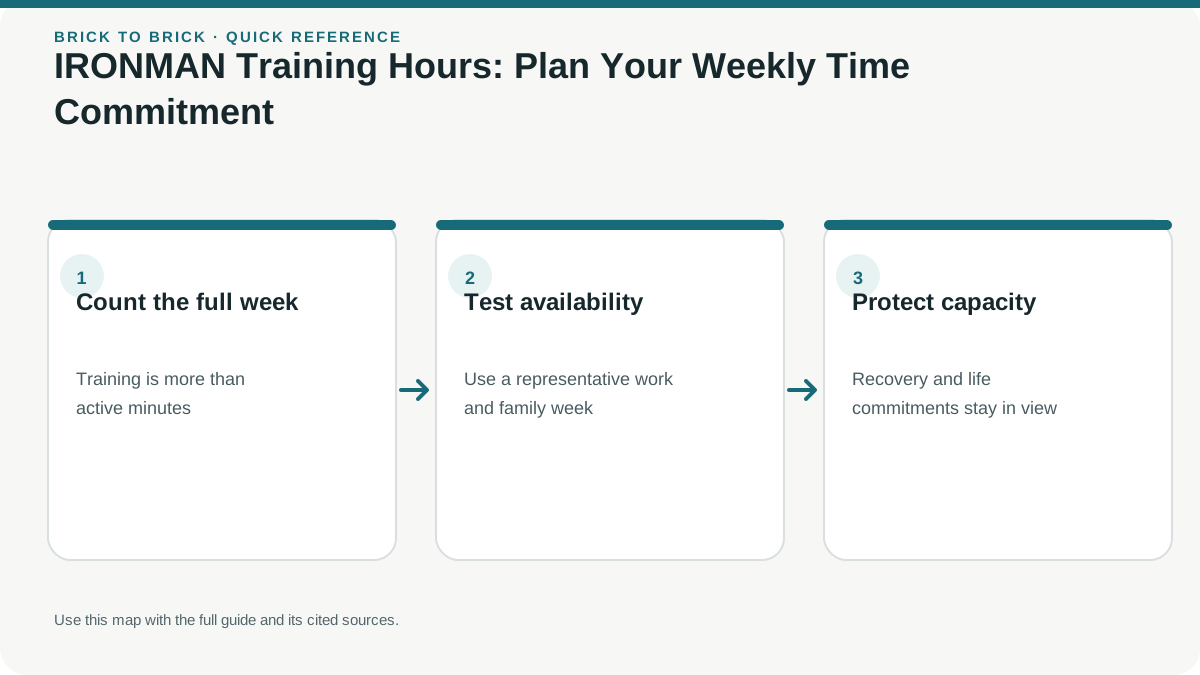
IRONMAN training hours are only one part of a demanding long-course commitment. This guide helps athletes compare weekly averages with peak weeks, count travel and recovery time, inspect the assumptions behind a plan, and test whether the schedule fits work, family and event demands without prescribing a universal minimum or promising a finish.
Key takeaways
- 1No single weekly-hour number establishes readiness for every athlete or full-distance course.
- 2Separate moving time, weekly average, peak weeks and calendar time for travel, setup and recovery.
- 3Audit what a plan assumes in swimming, cycling, running, fueling practice, recovery and race skills.
- 4Use a representative training block to see whether the schedule is repeatable around work, family and sleep.
- 5Check the current event guide and reconsider the date or distance if the preparation demands do not fit safely.
In this article
- 1Ask what the hours need to achieve
- 2Distinguish average, peak and calendar time
- 3Price the long sessions into the household calendar
- 4Evaluate a low-hour plan by its missing demands
- 5Use a trial block before committing further
- 6Let evidence change the event plan
- 7Price a peak week in hours outside the training app
- 8Calculate the average and peak from an actual block
- 9Inspect what is inside a low-hour promise
- 10Use a trial block to test the commitment before the largest weeks
- 11Build an hour budget from a real calendar
- 12Audit the plan's demands behind the weekly total
- 13Write a recovery-aware plan for missed sessions
- 14Review the commitment after a representative training block
- 15Match your budget to the actual event and its cutoff plan
- ⚖A time-budget worksheet for evaluating an Ironman plan
- ?Frequently asked questions
Ask what the hours need to achieve
A long-course plan must develop appropriate swim ability, cycling endurance, running tolerance, pacing, fueling and practical race skills. An hour spent in each sport does not contribute identically to every need.
Record your current sustainable week and the largest gaps relative to the event. A strong cyclist who cannot swim comfortably needs a different allocation from a confident swimmer new to running.
The full-distance training plan is an example structure to assess, not evidence that its advertised hours fit every athlete.
Distinguish average, peak and calendar time
Average weekly exercise time describes the whole preparation period. A peak week is the largest planned workload. Calendar time includes travel, changing, equipment, meals and practical recovery arrangements.
For an illustrative week, 3 hours swimming, 6 cycling, 3 running and 1 strength total 13 exercise hours. Adding 2 hours of travel and preparation produces 15 calendar hours before other recovery needs. These figures show the accounting method, not a recommended workload.
Ask whether both an ordinary week and the demanding weeks fit your life. A plan that is affordable only on paper is unlikely to be repeatable.
Price the long sessions into the household calendar
A long ride needs more than its moving time: route preparation, food, mechanical checks, stops and the return home all matter. The same applies to travel for open-water practice.
Discuss the predictable longer blocks with anyone affected. Consider whether one weekend day can support the main session without making the other day an unplanned recovery burden for others.
Use training with full-time work to make the commitment explicit. Do not assume an early start makes the time cost disappear.
Evaluate a low-hour plan by its missing demands
A lower-hour plan may fit some experienced athletes, but it is not automatically sufficient for a beginner or a demanding course. Ask what it preserves and what it omits: endurance, technique, open-water practice, long-ride fueling or run durability.
Do not compensate for limited time by making every session hard. That changes the load without necessarily meeting the event's practical requirements.
If the gap cannot be addressed within available time and recovery, consider a later date, shorter distance or different objective. A finish-time ambition should not force an unrealistic schedule.
Use a trial block before committing further
Try a manageable representative schedule and record actual calendar use, recovery, symptoms and missed obligations. Do not jump straight into a peak week as a readiness test.
Review whether the pattern is sustainable across normal work and family demands. A holiday week with unlimited time is not a representative baseline for the rest of the year.
The IRONMAN readiness tool can organise questions, but its output is a planning aid rather than medical clearance or a finish guarantee.
Let evidence change the event plan
If sessions repeatedly fail because of time, access or recovery, identify the limiting factor and change it where possible. Buying a faster bicycle cannot replace missing swim preparation or running tolerance.
Track leading signs such as consistent sessions, comfortable recovery and successful equipment rehearsals. Total hours alone can hide poor distribution or excessive intensity.
Choose the preparation you can sustain, then match the race goal to it. The useful number is a realistic commitment with a purpose, not a universal minimum copied from another athlete.
Price a peak week in hours outside the training app
Take the actual longest week in a proposed plan and total each discipline, including both parts of bricks. Then add travel, changing, bike maintenance, food preparation and recovery arrangements. Keep unknown swim duration visible until you estimate it from a realistic pace and rest structure.
A fictional week containing 10 hours of exercise plus 3 hours of logistics needs 13 hours in the calendar before any extra recovery time. Calling it a ten-hour plan can conceal the commitment your household experiences.
Compare that week with an ordinary work week and a difficult one. Identify which sessions can move and which require daylight, facilities or support. If the peak only fits when nothing goes wrong, build a smaller margin of commitments or reassess the event. Total hours describe one constraint; they do not certify readiness for the swim, long ride or marathon.
Calculate the average and peak from an actual block
Use the same accounting method for every week. In a fictional eight-week block, exercise totals might be 6, 7, 8, 5, 8, 9, 10 and 6 hours. The sum is 59 hours and the average is 59 ÷ 8 = 7.375 hours, or 7 hours 22.5 minutes. The peak is 10 hours. These invented numbers demonstrate calculation, not a sufficient Ironman programme.
The average is about 26% below the peak in this particular example. That percentage follows from the listed weeks; it should not be assumed for another plan. A block with more large weeks or a longer taper would produce a different relationship.
Check what each total includes. Some logs count warm-up and cool-down, others only a main set. Swimming in metres needs conversion to time using a realistic pace plus rests. A brick contains both bike and run time, but should not be counted again as a separate extra workout if its components are already included.
Keep calendar time in another column. It includes travel, changing, preparation and the practical space needed around exercise. Those minutes do not become physiological training volume, but they do affect whether the plan can be completed. Both numbers matter, and combining them into one unexplained total makes comparisons less useful.
Inspect what is inside a low-hour promise
When a plan advertises a small weekly commitment, read the actual sessions and prerequisites. Does it assume an experienced swimmer, strong cycling endurance or a history of marathon training? Are its longest weeks clearly stated? Does the advertised figure exclude strength work, warm-ups, travel or optional sessions that the plan later treats as important?
Ask whether the schedule addresses the demands you personally lack. An athlete with substantial endurance experience and reliable skills is not in the same position as someone learning to swim. Matching their weekly total does not reproduce their training history.
Also inspect intensity. A compact schedule can still be demanding, especially when several sessions are hard or when work and sleep already limit recovery. More intensity is not a universal substitute for missing long-course preparation.
The useful comparison is the complete programme and its assumptions. If those assumptions do not fit, seek an adaptation or choose another objective. A headline number should help you screen possibilities, not override evidence about current capacity.
Use a trial block to test the commitment before the largest weeks
Select a representative part of the proposed schedule that is appropriate to your current training. Try its logistical arrangement and record actual completion, recovery and the effect on other responsibilities. Do not begin with the peak week simply to prove that enough hours exist.
At the review, identify the bottleneck. It may be pool access, long-ride support, recurrent fatigue, run tolerance or an event-specific skill. Choose the next action from that observation. Adding a general hour may do little if the missing element is supervised swimming or appropriate recovery.
Before proceeding further, explain the coming larger weeks to anyone affected by them. Agree their timing and a fallback for disruption. The decision to continue should be based on a workable arrangement and suitable preparation, with professional advice where needed, rather than a belief that commitment alone will create the required time.
Build an hour budget from a real calendar
Before comparing plans, map a representative two-week stretch of ordinary life. Mark fixed work or study hours, caregiving, travel, sleep, meals, and commitments that cannot be moved. Add the realistic windows for pool access, outdoor light, safe cycling and recovery. Then place training into the remaining spaces. This reverses a common planning error: choosing an attractive weekly hour target first and assuming the rest of life will rearrange itself around it.
Separate “could do once” from “can repeat.” A holiday week, unusually quiet work period or one generous weekend may not represent the season. Consider the busiest normal week, seasonal work peaks and travel. If your only reliable long ride begins before dawn, account for the sleep trade-off and route safety. If the pool is a long drive away, include that travel every time; do not add it only when the schedule is already convenient.
Keep a second column for the time outside the workout: getting to the venue, changing, setting up the bike, preparing food, showering and returning home. Some of those tasks overlap with family or household routines, but many do not. Compare an ordinary week and the plan's biggest week with the same accounting. If either requires recurring sleep loss, unsafe commuting or missed essential responsibilities, it is not a stable budget even if the workout total fits in a spreadsheet.
A simple planning sheet can list day, training window, discipline, estimated session time, travel/setup time, alternative slot and the person or resource the session depends on. Use the triathlon training week overview to see how sessions can be distributed; this hours page asks whether the resulting pattern fits your actual calendar.
Audit the plan's demands behind the weekly total
Two plans with the same weekly total can emphasize different skills and create very different demands. Audit each discipline as its own workstream, then check how sessions interact. An hour of pool swimming may be skill practice for one athlete and endurance work for another. A long ride may include course-specific handling and practiced fueling. Running after cycling asks for tolerance that a weekly total cannot describe. Strength work, mobility or recovery sessions may be listed as optional even when the plan expects athletes to do them.
Use a checklist rather than looking only at a headline number:
- Swim: Are the proposed sessions accessible at your pool? Does the plan build the specific swim skills you lack, and is supervised open-water practice relevant to your event?
- Bike: Are long rides present and gradual? Does the plan allow safe outdoor handling practice, maintenance checks and rehearsal of the bike fueling routine?
- Run: Does the schedule build running progressively from your current background? Can you manage the run leg without forcing extra sessions when tired or injured?
- Transitions and logistics: Does it include equipment rehearsal, race-specific skills and time to learn the course or follow the current athlete guide?
- Recovery: Is there room to respond to illness, pain, work stress, poor sleep or an unexpected missed session?
This list does not set a pass mark or prescribe weekly sessions. It helps reveal assumptions that a low-hour plan may leave implicit. For each area, write what experience the plan assumes, what it actually schedules, and what you would do if the skill is missing. A qualified coach can help decide which change has the most value for your background. Do not replace an omitted long session with several hard workouts simply to make the week look fuller.
Write a recovery-aware plan for missed sessions
A usable budget includes what happens when life disrupts training. Decide in advance which session can move, shorten or be skipped, and which one needs a conversation with your coach. This prevents one late meeting or poor night's sleep from turning into an unscheduled “catch-up” workout that stacks hard efforts together.
Use the reason for the disruption to choose the response. A closed pool may allow a different technique or aerobic session if a coach agrees, but a substitute is not the same as completing a swim. A weather-delayed long ride may need to move to another safe day or be shortened; it should not automatically become an indoor session of equal clock time. A missed easy session can often stay missed. If a session is missed because of pain, illness or unusual fatigue, assess the reason before rescheduling it. Persistent or concerning symptoms merit guidance from a qualified clinician.
Look at the next several days before adding anything. Where can a session move without crowding recovery, family obligations or sleep? If no safe space remains, record it and continue with the next planned session rather than doubling up. Repeatedly missed sessions are useful evidence: the plan, timing or event goal may need adjustment. They are not proof that you lack discipline.
Discuss the adjustment rules with a coach before the most demanding part of the plan. Ask which workouts are priorities, what can be removed during a busy week, and what warning signs should prompt a pause or professional review. For athletes balancing work and family, our busy-parent triathlon training guide offers practical calendar approaches; it does not make a full-distance load automatically manageable.
Review the commitment after a representative training block
Do not decide whether an Ironman schedule is sustainable from one unusually good week. After a representative block, compare what the plan scheduled with what you completed and how it affected the rest of your life. Look for patterns: Are swims regularly displaced by pool hours? Do long rides take more time than the plan assumes? Are you recovering before the next key session? Does the schedule leave room for sleep, work, meals and family responsibilities?
A useful review records both training and context. Note actual moving time separately from travel and setup, and record why sessions were changed. Add a simple effort or recovery note in terms you understand; no one metric makes the decision. A drop in session completion with repeated fatigue or symptoms is a prompt to seek advice or revise the load, not to increase intensity. A plan that looks perfect in the app but repeatedly requires missed sleep or unsafe travel is not succeeding as a life schedule.
Then choose one change at a time: move a session to a safer window, simplify equipment logistics, ask a coach about the purpose of a workout, or reduce the event ambition. Reassess after the next suitable block rather than changing every session after one difficult day. A coach may help interpret training response; a sports dietitian can address fueling logistics, and a clinician should assess health concerns. This review is a planning tool, not medical clearance or a prediction that you will finish.
Match your budget to the actual event and its cutoff plan
“Ironman” is often used informally for full-distance triathlon, while IRONMAN is also an event brand. Confirm the exact race, distance, course, conditions, cutoff rules and required procedures in the organizer's current athlete guide. Courses, aid stations, cutoffs, start times and permitted equipment can vary across events and seasons. A training plan for one course is not automatically a fit for another.
Read the cutoff information as part of the time budget, not only as a race-day detail. Ask what swim start format and swim cutoff apply, where bike and run checkpoints occur, and what happens if an athlete is delayed or withdraws. Include likely travel to training locations and event familiarization when those skills matter. If the route has conditions you have not practised, identify how and when you can prepare for them safely.
Then connect the race demands to the schedule you can sustain. Can you practise the disciplines and skills that matter for this event? Can the long-session progression fit without repeated overreaching? Do your current experience and health needs warrant a coach or clinician's input? If the gaps cannot be addressed in the time available, changing the race date or choosing a different distance can be a sound planning decision. Check the current IRONMAN competition rules and your event's own guide; use the organizer's documents for event-specific facts rather than relying on an old course page.
A time-budget worksheet for evaluating an Ironman plan
| Budget line | Record | Question to ask |
|---|---|---|
| Exercise time | Swim, bike, run, strength and mobility as scheduled | What sessions are included or treated as optional? |
| Peak week | The plan's largest planned week and its session mix | Can this week fit without recurring sleep loss or unsafe logistics? |
| Travel and setup | Pool commute, bike preparation, changing and cleanup | Are these hours visible in my calendar? |
| Recovery and care | Meals, sleep opportunity, appointments and recovery arrangements | Does the plan leave space to respond to fatigue or illness? |
| Event-specific preparation | Open-water access, course practice, equipment and athlete-guide review | What experience does the race require that my schedule does not address? |
| Disruption plan | Move, shorten, skip or seek coaching advice | What will I do when work, family, weather or health changes the week? |
Sources
Sources are listed so readers can verify consequential claims and dated details.
- Sleep and the athlete: narrative review and 2021 expert consensus recommendations — British Journal of Sports Medicine (accessed September 24, 2026)
- IRONMAN Competition Rules — IRONMAN (accessed September 24, 2026)
- Multisport Rules — USA Triathlon (accessed September 24, 2026)
- IRONMAN Cycle Smart — IRONMAN (accessed September 24, 2026)
Frequently asked questions
How many hours a week do I need to train for an IRONMAN?
There is no universal weekly minimum. The time required depends on your training history, current skills, health, course, goals, plan structure and how the plan counts sessions. Compare the actual schedule and peak weeks rather than treating a single number as a guarantee of readiness.
Do IRONMAN training hours include travel and recovery?
Training plans often report exercise time separately from logistics. For a realistic calendar budget, add travel, changing, setup, maintenance, meal preparation and practical recovery arrangements. Track workout time and total time in separate columns.
Can a beginner train for an IRONMAN on fewer hours?
An online weekly total cannot determine whether a particular beginner is prepared. Review the plan's prerequisites, your swim and run background, gradual progression, event demands, health and ability to recover. A qualified coach or clinician may help you decide whether to adjust the plan, date or distance.
Should I make up a missed Ironman workout?
Not automatically. Consider why it was missed and whether another safe slot exists without crowding recovery or sleep. A missed session due to illness, pain or unusual fatigue may call for rest or professional advice. Repeated scheduling conflicts suggest the plan needs review.
Does a low-hour training plan guarantee a finish?
No. Weekly hours do not guarantee readiness or a finish. Plans have assumptions about training history, skills, recovery and course demands. Check those assumptions and the current athlete guide for the event you intend to race.
Should I choose a shorter event if I cannot fit the plan?
Changing the event date or distance can be a reasonable choice if you cannot prepare safely and consistently for the actual course. Discuss the decision with a coach or clinician when training history, injury, illness or health concerns affect your readiness.