Alcohol and Triathlon Training: Recovery and Planning
Learn how alcohol may affect sleep, recovery and training safety. Review evidence, next-session decisions and when to speak with a clinician.
By Lotte
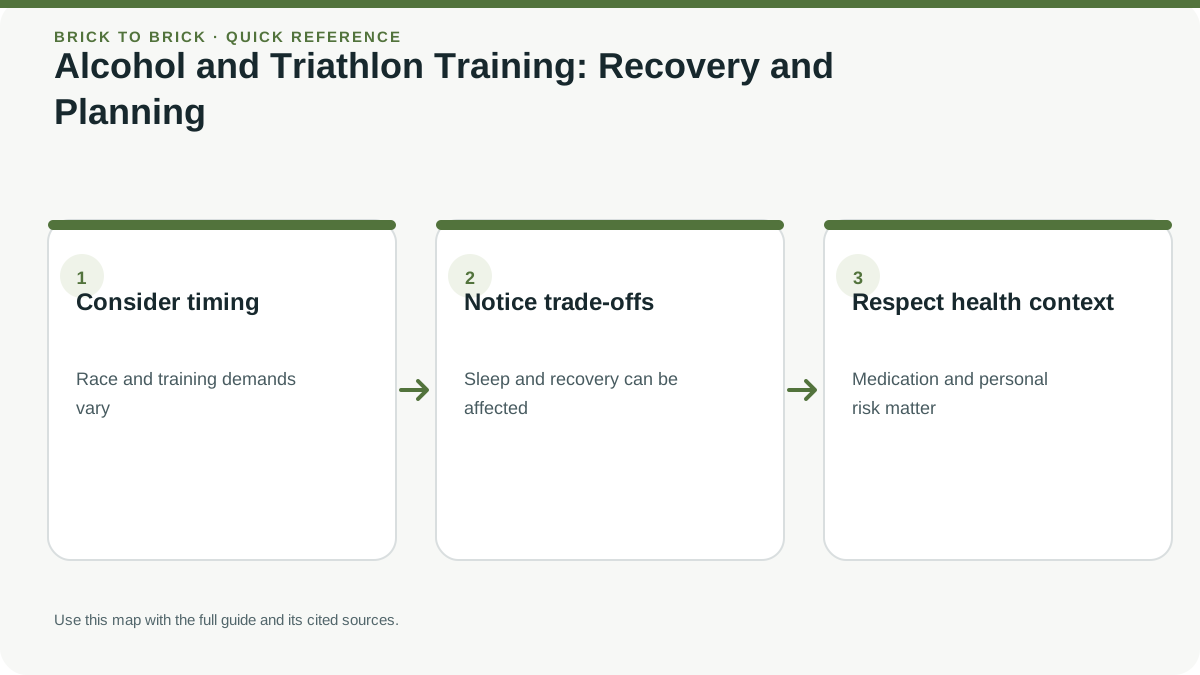
Alcohol can complicate sleep, recovery and safe training decisions, but individual effects and risks differ. Use the demands of the next session and current health guidance rather than relying on a universal waiting-time rule.
Key takeaways
- 1No amount of alcohol is required for recovery or performance.
- 2Never ride, drive or swim when impaired; food, coffee and water do not restore sobriety.
- 3Move or skip a session if impairment, poor sleep or symptoms make it unsafe.
In this article
- 1Separate health guidance from performance speculation
- 2Plan the social event and the following day together
- 3Use a morning decision instead of a punishment workout
- 4Keep a useful, non-judgemental record
- 5Make the post-race celebration part of recovery
- 6When the issue needs more than schedule changes
- 7Make a social plan that does not depend on willpower at midnight
- 8Give an alcohol-free choice the same practical preparation
- 9What alcohol can change after a training session
- 10Sleep, hydration and judgment are separate decisions
- 11Put alcohol in context with the week’s training load
- 12Plan a post-race celebration without treating alcohol as recovery
- 13Know when drinking needs support beyond training changes
- 14Separate recovery outcomes before interpreting evidence
- 15Use a personal decision framework without normalizing risk
- ?Frequently asked questions
Separate health guidance from performance speculation
The World Health Organization identifies alcohol as a toxic, psychoactive substance associated with health risks. Lower consumption reduces exposure; a claim that a particular amount is harmless for every athlete is not supported.
Training questions are narrower: will you sleep well, eat adequately, make safe decisions and arrive ready for the next session? Research about a specific dose in a small study cannot give an exact recovery penalty for your body or an exact number of hours until you are ready.
This guide does not prescribe drinking limits. Local public-health guidance and individual clinical advice matter, especially with medication, pregnancy, liver disease or a history of alcohol-related problems.
Use a morning decision instead of a punishment workout
On waking, check alertness, balance, nausea, headache and whether you can eat normally. If you feel impaired or unwell, do not ride on the road, swim or attempt hard exercise. Rest and reassess.
If the main issue is a disrupted night, consider whether a short easy session serves any useful purpose or whether sleep and normal meals are the better choice. Do not add intervals to “sweat it out,” and do not compensate for drinking by restricting food.
A missed session is usually simpler to manage than a crash, an unsafe swim or several days of worsening fatigue. Resume your normal schedule when you are well rather than stacking missed work.
Keep a useful, non-judgemental record
For a few relevant occasions, record bedtime, wake time, whether you drank, and your next-day readiness. Note other factors such as travel, late meals, unusual stress or a long race. The purpose is to see whether the combination repeatedly disrupts training.
Do not turn a wearable sleep score into a diagnosis. A device can support a conversation, but it does not measure every part of recovery. If you consistently feel unrefreshed, use the sleep and recovery guide to organise what to discuss with a clinician.
A useful outcome might be moving the long ride away from a recurring late evening, or choosing an alcohol-free option before a key rehearsal.
Make the post-race celebration part of recovery
After a race, first arrange food, comfortable clothing, transport and the chance to rest. Alcohol is not a rehydration strategy, and the fact that a demanding event is finished does not remove the need for safe decisions.
If you are nauseated, dizzy, confused or otherwise unwell, seek appropriate help rather than treating a celebratory drink as harmless. Keep an eye on friends who are also fatigued and agree how everyone gets home.
You can celebrate a finish in ways that leave room for different preferences: a meal, a walk with supporters, photographs or a social event later in the week. No one should need to explain a private health reason for declining alcohol.
When the issue needs more than schedule changes
If drinking feels difficult to control, regularly displaces meals or responsibilities, or creates worry for you or people close to you, seek support from a clinician or local alcohol service. That is a health question rather than a failure of training discipline.
If you may be physically dependent, obtain medical advice before suddenly stopping; withdrawal can be dangerous. Seek urgent help for severe symptoms, seizures or confusion.
For everyday planning, decide the next morning's expectations before going out and keep the choice proportionate. A consistent training routine benefits from realistic social arrangements, not guilt or exaggerated promises about rapid detoxification.
Give an alcohol-free choice the same practical preparation
If you choose not to drink, make the alternative convenient: check the venue's options, arrange your own transport if useful and tell a friend who can support the choice. You do not owe others a performance-based explanation. Keeping a social occasion enjoyable without alcohol is a valid aim in its own right, and it avoids making every personal decision depend on whether you have a race booked.
What alcohol can change after a training session
Alcohol can affect a training day through several routes at once: sleep timing and quality, judgment, coordination, food choices, hydration behavior and the time available for recovery. The size of an effect varies with the amount consumed, timing, the athlete’s body, the session, the environment and what happens next. Research on post-exercise alcohol is limited and often studies small groups of men after resistance exercise; it should not be treated as a precise forecast for every woman, endurance athlete or long-course race.
One systematic review of alcohol consumed after resistance exercise found that some measured performance outcomes were not consistently different between conditions, while certain biological markers—including muscle protein synthesis in a study—changed. That narrow evidence does not prove alcohol has no effect on endurance training, and it does not identify a safe performance-enhancing or recovery dose. It supports a more careful summary: alcohol is not a recovery tool, and it can complicate recovery behaviors even when a next-day workout feels normal.
The World Health Organization describes alcohol as a psychoactive, toxic substance associated with health risks. This page is about training decisions, not a personal medical assessment or a claim that one drinking pattern is safe for everyone. People who are pregnant, take interacting medication, have a relevant medical condition or are trying to reduce or stop drinking should seek appropriate professional support.
Sleep, hydration and judgment are separate decisions
It is easy to reduce the discussion to “alcohol dehydrates you,” but athletes make several independent choices after drinking. Alcohol can disrupt sleep and next-day alertness. A poor night can make an outdoor ride, open-water swim, strength session or long drive less safe even if fluid intake was adequate. Alcohol may also make it harder to notice fatigue, balance problems or an illness that would normally lead you to rest.
Do not use alcohol as a rehydration strategy after a hot race or hard session. Start with your planned meal, appropriate non-alcoholic fluids, shade, cooling and rest. If the event caused substantial dehydration, vomiting or heat illness, follow medical advice rather than trying to manage symptoms with a drink. Drinking more fluid than you need is also not automatically safer; forced over-drinking during prolonged events can create serious risks.
The next morning, make a decision based on actual function rather than guilt or a training streak. If you are groggy, dizzy, unsteady, nauseated, still feel impaired or cannot eat and drink normally, do not drive, cycle in traffic, swim unsupervised or do a hard workout. Rest, use a safe low-demand alternative only if you are well enough, and reassess later. Serious or unusual symptoms warrant medical evaluation. Skipping one session is safer than trying to compensate for a late night with a maximal effort.
Put alcohol in context with the week’s training load
The same social event can have different consequences depending on what surrounds it. An evening before a quality workout, a long ride in traffic or a race is a different scheduling problem from a low-stress day with no early responsibility. When possible, plan demanding sessions away from nights when sleep is likely to be shortened. This is a practical scheduling choice, not a guarantee that drinking on another night has no health consequences.
If an event is unavoidable, decide before you go what happens to the next day’s session. You can move it, reduce the demand, take a rest day or do a brief indoor session only if fully alert and well. Do not stack missed work into the rest of the week as punishment; that can create more fatigue than the original change. A training plan should be flexible enough to accommodate ordinary life.
A useful log is short and private: note training type and effort, sleep duration and quality, whether you drank and whether the next day felt different. Avoid estimating an exact “performance cost” from one occasion. Heat, work stress, travel, late meals, menstrual symptoms, illness and training load can all affect the same session. Look for repeated patterns rather than trying to convert one morning’s heart rate or pace into proof of a causal effect. If logging alcohol would increase anxiety or obsessive tracking, stop; the record is optional.
Plan a post-race celebration without treating alcohol as recovery
A finish line can make a celebratory drink feel like part of the reward. Keep the practical recovery tasks first: arrange a safe ride, eat a meal that suits you, drink according to thirst and the conditions, change out of wet or cold kit, and find a place to rest. A long event can leave judgment and coordination impaired from exertion alone, so do not assume that crossing the finish makes driving or cycling home safe.
If you choose to drink, understand that event duration, heat, nausea, medication, sleep debt and dehydration can make the situation less predictable. Avoid pressure to match another athlete’s amount. A non-alcoholic option can be just as social, and you do not owe an explanation. If you have taken medication or have a health condition, check qualified medical guidance before combining it with alcohol.
Do not turn a post-race drink into a hydration calculation. Alcohol content and serving sizes vary, and beverage volume is not a direct measure of the fluid and electrolyte needs created by the event. If you are vomiting, confused, faint, unable to keep fluid down or unusually unwell, seek medical help rather than relying on friends to monitor you through a serious problem.
Race recovery can include a celebration and still prioritize safety. Decide transportation with a sober person before the event, stay with someone you trust if you feel unwell, and seek help if symptoms are more than expected fatigue.
Know when drinking needs support beyond training changes
Changing a workout schedule can address a planning conflict; it cannot treat alcohol dependence or another health concern. Consider speaking with a clinician or a local alcohol support service if drinking feels difficult to control, you regularly drink more than intended, it interferes with relationships or responsibilities, you experience withdrawal symptoms, or attempts to cut down are not working. You do not need to wait for a crisis or reach a particular training consequence before asking for help.
If someone is difficult to wake, breathing slowly or irregularly, having a seizure, repeatedly vomiting, severely confused or becoming cold and pale, treat it as an emergency. Do not leave them to sleep it off. Call the local emergency service and follow the dispatcher’s instructions. Signs and emergency numbers differ by country; use the local service.
For athletes who prefer a measurable experiment, choose a low-risk period and a clear question, such as whether late nights coincide with missed morning sessions. Do not use a self-experiment to diagnose a health problem, and do not suddenly stop heavy regular drinking without medical advice because withdrawal can be dangerous. A healthcare professional can help assess the safest next step.
The sustainable training choice is the one that protects health, sleep, safe transport and relationships as well as performance. Endurance sport can include social events, but an app, race plan or coach should never pressure you to ignore a health concern.
Separate recovery outcomes before interpreting evidence
Questions about alcohol and sport often combine sleep quality, next-day coordination, hydration, muscle repair, training adaptation and long-term health. Evidence about one outcome does not answer all the others. A small study of a single drinking session after resistance exercise cannot establish the effect of every dose, timing pattern or endurance workout. Study participants, beverage amounts, meal context and measurement windows differ. Avoid turning a narrow experiment into a precise rule such as a guaranteed waiting period before training.
Alcohol can make someone feel sleepy while still disrupting sleep quality. A person may also underestimate impairment, especially after a late social event or hard training. Do not ride, drive, swim alone in open water or handle equipment when impaired. A session requiring balance, reaction time or road awareness should be moved until the athlete is fully unimpaired and rested. Coffee, a shower or extra fluids do not make someone sober.
Alcoholic drinks contain fluid, but that does not make alcohol a rehydration strategy. Recovery depends on the total situation: sweat loss, food, water, heat exposure and the next training demand. Avoid prescribing a fixed volume of water to offset alcohol; excessive drinking can also be dangerous. Confusion, repeated vomiting, difficulty waking or other signs of an emergency call for urgent medical help, not a home recovery protocol.
The practical training decision is whether a session can be completed safely and at the intended quality. If sleep was poor, coordination is impaired or symptoms remain, rest or easy activity may be more appropriate than a hard workout. Moving one session is usually preferable to stacking it onto an already demanding day. Athletes who train through heat or have health risks should discuss alcohol and recovery with a qualified sports dietitian or clinician.
Use a personal decision framework without normalizing risk
There is no performance benefit that requires someone to drink alcohol. People who do not drink do not need to start for social reasons or because they believe alcohol improves recovery. For people who do drink, lower consumption generally means lower exposure, but individual risk differs with age, medication, pregnancy and health history. Follow current public-health guidance where you live and ask a clinician about personal risk or medication interactions.
Before a key workout or race, consider the demands rather than searching for a universal cutoff. Will the event involve driving, technical cycling, open water or early-morning concentration? Is the athlete responsible for another person? Could a late night interfere with sleep or medication timing? These questions support informed choices without claiming that a specific number of hours makes drinking safe for everyone.
If alcohol is difficult to control, affects training or relationships, or is used to manage stress, this is a health concern rather than a discipline failure. A primary-care clinician or local support service can discuss confidential options. Athletes can plan social activities around non-alcoholic drinks, arrange transport and tell a trusted person what support would help. These steps do not replace care when someone may be dependent or at risk of withdrawal.
Clubs and coaches should avoid making alcohol a required part of team culture. Offer inclusive alternatives and make it ordinary to decline a drink or leave early. Recovery basics still matter: adequate food, sleep, suitable training load and medical care when needed. Alcohol should not be used to manage pain, sleep or anxiety, and no performance claim justifies ignoring a health concern.
Sources
Sources are listed so readers can verify consequential claims and dated details.
- Alcohol fact sheet — World Health Organization (accessed September 24, 2026)
- Alcohol misuse: treatment and withdrawal — NHS (accessed September 13, 2026)
- Alcohol ingestion after resistance exercise systematic review — Peer-reviewed systematic review (accessed September 24, 2026)
- Nutrition and Athletic Performance position paper — AND, Dietitians of Canada and ACSM (accessed September 24, 2026)
Frequently asked questions
Does alcohol always ruin a workout?
Effects vary by amount, timing, sleep, health and the session. Do not treat a single study as a rule for every athlete; decide based on safety and how you feel.
Can a sports drink make it safe to train after drinking?
No. A drink cannot establish that you are unimpaired or safe to ride, swim or drive. Arrange safe transport and reassess the session when fully unimpaired and rested.