Heat Acclimatization for Triathlon: Should You, and How Safely?
Decide whether to heat-acclimatize for a hot triathlon: what it can and can't do, who must get medical advice first, the safety rules that come first, and where the how-to lives.
By Lotte
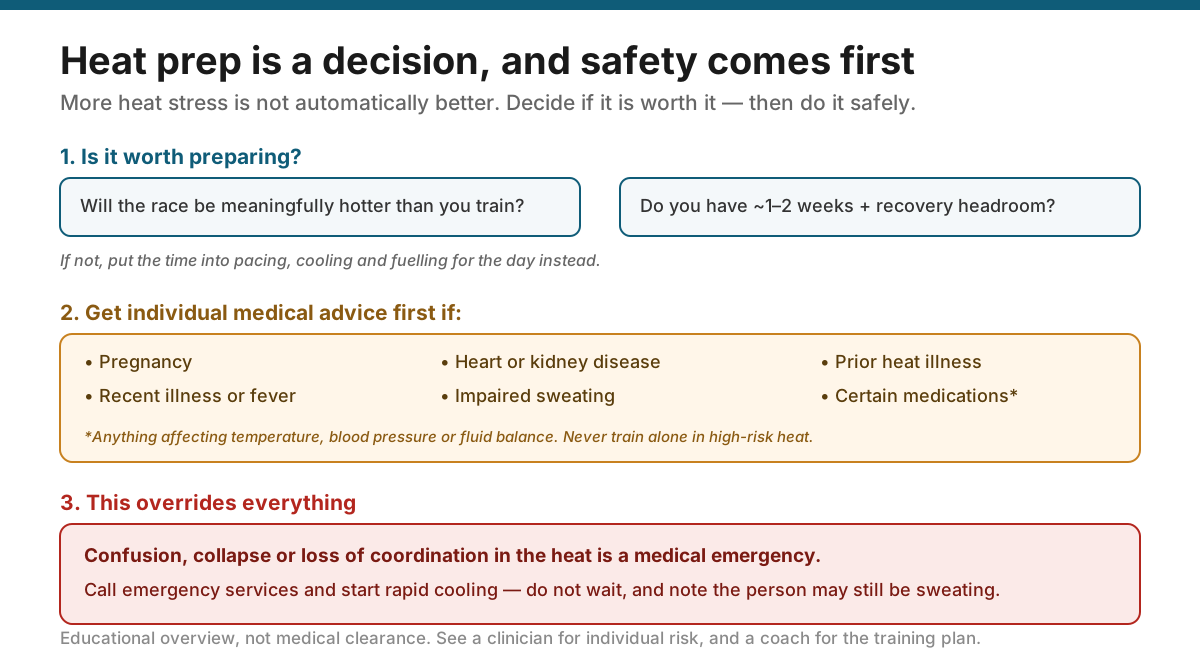
Heat acclimatization is repeated, controlled exercise in heat that helps your body cope with a hot race with less strain. But it is a decision, not a default: it adds training stress, it does not make extreme conditions safe, and some people should get medical advice before attempting it. This page is the decision-and-safety overview — what heat acclimatization can and can't do, whether it is worth it for your race, who must screen first, the safety principles that come before any protocol, and how to recognise an emergency. For the actual training block it links to the how-to guide, and for race day it links to racing in heat.
Key takeaways
- 1Heat acclimatization reduces heat strain but does not make extreme heat safe or restore your cool-weather pace
- 2It is worth preparing mainly when the race will be meaningfully hotter than you train, and you have ~1–2 weeks plus recovery headroom
- 3Some people — including those with heart or kidney disease, prior heat illness, pregnancy, or certain medications — should get medical advice first
- 4Safety comes before any protocol: controllable exposure, supervision, cooling access and a clear stop plan
- 5Confusion, collapse or loss of coordination in the heat is a medical emergency — call for help and start rapid cooling
In this article
- 1Quick answer: what this page is for
- 2What heat acclimatization can — and can't — do
- 3Is it worth preparing for your race?
- 4Who should get individual medical advice first
- 5The two broad approaches, at a glance
- 6Safety principles that come before any protocol
- 7Timing it around your race
- 8Recognise the warning signs and stop
- 9Decide, then go to the right guide
- ⚖What heat acclimatization can and can't do
- ?Frequently asked questions
Quick answer: what this page is for
Heat acclimatization is a series of controlled exposures to exercise in the heat that helps your body tolerate hot conditions with less physiological strain. Consensus guidance typically builds it over roughly one to two weeks, though people respond differently and some partial adaptation can come sooner.
This page is the decision-and-safety overview — it helps you work out whether preparing for a hot race is worth it for you, and how to approach it safely. It deliberately does not repeat the step-by-step block; the how-to training guide covers methods, dosing, scheduling and maintenance, racing in heat covers race-day pacing and cooling, and exertional heat stroke covers emergency recognition and response. Start here to decide; go there to execute.
What heat acclimatization can — and can't — do
Getting the expectations right is the first safety step, because overestimating what heat prep buys you is how people push too hard on a dangerous day.
What it can do: lower your heart rate and core temperature for the same effort in the heat, bring on sweating earlier and increase it, and make a hot race genuinely feel more manageable so your pace holds together better late on. These are real, measurable adaptations described consistently in the consensus literature — but their size is individual, not a fixed percentage anyone can promise you.
What it can't do: it does not make extreme heat safe, it does not restore your cool-weather pace in the heat, and it is not a substitute for sensible pacing, cooling and hydration on the day, or for the event's own heat policy. Treat acclimatization as one layer of protection that reduces heat strain — never as permission to ignore the conditions.
Is it worth preparing for your race?
Heat acclimatization is not free: every heat exposure is an extra stressor on top of your training, so it has to earn its place. Weigh it up honestly:
- Will the race actually be hot for you? The benefit is largest when race-day conditions will be meaningfully hotter or more humid than what you normally train in. If you already train in similar heat, or the race will be mild, the payoff is small.
- Do you have the time and recovery headroom? A useful block needs roughly one to two weeks of repeated exposure and the recovery capacity to absorb it without wrecking your key sessions or taper. Squeezed into an already-maxed schedule, it can do more harm than good.
- What is the opportunity cost? If preparing would compete with more important limiters, the time may be better spent on pacing, cooling strategy and a rehearsed fluid plan for the day.
If the answers point away from a block, that is a legitimate outcome — pacing and cooling still matter, but may not make participation safe; changing plans or not starting can be appropriate.
Who should get individual medical advice first
This is the most important part of the decision. Deliberate heat exposure raises physiological stress, and for some people that carries real risk, so screen yourself honestly before you begin. Seek advice from a clinician before any planned heat work if any of the following apply:
- pregnancy;
- cardiovascular disease, high blood pressure or kidney disease;
- a history of heat illness or heat stroke;
- a current or recent illness, or a fever;
- any condition that impairs sweating or temperature regulation;
- medications that affect temperature, blood pressure, hydration or fluid balance (many common ones do).
This is not an exhaustive list, and "I feel fine" is not a substitute for advice when a risk factor is present. Regardless of health status, do not undertake demanding heat sessions alone in high-risk conditions — have someone who knows what you are doing and can help if something goes wrong.
The two broad approaches, at a glance
If you decide a block is worth it, there are two broad ways to deliver the heat — and the how-to guide covers exactly how to schedule and dose them. In summary:
- Active — exercising in the heat. The primary, best-supported method: doing sessions in genuinely hot conditions. Best when you have access to the heat you are preparing for.
- Passive — heat after training. Post-session sauna or a hot bath can add to or maintain adaptation, and are especially useful when you are preparing for a hot destination race from a cool climate.
Both have supporting research, but tolerability, evidence and risk differ; neither is a guaranteed or risk-free substitute for an individual plan. The point for this page is only that your situation (do you have real heat to train in?) points you toward one or the other — the detailed protocol, timing and progression belong in the how-to guide, not here.
Safety principles that come before any protocol
Whatever method you choose, these principles override the details of any plan:
- Keep every exposure controllable. Use a setting where you can regulate the intensity and stop immediately — never a situation you cannot exit.
- Start conservative and progress by response. Begin easier and shorter than your eventual target and build only when your recovery, sleep and symptoms stay normal. More heat stress is not automatically better.
- Protect cooling and communication. Keep water, airflow and a phone within reach, and tell someone what you are doing and when to expect you back.
- Decide your stop signs in advance. Agree with yourself the symptoms that will end a session before you start it, so the decision is not made under stress.
Hydrate normally around sessions and avoid both severe dehydration and forced overdrinking; there is no single universal fluid or sodium dose, and a sweat-rate estimate can inform a plan without commanding full real-time replacement.
Timing it around your race
Because adaptations fade without exposure, timing matters — but the goal is simple: have the adaptation present on race day, not necessarily finished the day before. Heat adaptations decay over a few weeks without ongoing exposure, though they return faster on re-exposure because the body remembers.
In practice that means completing the main block in the weeks before the event and then topping it up with lighter exposures through the taper, rather than cramming a new, aggressive block into race week where it would compete with taper, travel and sleep. The detailed scheduling — how to build, maintain and time it around your specific plan — is in the how-to guide.
Recognise the warning signs and stop
Know the line between hard-but-fine and a problem, and act early. Stop a session for unusual dizziness, a worsening headache, nausea or repeated vomiting, chills, a disproportionately high heart rate, or feeling worse rather than warmed up.
And know the emergency: altered mental status during exertion in heat — confusion, loss of coordination, slurred speech, collapse or seizure — is a medical emergency. Call local emergency services and begin rapid whole-body cooling with whatever help is available; do not wait to see if it passes, and do not give oral fluids to someone with altered consciousness, and do not assume the person is fine because they are still sweating, because exertional heat stroke can occur with sweating present. Learn the full recognition-and-response steps in the exertional heat stroke guide before you begin any heat work.
Decide, then go to the right guide
To pull it together: prepare for the heat when your race will be meaningfully hotter than you train and you have the time and recovery to do it, skip it (and focus on pacing and cooling) when it won't or you don't, and screen your health honestly either way.
Once you have decided, use the spokes this page links to. For the training block itself, follow the heat-acclimatization how-to guide. For emergencies, read the exertional heat stroke guide. For race day, use triathlon racing in heat, and build your fluid plan with a sweat-rate test and a sodium plan for hot races. The decision is yours to make; these guides help you carry it out safely.
What heat acclimatization can and can't do
| The claim | Realistic? | What it actually means |
|---|---|---|
| Lowers heart rate and core temperature at the same effort | Yes | A hot race feels more manageable and pace holds better late on |
| Guarantees a fixed percentage improvement | No | The size of the benefit is individual — no honest number fits everyone |
| Makes a dangerously hot race safe | No | It reduces strain; it does not remove risk or replace the event's heat policy |
| Replaces pacing, cooling and hydration on the day | No | These still decide your race — acclimatization is one layer, not all of them |
| Restores your cool-weather pace in the heat | No | Expect to race more conservatively in the heat regardless |
Sources
Sources are listed so readers can verify consequential claims and dated details.
- IOC consensus statement on recommendations and regulations for sport events in the heat — International Olympic Committee consensus group (accessed September 1, 2026)
- Consensus recommendations on training and competing in the heat — PubMed (accessed September 1, 2026)
- National Athletic Trainers' Association position statement: exertional heat illnesses — National Athletic Trainers' Association (accessed September 1, 2026)
Frequently asked questions
Do I actually need to heat-acclimatize for my race?
Only when the race will be meaningfully hotter or more humid than what you already train in, and you have roughly one to two weeks plus the recovery headroom to add the stress. If the race will be mild, you already train in similar heat, or your schedule is maxed, your time is usually better spent on pacing, cooling and a rehearsed fluid plan for the day.
Is heat training safe?
For most healthy athletes, controlled heat exposure with conservative, gradual progression and a clear stop plan is reasonable — but it adds real physiological stress, so it is not risk-free. Some people, including those with heart or kidney disease, prior heat illness, pregnancy, recent illness, or certain medications, should get medical advice before starting, and no one should do demanding heat sessions alone in high-risk conditions.
How is this different from a heat training plan?
This page helps you decide whether to prepare and how to do it safely; it is not the step-by-step plan. The methods, how to dose a block over one to two weeks, how to fit it around your training and how to maintain it live in the dedicated heat-acclimatization training guide, which this page links to.
Can heat acclimatization make a dangerously hot race safe?
No. It lowers your heat strain and makes hard conditions more manageable, but it does not remove the risk of heat illness or replace sensible pacing, cooling, hydration and the event's own heat policy. Treat it as one layer of protection, and still respect the conditions on the day.
Who should not attempt heat training without medical advice?
Get individual advice first if you are pregnant, have cardiovascular, blood-pressure or kidney disease, have a history of heat illness, are recently ill or feverish, have impaired sweating, or take medications affecting temperature, blood pressure or fluid balance. The list is not exhaustive, so when in doubt, ask a clinician before beginning.