Heart Rate vs Power in Triathlon: When to Use Each
Compare heart rate and power for triathlon training across swimming, cycling, and running. Learn what each metric measures, when to use it, and how to interpret conflicting readings.
By Lotte
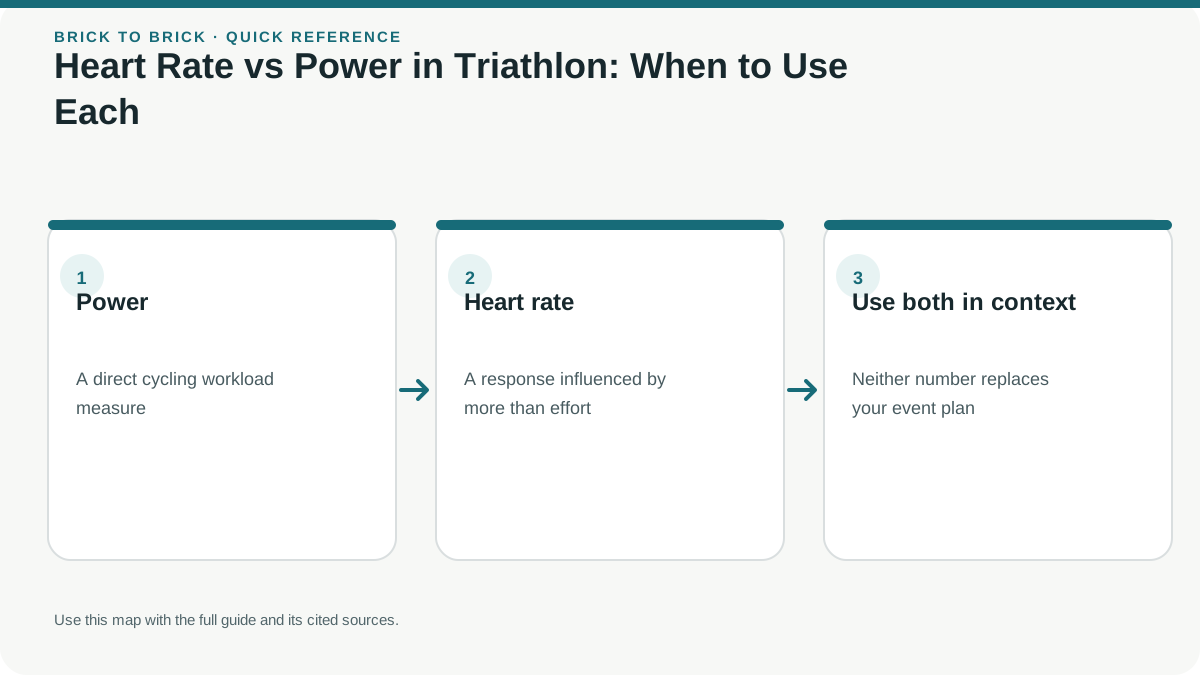
Heart rate and power answer different training questions. Heart rate reflects internal cardiovascular response; bike power measures external output, while running power is device-specific. Use the metric that fits the sport and session, cross-check it with perceived effort, and avoid treating any single reading as a diagnosis or universal instruction.
Key takeaways
- 1Heart rate is an internal response, not a direct measurement of running pace or cycling output
- 2Bike power helps describe measured output, but the same watts can feel different across days and measurement devices may differ
- 3Running power is device-specific and should be interpreted against your own history, not another athlete’s number
- 4For swimming, pace, interval time, stroke quality, and perceived effort are practical references; cycling power zones do not transfer directly
- 5Heart rate and output can disagree because response timing, conditions, sensors, or athlete state changed
- 6A beginner can train effectively with perceived effort, pace, heart rate, or a combination; a power meter is optional
- 7Use sport-specific zone references and do not let a device override symptoms or safety
In this article
- 1Heart rate vs power in triathlon: which should you use?
- 2What heart rate tells you—and what it cannot tell you
- 3What power measures on the bike and run
- 4Choose a metric by sport and session
- 5How to use heart rate and power together
- 6Do you need a power meter to start triathlon training?
- 7Build a useful setup with the data you already have
- 8Set training ranges without mixing zone systems
- 9Common heart-rate and power mistakes
- 10Use perceived effort as a third reference
- 11Build a personal reference before changing the plan
- 12A practical example: one bike workout, three signals
- 13Use the right follow-up guide for the next question
- ⚖What heart rate and power can tell you in triathlon
- ?Frequently asked questions
Heart rate vs power in triathlon: which should you use?
There is no single winner for every triathlon workout. Heart rate (HR) describes part of your body’s internal response to exercise. Power describes the external output measured in watts on a bicycle; running power is an estimate produced by a specific device or model. Perceived effort, pace, and the session itself add context that neither number can provide alone.
For bike intervals or steady climbs, a properly set up power meter can help you keep output controlled as terrain and wind change. HR can show how that output is landing on a particular day, but it does not respond at the same rate as a change in pedal force. For a steady run, HR, pace, and perceived effort are useful references; a running-power metric may add context on hills if you understand the device. In swimming, pace per interval, stroke quality, and effort are usually more practical anchors than cycling-style power.
If you are new to triathlon, you do not need to buy a power meter to train well. A watch, a heart-rate monitor, or even no device can be enough when paired with a clear session plan and an honest sense of effort. Add a metric when it helps answer a question you actually have, not because one number is supposed to make every workout precise.
The short version: use power to describe measured bike output; use heart rate to observe cardiovascular response; use pace and perceived effort to understand the task; combine signals when useful. None is a diagnosis or a universal command to keep going. This guide compares how the measures work across triathlon. For the separate question of how HR zones and power zones are calculated, see heart-rate versus power zones.
What heart rate tells you—and what it cannot tell you
Heart rate is the number of heartbeats per minute recorded by a sensor. It is an internal response to exercise, not a direct measurement of how fast you are running, how much force you are applying to the pedals, or how much energy your body is using. An HR number becomes useful when interpreted alongside your own recent training, sport, conditions, and a chosen zone model.
The same external output can produce different HR readings on different days. Temperature, duration, fatigue, illness, hydration status, emotional stress, sleep, medication, and other factors can affect the response. Research in recreational cyclists exercising in heat found that the HR response differed across the hydration conditions tested; that small study does not establish an individual drinking prescription, but it illustrates why HR is not a fixed translation of watts. A rising HR may reflect increasing cardiovascular strain, but one reading cannot identify the cause.
Heart-rate sensors also have limitations. A sudden implausible jump, drop, or flat reading may come from fit, contact, movement, interference, or the device rather than a sudden change in your body. If the number conflicts sharply with how you feel, check the sensor and conditions before rebuilding the workout around one sample. The heart-rate monitor guide explains chest straps and optical sensors; this article focuses on what the data means.
HR can add useful context during longer steady efforts and across repeated sessions, especially when interpreted against a consistent personal baseline. It is not a stand-alone test for overtraining, illness, dehydration, heat illness, or recovery. If an unusual reading comes with feeling unwell, pain, faintness, unusual breathlessness, or other concerning symptoms, ease off or stop and seek appropriate help rather than waiting for a device to diagnose you.
What power measures on the bike and run
On the bike, power is a measure of mechanical output expressed in watts. A bicycle power meter estimates or measures that output at a location such as the pedals, crank, spider, or hub; an indoor trainer may report its own power value. These instruments use different designs and can have different biases. In a validation study of 54 bicycle power meters, readings varied in trueness across devices even though precision was generally high. For practical training, compare changes using the same device and setup when possible instead of assuming every source of “250 watts” is interchangeable.
Power can respond quickly when you change how hard you pedal, which makes it useful for pacing short work intervals, sustained climbs, or a steady ride. But watts measure the output at the sensor, not the full cost to you. The same displayed output can feel easier or harder as fitness, fatigue, position, temperature, wind, equipment, or sensor conditions change. Power also does not account for how much time you spend coasting, braking, or choosing a line on a technical course.
Running power is different. Many running devices estimate a power-like number from movement sensors, pace, grade, or an algorithm; they do not all measure the same thing as a bike meter. In a small 2022 laboratory study of 11 runners, the absolute power values from the tested devices differed, even though all tracked changes associated with speed on a level treadmill. That result does not validate every device or every terrain. If you use running power, set and interpret it with the same device and protocol, and cross-check it with pace and perceived effort. Do not copy a number from another runner or compare brands as if they shared one scale.
Power is a useful description of output, not an objective statement that your body is ready for more work. Check the manufacturer’s setup and calibration instructions, note which device recorded the session, and review sensor dropouts before acting on small differences.
Choose a metric by sport and session
Start with the sport and the question the session is meant to answer.
Cycling: A bicycle power meter is helpful when you want repeatable output during intervals, on rolling terrain, or across indoor and outdoor rides. HR adds a view of internal response during longer work and helps you notice when familiar watts feel unusually costly. For a first ride, a hill, or an easy spin, perceived effort may be sufficient. If the route is technical or frequently interrupted, a constant watt target may be less useful than a broader effort range.
Running: Pace is easy to understand on a consistent, measured route, but it changes with hills, footing, wind, and heat. HR can help describe effort on longer steady runs after you have established a relevant baseline. It may be too slow to steer very short repetitions by itself. Running power can be useful to some athletes on variable terrain, but each system’s estimate is device-specific; use personal trends rather than shared absolute numbers. For form questions, use the running technique guide rather than treating watts as a technique diagnosis.
Swimming: Swim pace, interval time, stroke quality, and perceived effort are practical training references. An HR monitor can add optional context if it is designed and configured for swimming, but access to a trustworthy live number varies by device and session. Bike power zones do not map directly to swim pace or effort. Use the pool set or coach’s instruction as the primary guide, and follow the separate triathlon swimming resources for open-water safety rather than using a sensor to judge whether conditions are safe.
Short versus long sessions: During brief, hard intervals, output, pace, and perceived effort can give faster feedback than waiting for HR to settle. During a longer steady workout, HR can help show how the body is responding over time, while output or pace describes what you are doing. For recovery, the session goal and how you feel matter more than hitting an arbitrary low number.
No device is trustworthy in every context. Choose the signal that matches the sport and session, then cross-check it against conditions and your experience.
How to use heart rate and power together
Using both metrics is a comparison, not a rule that one must always overrule the other. If you ride at a familiar power and HR is higher than expected, first ask whether the ride is hotter, hillier, more exposed, longer, or more stressful than the sessions you are comparing. Check your sensor and the bike setup. Then notice how the effort feels. A difference is information to investigate; it does not prove that you are sick, dehydrated, or under-recovered.
Heart rate response timing is individual. A 2025 field study followed 23 semi-professional cyclists over two years and modeled individual HR delay, recovery, and maximum response time. It does not provide a universal number of seconds that every triathlete should wait, but it is a reminder that HR and power do not change in lockstep. For a short interval, do not chase a target HR by surging after the work has already started. Use the interval prescription, a sensible output or pace, and perceived effort; review HR as context rather than a stopwatch.
For a long ride, compare a familiar output with HR, perceived effort, and conditions. If HR gradually rises, that may be related to heat, duration, fluid balance, or other factors. Do not automatically hold the original watts regardless of how you feel. If the effort becomes unexpectedly hard, symptoms develop, or conditions deteriorate, back off, take a recovery break, or stop according to the situation and your plan.
For a race, use only targets you have practised in comparable conditions. HR may be elevated near the start by nerves, warm-up, or recent exertion; an output target may still be too aggressive if the course or weather differs from training. Reassess as the event unfolds. Do not use a fixed percentage of threshold, a generic HR cap, or a single reading as a universal race prescription.
An athlete who trains mostly by HR can still record pace or power when available, and a power-focused athlete can still observe HR and perceived effort. The point is to learn what each signal adds, not to collect more data for its own sake.
Do you need a power meter to start triathlon training?
No. A power meter is optional equipment, not an entry requirement for triathlon and not a substitute for consistent practice. Many athletes can follow a suitable plan using pace, perceived effort, heart rate, or a combination of those signals. A beginner may get more value from learning how an easy, steady, or hard effort feels than from trying to manage a new display while learning to ride safely.
Consider cycling power if you have a specific reason: you want to pace steady bike intervals, compare output across familiar sessions, or manage a course where effort can rise quickly on climbs. It is less useful if you are not sure how the number relates to your goals, your device is unreliable, or you find the display distracts you from traffic and handling. Use a qualified coach or an established training plan to connect any target with a real workout purpose.
For running, an additional power device is not required to train well. Pace, effort, and HR are often enough; a running-power estimate is an optional personal reference. For swimming, time, pace, stroke quality, and effort are usually more accessible measures. There is no universal weekly-hours threshold, race distance, or experience level at which every triathlete needs power.
If you already own a device, learn one metric at a time and turn off screens that encourage you to chase every fluctuation. If you are considering a purchase, decide which training question the device will help answer and whether it works with the equipment you already use. The dedicated heart-rate monitor guide covers sensor choices; this guide does not endorse a product or price point.
Build a useful setup with the data you already have
You can make a useful training decision without assembling a “starter stack.” Begin with the tools you already have and a plan that explains the workout. If you own a sports watch, check which sensor it uses and whether it records HR reliably for your sport. If you have no device, effort cues and a measured route or pool interval can still guide a session.
If you add one measure, write down the question first. Examples: “Can I hold a steady effort on this climb?” may point to bike power; “How is my internal response changing during this long run?” may point to HR; “Can I finish these repetitions at even effort?” may be answered by pace and perceived effort. Choose based on usefulness, compatibility, and comfort—not a claim that a more expensive number is automatically more accurate.
Avoid combining multiple sources until you understand where each value comes from. A trainer, pedal meter, and crank meter may not show identical readings. Keep the device and recording location consistent when comparing your own progress, and follow setup instructions after moving equipment between bikes. For running, do not treat a device’s estimate as universal mechanical power. For pool swimming, verify that a sensor is intended for water use and that the data is available in the form you expect.
If reviewing the display adds stress, distraction, or unsafe behavior, simplify the screen. Data is useful only when you can use it while staying aware of the road, trail, pool, and other athletes.
Set training ranges without mixing zone systems
A training zone is a way to group effort relative to a chosen reference. Heart-rate zones may use maximum HR, heart-rate reserve, or a threshold measure. Cycling power zones may use a threshold estimate such as functional threshold power (FTP) or a different model. Running zones may be based on pace, HR, or a device-specific power scale. The terms and percentages are not interchangeable across sports or apps.
Before applying a range, check three things: which protocol produced the reference value, which sport it applies to, and whether the workout plan uses the same zone model. A bike HR zone should not automatically become a run HR zone; a bike FTP percentage is not a running-power percentage. Treat a short test result as an estimate that depends on conditions, sensor quality, pacing, experience, and the protocol used.
You do not need a maximal field test simply to choose an easy effort. If a test is part of your plan, follow a recognized protocol appropriate to your experience and current health. Avoid an all-out test if you have symptoms, an injury, a relevant medical condition, or no safe way to complete it; seek qualified guidance when needed. Retest when there is a clear training reason and compare results under reasonably similar conditions rather than treating an automatic calendar reminder as necessary.
For the details of how HR and power zone systems differ, use heart-rate versus power zones. For general easy-effort context, see Zone 2 training explained; for test design and limitations, use lactate-threshold testing at home.
Common heart-rate and power mistakes
- Treating heart rate as a direct measure of output. HR is an internal response; pace or power describes the external work in different ways.
- Treating cycling power as a direct measure of strain. The watt display does not report heat load, fatigue, illness, or how sustainable the effort feels today.
- Assuming every device reports interchangeable values. Keep equipment, setup, protocol, and sport consistent when comparing trends.
- Using absolute running-power numbers from another person. Running devices estimate power differently; a value is most useful in the context of your own device and sessions.
- Using HR alone to pace a very short repetition. HR response timing varies and may reflect the effort after it has begun. Pair the workout target with pace, output, or perceived effort.
- Calling one unusual reading “overtraining.” A monitor cannot diagnose the reason for a value. Check the sensor, conditions, training history, symptoms, and other information.
- Ignoring the body because the target number looks right. Stop or reduce effort when symptoms, safety, or your own condition call for it; the display does not override that judgment.
- Mixing zone systems. Keep sport, reference test, and calculation method attached to every zone chart.
Use perceived effort as a third reference
Perceived effort is your own report of how demanding the session feels. It is not a competing sensor or a perfectly objective number, but it can help interpret HR and power. A power target may look steady while you feel unusually strained; an HR reading may be noisy while you can speak comfortably and the planned effort feels familiar. The mismatch is a prompt to pay attention, not proof that one measure must be wrong.
Use a consistent description or scale so you can compare like with like. For an easy endurance session, you might record whether you could speak in comfortable phrases; for a hard repetition, you might note how controlled or close to maximal the effort felt. Do not force the same scale across sports if the sensation differs. Record conditions and session type so the note stays meaningful.
Perceived effort is especially useful when no device is available, during sensor dropouts, or when the route makes pace and power hard to interpret. It is also a useful check during warm-up: if a normally easy output feels unexpectedly demanding, consider easing into the session before committing to the full plan. If persistent or concerning symptoms appear, stop and seek qualified advice rather than using a subjective scale to diagnose them.
Build a personal reference before changing the plan
One workout rarely tells you whether a metric is useful. Collect a small set of comparable sessions using the same sport, device, setup, and type of effort. Note the goal, duration, terrain, temperature, interruptions, and how the workout felt. For cycling, record whether power came from the same meter or trainer; for running, record the same device and surface when possible. For swimming, note pool length and interval structure.
Compare trends rather than treating every reading as a pass or fail. If your HR is repeatedly different at a familiar pace or power, ask whether the conditions, recovery, sensor fit, or training period also changed. If two power sources disagree, check their setup and measurement location before changing the target. A new device can create a new baseline; it does not mean your fitness changed overnight.
This is a simple observation log, not a medical or performance test. It can help you and your coach make a more informed adjustment, but no single metric establishes readiness, illness, or the cause of fatigue. For a broader weekly view that places workout data next to recovery and session purpose, see the training-week overview.
A practical example: one bike workout, three signals
Imagine a steady bike interval on a familiar indoor trainer. The plan asks for controlled, repeatable work—not a maximal effort. Power can help keep the output from surging. HR shows how your cardiovascular response changes as the interval continues. Perceived effort tells you whether the work still feels controlled. None of these alone says everything about the session.
If the trainer value jumps while your cadence and feel do not change, inspect the connection, calibration, or data source. If output is stable but HR rises on a hotter day, note the conditions and assess how you feel; do not automatically assume the workout is safe at the same target. If HR is unexpectedly high and the effort feels wrong, reduce the work or stop according to your plan and symptoms. If all three align with the intended effort, complete the session as planned.
The same logic transfers to running: pace or a personal running-power estimate describes output, HR reflects response, and perceived effort describes the experience. On a hill or into wind, pace may fall while the effort remains steady. The point is not to force the metrics to agree, but to know what each one is measuring and what decision it can reasonably inform.
Use the right follow-up guide for the next question
This article covers the choice and interpretation of training metrics. It intentionally does not prescribe a set of universal HR percentages, FTP ranges, device prices, or race targets. Those depend on the sport, measurement system, protocol, event, and athlete.
If you want to compare calculation methods, continue to heart-rate versus power zones. If you want to understand an easy aerobic session, read Zone 2 training explained. If you are planning a threshold test, use lactate-threshold testing at home and make sure the protocol is appropriate for you. If you are deciding between monitor types, use the heart-rate monitor guide. Each resource addresses a narrower decision so you can find a specific answer without treating one metric as a complete training plan.
What heart rate and power can tell you in triathlon
| Question | Heart rate | Power or pace |
|---|---|---|
| What is being described? | Internal cardiovascular response in beats per minute | Bike output in watts; run power is a device-specific estimate, while pace is speed over distance |
| Useful for | Context during steady work and comparison with your own response | Controlling bike output or comparing personal pace and device trends |
| Main limitation | Changes with conditions and responds on an individual time course | Does not show how costly the output feels; devices and sports are not interchangeable |
| Short intervals | May respond too late to steer the entire repetition | Can guide bike output; use pace or effort for running as appropriate |
| Across the three sports | Use sport-specific context and compatible sensors | Bike power is not a swim measure; running-power estimates are model-specific |
| Best interpreted with | Conditions, sensor quality, and perceived effort | Measurement setup, workout purpose, HR, and perceived effort |
Sources
Sources are listed so readers can verify consequential claims and dated details.
- Coupling heart rate and power data in professional road cycling: Shorter heart rate response indicate better 10-min time trial power output — Journal of Sports Sciences (accessed September 24, 2026)
- Personalized Hydration Strategy Attenuates the Rise in Heart Rate and in Skin Temperature Without Altering Cycling Capacity in the Heat — Frontiers in Nutrition (accessed September 24, 2026)
- Accuracy of Cycling Power Meters against a Mathematical Model of Treadmill Cycling — International Journal of Sports Medicine (accessed September 24, 2026)
- Running power: lab based vs. portable devices measurements and its relationship with aerobic power — European Journal of Sport Science (accessed September 24, 2026)
- Validity of Current Smartwatches for Triathlon Training: How Accurate Are Heart Rate, Distance, and Swimming Readings? — Sensors (accessed September 24, 2026)
Frequently asked questions
Is heart rate or power better for triathlon training?
Neither is better for every workout. Bike power is useful for controlling measured output; heart rate helps show cardiovascular response. Running power is device-specific, and swim pace, interval time, stroke quality, and perceived effort are practical references. Choose based on the sport and question.
Do beginners need a power meter?
No. Beginners can train effectively using perceived effort, pace, heart rate, or a combination. Consider power only when it solves a specific training or pacing problem and the device will not distract from safe riding.
Why is my heart rate different at the same power?
Heart rate can vary with conditions, duration, fatigue, illness, emotional stress, hydration, sensor fit, and other factors. Check the device and context, then consider how you feel. A single difference does not identify the cause or prove that the effort is safe.
Does heart rate lag behind power?
Power reflects changes in measured bike output quickly; heart rate is a physiological response that changes on an individual time course. There is no one lag value that applies to every athlete or sensor. For short intervals, use the session target, output or pace, and perceived effort rather than chasing a delayed HR reading.
Can I compare running-power numbers with other runners?
Usually not as if they were one universal scale. Running devices estimate power using their own methods, and research has found differences in absolute values among tested devices. Compare your own trends using the same device and conditions.
Should triathletes train by power while swimming?
Cycling power zones do not translate directly to swimming. Most athletes can use swim pace, interval time, stroke quality, and perceived effort; compatible swim heart rate can be optional context.
Can heart rate tell me whether I am overtrained or sick?
No single HR value can diagnose illness, overtraining, dehydration, or recovery. Interpret patterns with training history, conditions, sensor quality, how you feel, and qualified medical advice when symptoms or health concerns matter.
Do I need separate heart-rate and power zones for each sport?
Zone systems depend on sport, reference test, and calculation method. Do not copy a bike HR or power range directly to running or swimming. Use a guide and protocol that match the metric and sport.