BCAAs & Amino Acids for Triathletes: What the Evidence Says
Compare BCAAs, EAAs and complete protein for triathlon: what recovery and endurance research shows, how to read supplement labels, and when to seek advice.
By Lotte
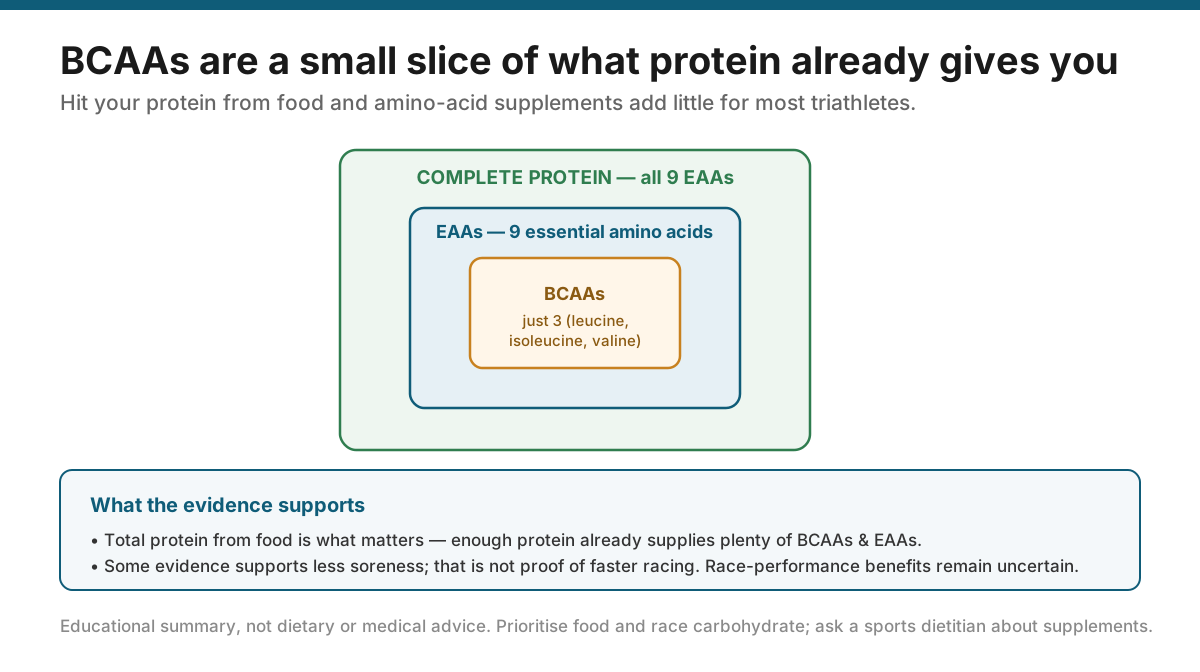
Most triathletes meeting their protein needs do not need a separate BCAA supplement. Evidence for soreness relief deserves attention, but it does not establish faster triathlon performance. Compare the product with your actual dietary gap before deciding whether BCAAs, EAAs, complete protein or ordinary food makes sense.
Key takeaways
- 1BCAAs are three of the nine essential amino acids; complete protein sources supply all nine in adequate proportions.
- 2Some research supports soreness relief, but that is different from proven race-performance improvement.
- 3A varied protein-adequate diet usually leaves little reason to buy isolated BCAAs.
- 4Amino-acid drinks cannot replace carbohydrate in your race-fuelling plan.
- 5Sport certification reduces supplement risk; it cannot guarantee safety or prove effectiveness.
In this article
- 1Quick answer: do triathletes need BCAAs?
- 2BCAAs, EAAs and complete protein: what the names mean
- 3What the evidence can and cannot show
- 4Compare the product with the problem you actually have
- 5Plant-based eating, low appetite and early training
- 6Race day: do not let amino acids displace your fuel
- 7How to read an amino-acid label
- 8Safety and supplement certification
- 9A practical buying decision for three common situations
- 10Your next step
- ⚖Which option addresses your actual need?
- ?Frequently asked questions
Quick answer: do triathletes need BCAAs?
Most triathletes who meet their protein needs do not need a separate branched-chain amino acid (BCAA) supplement. Ordinary protein-containing foods already supply BCAAs. Buying an isolated powder is therefore usually a lower priority than sorting out meals, recovery food and a race-fuelling plan.
That answer is about whether a purchase is justified, not a claim that amino acids do nothing. Amino acids are essential to normal physiology; the useful question is whether adding this product to your existing diet improves an outcome you care about. A laboratory change in muscle protein synthesis, less soreness tomorrow and a faster triathlon are different outcomes.
This guide helps you compare BCAAs, essential amino acids (EAAs) and complete protein, read the evidence without turning it into a promise, and decide what to do next. For daily amounts, use our triathlon protein requirements guide; for the meal after training, use recovery nutrition. Here the focus is the supplement decision itself.
BCAAs, EAAs and complete protein: what the names mean
BCAAs are leucine, isoleucine and valine. They are three members of the nine essential amino acids: the amino acids that must come from the diet because the body cannot make enough of them. An EAA product aims to provide all nine, while a BCAA product provides only the three named on its label.
Protein is made of linked amino acids. A complete protein source supplies all nine essential amino acids in adequate proportions; examples include dairy, eggs and soy. Protein sources differ in their amino-acid proportions and digestibility. “Whole protein” does not automatically mean an ideal balance of every amino acid: collagen, for example, is not a complete protein. A varied diet can combine different sources across the day.
Leucine participates in signalling that stimulates muscle protein synthesis, but a signal is not the same as supplying every building block needed to make new protein. This is why a high-leucine ratio on a tub is not enough to establish that it is better than a complete protein source. Wolfe's 2017 review explains this mechanistic limitation. It is a physiology review, not a trial proving that one product makes triathletes recover or race faster.
What the evidence can and cannot show
Read a supplement claim in three parts: what was tested, against what comparator, and with what outcome. An ingredient tested against water in people who have not eaten is answering a different question from that ingredient added to an already adequate diet. A mixed product containing carbohydrate, caffeine or other ingredients cannot establish the effect of BCAAs alone.
For muscle protein synthesis, a small 2017 resistance-exercise trial found a greater acute response to BCAAs than placebo in young trained men. That matters: saying BCAAs never stimulate synthesis would be too strong. The study did not establish a long-term triathlon performance benefit or directly compare a normal recovery meal with a BCAA supplement. Acute laboratory measurements should not be read as a finishing-time forecast.
For soreness, a 2024 systematic review and meta-analysis reported reductions in soreness and some muscle-damage markers after exercise that caused muscle damage. Protocols and results varied. These findings should not be dismissed, but neither do they establish that routinely supplementing a protein-adequate triathlete improves race performance. Feeling less sore, restoring muscle function and adapting to training are not interchangeable measures.
For endurance, the NIH Office of Dietary Supplements finds little evidence for improved performance in endurance-related aerobic events. That supports keeping BCAAs a low purchasing priority, while leaving room for research to change the picture.
One useful example is a 2024 crossover trial in ten trained male cyclists and triathletes. It compared carbohydrate products with and without BCAAs during cycling. Although average time to exhaustion was longer in the BCAA-containing condition, the performance difference was not statistically significant. The small sample and laboratory endpoint limit what it can tell you about racing. A promising-looking average is a reason for further investigation, not a justified claim of a guaranteed endurance benefit.
Compare the product with the problem you actually have
Before comparing tubs, write down the job you want the purchase to do. “Recover better” is too vague to evaluate; “I regularly miss lunch after swimming because I go straight to work” identifies a practical problem with several possible solutions.
- Missing a meal: prepare portable food, buy a convenient meal, or use a suitable snack while arranging the next meal. An amino-acid drink alone does not replace the energy and nutrient variety of lunch.
- Struggling to meet protein needs: assess your normal intake, then consider food portions or a complete protein product if that is easier to sustain. Adding three isolated amino acids is not equivalent to fixing an inadequate overall intake.
- Feeling exhausted late in races: review pacing, carbohydrate access, hydration, heat and preparation. There is no established BCAA protocol that reliably fixes late-race fatigue.
- Wanting less soreness: distinguish expected soreness after unfamiliar training from persistent pain or an injury. A supplement trial is not a substitute for assessing training load or seeking appropriate help.
Our editorial decision rule is to choose the simplest option that addresses the identified gap and fits your budget, tolerance and preferences. This is a practical comparison framework, not a validated scoring system. If you cannot name a specific gap, there is little reason to add another recurring purchase.
Plant-based eating, low appetite and early training
Being vegan or vegetarian does not automatically mean you need BCAAs or EAAs. Start with the whole diet: total intake, variety, familiar protein sources and whether meals fit around training. Avoid deciding that a pea, rice or soy product is inadequate just because of its ingredient name; formulations and serving sizes differ.
For example, a triathlete eating a limited selection of foods might benefit from expanding meals or choosing a convenient complete protein source. Another athlete may already meet their needs through varied plant foods and have no gap to fill. Those two people should not receive the same automatic supplement recommendation. The protein guide’s plant-based guidance covers the wider dietary pattern.
Low appetite creates a different problem. A drink or small snack can be easier to manage than a large meal after an early session. Consider what it actually provides: an EAA drink supplies amino acids but may supply little carbohydrate or overall energy. It can be one component of an individual plan, but calling it a meal replacement hides what is missing.
Nor does training before breakfast automatically create a need for BCAAs. Review the purpose, length and demands of that session and your opportunities to eat. If persistent poor appetite, restrictive eating or difficulty meeting training demands is driving the decision, ask a sports dietitian for an individual assessment rather than trying to solve the pattern with a powder.
Race day: do not let amino acids displace your fuel
A BCAA drink and a carbohydrate sports drink are not interchangeable. Check the nutrition panel rather than judging by flavour, bottle colour or the word “endurance”. A product may contain amino acids but very little carbohydrate; that matters if you are counting the bottle toward your race fuel.
As an illustrative label-reading example, suppose your rehearsed plan relies on a bottle providing 40 g of carbohydrate. Swapping it for a BCAA drink labelled 0 g carbohydrate removes those 40 g from the plan. Adding amino acids does not preserve the carbohydrate total. This is arithmetic, not a recommendation to consume 40 g per bottle or per hour.
Use the race-fuelling guide to plan carbohydrate and the hydration guide to plan fluids in context. Sodium needs are a separate consideration, and sodium does not make overdrinking safe. For longer events, the Ironman nutrition guide connects these decisions with course logistics.
If you already use a mixed product comfortably, this page is not a reason to change everything immediately before a race. Identify its actual carbohydrate, fluid and other ingredient contribution first. Rehearse any change in training and record tolerance. Do not introduce a new supplement on race morning, and do not interpret tolerating it as proof that it improves performance.
How to read an amino-acid label
Start with the serving size and ingredient list. A large number on the front may describe the weight of the entire blend, not the amount of BCAAs or protein you thought you were buying. Also check whether the advertised serving requires more than one scoop.
- Identify the category. Is it BCAAs only, all nine EAAs, a complete protein, or a mixed pre-workout or recovery product? These are different comparisons.
- Check disclosed quantities. If a blend hides ingredient amounts, you cannot reliably compare it with a studied formulation or with another product.
- Read the full formula. Check caffeine, other active ingredients, allergens and ingredients you already consume elsewhere. Combining several products can create an intake you did not intend.
- Check carbohydrate separately. A recovery or endurance label does not establish that the product supplies the fuel in your plan.
- Verify the exact product's certification. A logo on another item from the same brand does not certify this formula.
A “2:1:1” BCAA ratio describes relative ingredient amounts, usually leucine to isoleucine to valine. It does not tell you the total dose, whether you need it, or whether it improves triathlon outcomes. Treat a larger ratio as a formulation detail unless the manufacturer can provide relevant evidence for the exact claim.
Keep a photograph of the label if you discuss the product with a dietitian. The actual formula is more useful than saying you take a recovery supplement. If you cannot establish what is in it, choose an option you can evaluate rather than guessing.
Safety and supplement certification
In the United States, dietary supplements are regulated differently from medicines and generally do not receive FDA approval for safety and effectiveness before sale. Rules differ internationally. The NIH supplement fact sheet explains why product quality and mixed ingredients deserve attention; a familiar nutrient name does not establish the safety of every formulation or long-term dose.
Athletes subject to anti-doping rules are responsible for substances found in their bodies. Consult USADA's Supplement Connect for risk assessment and certification guidance, and check the exact product in the certifier's database. Independent sport certification can reduce risk, but cannot guarantee that a supplement is safe or free of every prohibited substance. It also does not prove the performance claim.
Seek individual advice before supplementing if you are pregnant or breastfeeding, under 18, take medication, or have a condition affecting protein or amino-acid metabolism, kidney function or liver function. This is not a claim that every product harms these groups; it means general athlete guidance is not enough to judge an individual case.
Stop using a product that causes concerning symptoms and seek appropriate medical advice. Do not respond by escalating the dose or adding another supplement to counter the symptoms. Persistent unexplained fatigue or poor recovery also deserves assessment rather than an assumption that you need more amino acids.
A practical buying decision for three common situations
The athlete with regular meals and no clear gap: you eat varied protein sources, can recover between sessions and have a rehearsed race-fuelling routine. The reasonable default is to skip BCAAs. You do not need a substitute purchase just because you decide against this one.
The athlete who misses food after training: your immediate problem is access. Compare a packed meal, an easy snack and a convenient complete protein option in the context of the rest of your day. Choose something you will actually bring and tolerate. An EAA product might have an individual role, but it does not by itself solve missing calories or carbohydrate.
The athlete attracted by a recovery claim: ask whether the evidence measures the outcome you want and resembles your circumstances. A soreness study is worth understanding, but it cannot promise that your next run will be faster. Review training progression and your normal food intake before deciding whether an uncertain marginal benefit justifies the expense.
For a budget check, use your own current price and intended frequency. An illustrative product costing €30 for 30 servings is €1 per serving; daily use costs about €30 per 30 days. That does not establish market prices or that an alternative is always cheaper. It makes the recurring cost visible, so you can compare it with something that addresses an actual need.
If you do try a product after weighing the evidence and risks, define the reason first, keep other changes modest and record tolerance. One good training session cannot establish causation: sleep, workload, weather and expectation all affect how a session feels. Reassess whether the purchase is still useful instead of allowing it to become an unquestioned habit.
Your next step
For most readers, the next step is a short review of ordinary meals and race fuel, not a dosing schedule. Use the protein requirements guide for daily intake, recovery nutrition for food after training and the race-nutrition calculator as a planning aid for carbohydrate. Rehearse any race plan through the gut-training guide.
If the question remains unresolved, bring a typical training week, a food record and the product label to a qualified sports dietitian. That turns a general “are amino acids good?” question into a decision about your diet, constraints and goal. This guide provides a way to evaluate the purchase; it cannot determine an individual's clinical needs.
Which option addresses your actual need?
| Situation | BCAAs | EAAs or complete protein | Practical first step |
|---|---|---|---|
| Adequate varied diet | Usually unnecessary | No automatic need for supplements | Keep your normal meals |
| Limited protein intake or variety | Only three essential amino acids | May address a specific gap | Review meals and total intake |
| Little appetite after training | Not a meal replacement | Convenient in an individual plan | Include energy and carbohydrate too |
| Post-exercise soreness | Some supportive research | Not a guaranteed cure | Check recovery and training load |
| Race fuelling | No reliable performance protocol | Not a carbohydrate substitute | Check the bottle's carbohydrate content |
Sources
Sources are listed so readers can verify consequential claims and dated details.
- Branched-chain amino acids and muscle protein synthesis in humans: myth or reality? — Journal of the International Society of Sports Nutrition (2017) (accessed September 23, 2026)
- Branched-Chain Amino Acid Ingestion Stimulates Muscle Myofibrillar Protein Synthesis following Resistance Exercise in Humans — Frontiers in Physiology (2017) (accessed September 23, 2026)
- BCAA supplementation, muscle damage and soreness: systematic review and meta-analysis — Sports Medicine - Open (2024) (accessed September 23, 2026)
- Alginate-encapsulated carbohydrate and BCAAs during cycling: randomized crossover trial — Nutrients (2024) (accessed September 23, 2026)
- Dietary Supplements for Exercise and Athletic Performance — NIH Office of Dietary Supplements (accessed September 23, 2026)
- Supplement Connect: assess supplement risk — U.S. Anti-Doping Agency (accessed September 23, 2026)
- Nutrition and Athletic Performance: joint position statement — Academy of Nutrition and Dietetics, Dietitians of Canada and ACSM (2016) (accessed September 23, 2026)
Frequently asked questions
Do triathletes need BCAAs?
Usually not if they meet protein needs through a varied diet. Consider whether there is an actual dietary gap before buying an isolated amino-acid supplement.
Can BCAAs reduce muscle soreness?
Some trials and reviews report reduced soreness after muscle-damaging exercise. That is different from establishing better triathlon performance or showing that a protein-adequate athlete needs the supplement.
Are EAAs better than BCAAs?
EAAs provide all nine essential amino acids while BCAAs supply three. That makes them a more complete amino-acid source, but does not prove every EAA product improves performance or that you need either product.
Do vegan triathletes automatically need amino-acid supplements?
No. Assess the amount and variety of protein in the whole diet. A specific gap may justify a convenient protein option or individual advice, but being vegan alone is not an indication for BCAAs.
Can I use a BCAA drink instead of sports drink?
Only after checking what it supplies. Many amino-acid drinks provide little carbohydrate, so they are not interchangeable with a carbohydrate drink in a rehearsed race-fuelling plan.
Does sport certification guarantee a supplement is safe?
No. Independent sport certification can reduce contamination risk, but cannot eliminate it or prove effectiveness. Check the exact product's certification and seek individual advice when medical conditions or medication matter.