Post-Race Blues After a Triathlon: Practical Support and Next Steps
Understand the unsettled period after a triathlon, choose a manageable next step, and find mental-health support when you need it.
By Lotte
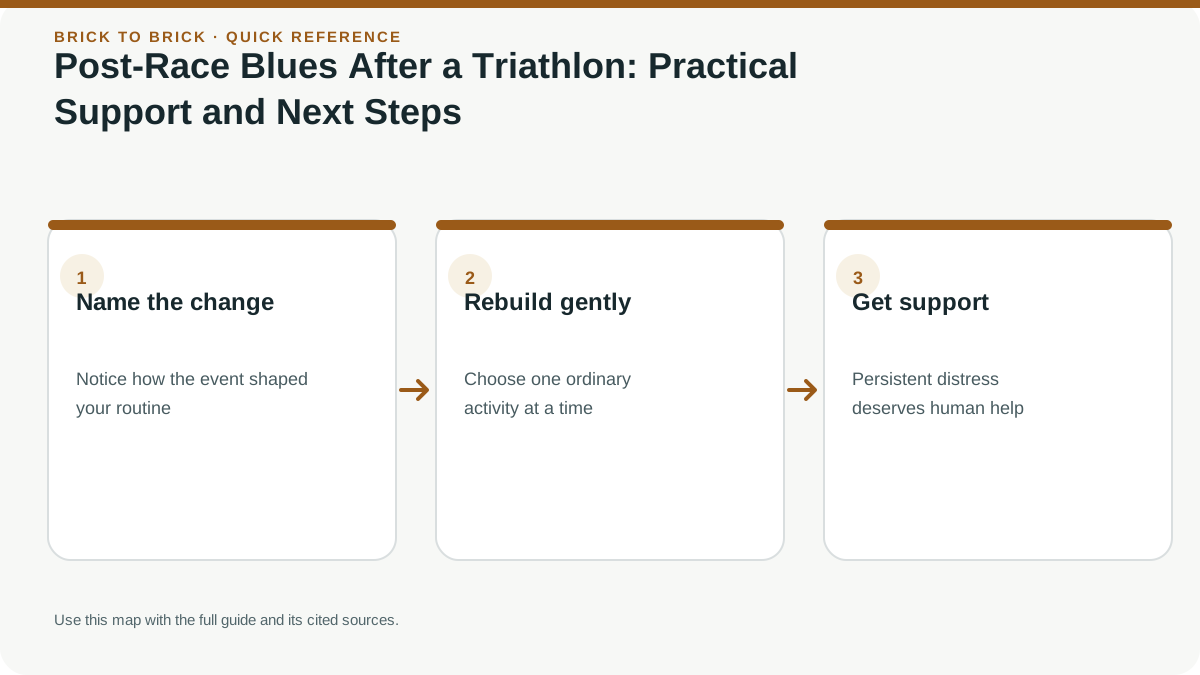
Post-race blues is an informal description, not a diagnosis or a timetable. Make room for physical recovery, identify the support you need, and seek professional or urgent help based on how you feel and function.
Key takeaways
- 1Post-race blues is an informal phrase, not a diagnosis or an expected stage after every race.
- 2Physical recovery, disappointment, a change in routine and unrelated pressures may call for different kinds of support.
- 3You can delay race analysis and decisions about another event while you recover.
- 4Seek help sooner if you are struggling; urgent safety concerns need immediate local support.
In this article
- 1Quick answer: make room for the feeling and choose one next step
- 2Notice what changed without diagnosing yourself
- 3Choose a low-pressure step for the next few days
- 4Separate the result from what you decide next
- 5Match the support to the concern
- 6When to seek professional or urgent help
- 7Plan support for a future race without adding pressure
- ?Frequently asked questions
Quick answer: make room for the feeling and choose one next step
Feeling flat, restless, disappointed or unsure after a race can be unsettling. People sometimes call this “post-race blues,” but it is an informal phrase, not a diagnosis, a required stage or a reliable timetable. Some athletes feel relief, some feel low, and some have mixed reactions.
You do not have to explain the feeling away or sign up for another race to fix it. Separate physical recovery from emotional support, choose one manageable next step, and contact a qualified professional if you are struggling or the feeling affects daily life. If you may not be safe, seek urgent help now.
Notice what changed without diagnosing yourself
A race can organize training, social contact and a calendar around one date. Afterward, those routines may change. Disappointment, a withdrawal, an injury, travel fatigue, work or family pressures, and concerns unrelated to sport can also be part of the picture. There may be more than one reason, or no clear explanation.
Try a simple check-in: What feels different? Is physical recovery affecting what I can do? Is this getting in the way of ordinary responsibilities or connection with other people? Do I feel safe right now? The answers can point toward a useful conversation; they cannot diagnose a mental-health condition.
Choose a low-pressure step for the next few days
Pick one or two ordinary actions that feel manageable: eat a familiar meal, handle one practical task, message someone you trust, or spend time on an interest outside triathlon. If a light activity or movement sounds good, consider it only when it fits your physical recovery and any advice you have received. Rest is also a valid choice.
You can postpone a detailed race debrief, a public race report and decisions about another entry. If you want company, tell someone what would help: listening without comparing results, practical help getting home, or a conversation about something other than racing. These are options, not a treatment plan or a schedule you have to complete.
Separate the result from what you decide next
A short debrief can preserve useful information without turning one result into a judgment about your worth or future in sport. Write three brief notes:
- What happened: an observable event, such as a missed bottle or a course change.
- What I might learn: a question to revisit after rest, such as how to rehearse bottle access.
- What I am not deciding yet: whether to race again, change a goal or explain the result publicly.
Include what went well and who supported you. Stop the exercise if repeatedly reviewing the race adds distress. A coach can help with a technical review when you are ready; a mental-health professional is better placed to assess persistent emotional distress.
Match the support to the concern
Different people can help with different needs. Asking directly can make the first conversation easier.
| What you need | A possible next contact | What to ask for |
|---|---|---|
| Company or someone to listen | Trusted friend, family member or teammate | Ask them to listen without comparing results or analyzing splits. |
| A technical race review | Coach, after you feel ready | Ask to review one concrete decision or skill, not your value as an athlete. |
| Pain, illness or return-to-exercise advice | Clinician or other qualified health professional | Describe the symptoms and ask what assessment or activity guidance is appropriate. |
| Persistent or hard-to-manage distress | Primary-care clinician or qualified mental-health professional | Explain how you feel and how it affects daily life; ask what support is available. |
| Immediate risk or inability to stay safe | Local emergency or crisis service now | Tell someone nearby and contact urgent support; use the local service for your country. |
When to seek professional or urgent help
You do not need to wait for a particular number of days to ask for help. NHS guidance advises contacting a GP if low mood lasts two weeks or more, if it is hard to cope, or if things you have tried are not helping. The two-week point is a prompt for support, not a reason to delay it. Use the health service where you live.
Seek professional advice sooner if distress is worsening, interferes with everyday life, or you are concerned about your mental health. A primary-care clinician or qualified mental-health professional can assess what support is appropriate. Physical symptoms, injury or illness may also need separate clinical attention; this article cannot determine whether returning to exercise is safe.
If you may harm yourself or cannot keep yourself or someone else safe, contact local emergency or crisis support now and tell a trusted person. In England, the NHS says to call 111 and select the mental-health option for urgent advice, or call 999 / go to A&E if someone's life is at risk or you cannot keep safe. In the United States, call or text 988. Elsewhere, use your local crisis line or emergency service.
Plan support for a future race without adding pressure
If you race again, consider the period after the finish as part of the logistics: how you will get home, who might check in, what work or caring responsibilities resume, and whether you need help with equipment or travel. A simple plan can make room for rest and mixed feelings without requiring you to choose another goal.
For physical return-to-training questions, see triathlon recovery after a race. For pre-race worry, the triathlon anxiety guide covers a different point in the athlete journey. Neither replaces appropriate professional support when symptoms or safety concerns matter.
Sources
Sources are listed so readers can verify consequential claims and dated details.
- Low mood, sadness and depression — NHS (accessed October 7, 2026)
- Where to get urgent help for mental health — NHS (accessed October 7, 2026)
- Get Help — 988 Suicide & Crisis Lifeline (accessed October 7, 2026)
Frequently asked questions
How long do post-race blues last?
There is no established timeline for an informal experience. Seek support sooner if you are struggling, and contact a health professional if low mood persists, worsens or affects daily life. NHS guidance uses two weeks as one reason to seek GP advice, not as a waiting period.
Is post-race blues a medical diagnosis?
No. It is an informal phrase that people may use for different reactions after an event. A qualified professional can assess persistent or concerning symptoms.
Should I sign up for another race to feel better?
You do not need to decide now. Consider what you miss about training or racing and whether a smaller source of routine or connection would help. A new event is a choice, not a treatment or obligation.
What if I cannot keep myself safe?
Contact local emergency or crisis support now and tell someone you trust. In England, call 111 and select the mental-health option for urgent advice, or call 999 / go to A&E if safety is at immediate risk. In the United States, call or text 988.