Triathlon Training on Holiday: Rest, Maintain or Train
Decide whether to rest, maintain fitness or train on holiday, with practical guidance for travel fatigue, safe routes, heat, altitude, rental bikes and returning home.
By Lotte
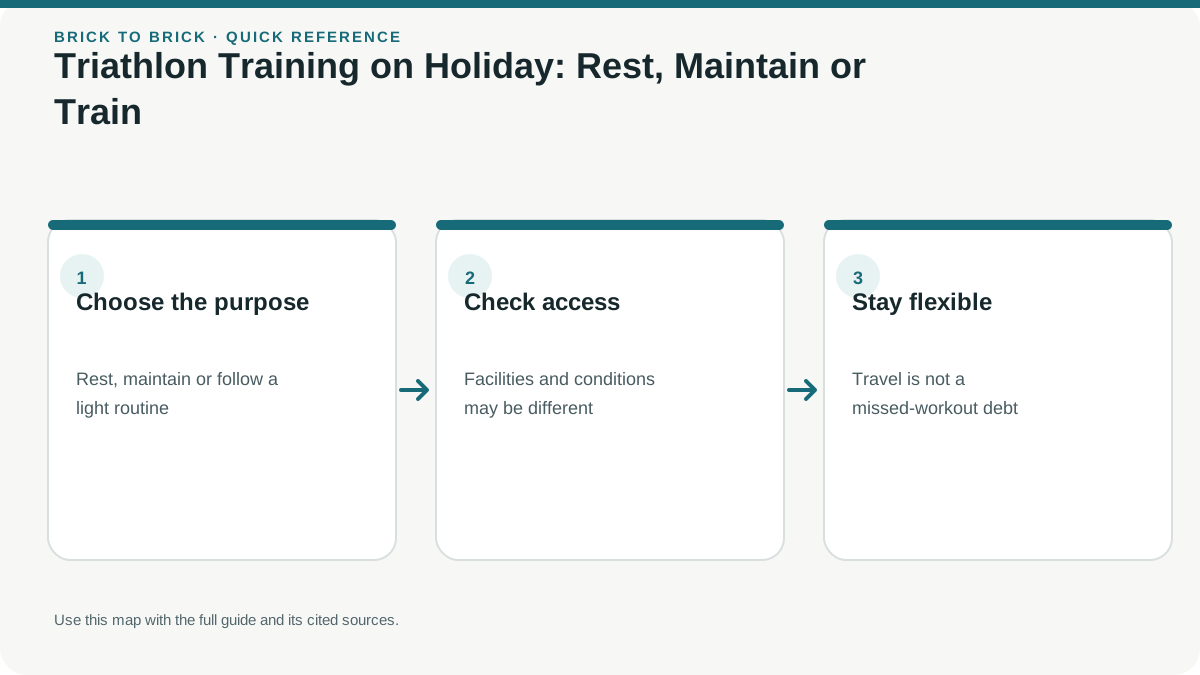
Holiday training works best when it fits the trip's purpose, safe local options and an athlete's training phase. This guide helps distinguish recovery from maintenance and a planned camp, adapt to travel and conditions, and return without trying to repay missed workouts.
Key takeaways
- 1Decide whether the trip is for rest, light maintenance or a planned training camp before packing a schedule.
- 2Travel, sleep, heat, altitude and local safety can change the value or risk of a session.
- 3Verify roads, pools, water quality and rental equipment before relying on them.
- 4Coordinate training time with travel companions and keep optional sessions genuinely optional.
- 5Return to the plan based on recovery; do not stack missed sessions to catch up.
In this article
- 1Decide what the trip is for
- 2Verify the local options before packing equipment
- 3Build a modest maintenance menu
- 4Treat new conditions as new demands
- 5Make a training camp explicit if that is the goal
- 6Return according to what you actually did
- 7Choose a holiday session by access and consequences
- 8Use a destination check before choosing a training menu
- 9Three holiday styles call for different expectations
- 10Build a maintenance menu from familiar tasks
- 11Return from the trip without a catch-up week
- 12Choose rest, maintenance or a training block deliberately
- 13Account for travel, sleep and time-zone changes
- 14Plan around heat, altitude and unfamiliar weather
- 15Make routes and swim venues safe before you arrive
- 16Travelling with a bike or using a rental
- 17Fit training around family, friends and the reason for the trip
- 18A flexible maintenance menu
- 19Returning home: resume, do not repay
- ?Frequently asked questions
Decide what the trip is for
Write one sentence describing the priority: family time, rest, a work trip with limited exercise, or a dedicated training camp. Agree expectations with the people travelling with you.
Look at the race calendar and current fatigue. A holiday after a demanding block may be useful recovery; a trip immediately before a race needs careful logistics. Do not assume every break requires preserving normal volume.
There is no exact number of days at which all athletes lose a fixed percentage of fitness. Avoid planning from a universal detraining countdown.
Verify the local options before packing equipment
Check pool access, opening hours, lane rules and booking requirements. For cycling, consider road conditions, traffic, rental-bike fit and secure storage. For running, identify a safe route and suitable time of day.
Open water needs appropriate local knowledge and safety cover. RNLI guidance emphasises planning conditions, entry and exit and swimming arrangements; a scenic beach is not automatically a safe training venue.
If the facilities are uncertain, plan an alternative that does not depend on them. Do not pack a full triathlon setup simply because a hotel advertises a gym.
Treat new conditions as new demands
Heat, humidity, altitude, unfamiliar terrain and rental equipment can change how a familiar session feels. Reduce expectations and learn the environment before attempting demanding work.
Do not combine a long flight, a new bike and a hard mountain ride as the first day back on the schedule. Check equipment and choose a controlled introduction.
For hot conditions, use the heat-racing guide for planning and warning signs. Its safety principles also matter during training, while local advice governs the specific setting.
Make a training camp explicit if that is the goal
A planned camp needs appropriate coaching or experience, suitable facilities, recovery, food and a workload that fits the preceding training. Extra available time is not the same as readiness for much more exercise.
Agree which sessions are priorities and which can be reduced. Include a way to stop or return early on long routes. Avoid comparing your volume with others in the group.
If the real goal is a holiday, do not use camp-style expectations without agreement. A short enjoyable session may serve the trip better than an ambitious block.
Return according to what you actually did
Review sleep, travel fatigue and recent activity before resuming normal training. If the trip included illness or a substantial break, restart appropriately rather than jumping into the week that would have occurred without travel.
Do not repay missed workouts. Keep the next few sessions familiar and observe the response before progressing.
Use the training-week guide to rebuild the layout. The successful holiday plan leaves you able to enjoy the trip and return with a realistic next step.
Choose a holiday session by access and consequences
Before selecting a workout, identify where it starts, how you return and what happens if conditions change. A scenic run with no shade or water access may be less practical than a short familiar loop near the accommodation. A hotel pool may prohibit lap swimming or have hours that do not fit your plans.
Agree shared activities first when travelling with others. Keep optional training genuinely optional: one person's race calendar should not silently become the group's daily timetable. Carry equipment only when a credible use exists.
If you rent a bicycle, allow time for fit and inspection and learn the local road arrangements before a demanding ride. Travel fatigue and unfamiliar terrain can increase the demands of an otherwise ordinary duration. On returning, log what you actually did and resume accordingly; kilometres missed on holiday do not need to be repaid.
Three holiday styles call for different expectations
A family or social holiday: agree shared activities before adding optional training. A short early outing may fit well, but it should not quietly impose an earlier bedtime, delayed breakfast or transport requirement on everyone else. Keep the return time clear and be willing to skip a session when the trip's purpose calls for it.
A sightseeing trip: walking and travel already occupy time and energy. Count that context when deciding whether another workout is useful. Carrying minimal familiar gear may be more practical than arranging every discipline. A demanding day on foot followed by a late run is not automatically an easy day because neither was labelled formal training.
An organised training holiday or camp: make the additional demand explicit. Check coaching, group levels, recovery arrangements, mechanical support and what happens if you need a shorter session. A camp should not require matching the strongest participant's volume. Discuss the block with your coach when it changes the wider programme.
These categories can overlap. The important step is agreeing which purpose has priority on a particular day. You can enjoy a holiday and remain connected to training without turning every opportunity into a compulsory session.
Return from the trip without a catch-up week
Log the activities you actually completed, including unusual walking, hiking or other exercise, and note illness, disrupted sleep or travel fatigue. Compare the planned return session with your current response. Do not infer readiness simply from the number of calendar days away.
Start with suitable familiar work and review how it feels before restoring every demanding session. If the trip replaced an important preparation block, identify which event-specific questions remain unresolved: long-ride comfort, swim skills, fueling or available recovery. Address the meaningful gaps rather than trying to recreate all missed minutes.
If the holiday was deliberately a recovery period, let it serve that purpose. Returning with a larger workload to compensate defeats the plan you chose. If it was a training camp, the following days may also need adaptation to absorb the additional work.
Keep one lesson for the next trip, such as a better route, a realistic pool arrangement or leaving unnecessary equipment at home. A useful holiday training plan becomes simpler with experience rather than accumulating more obligations each year.
Choose rest, maintenance or a training block deliberately
Start with the purpose of the trip and the training phase. A week away might be a recovery break after a demanding block, a family holiday where movement is optional, or a planned camp with reliable facilities and time for training. Those are different trips. Treating every vacation as a camp can create conflict, fatigue and pressure; treating an intended camp as an ordinary break may undermine a carefully planned block.
Ask what training stress is actually needed in this period and what recovery is expected. If you follow a coach's plan, tell the coach about travel dates, time zones and access before departure. A recovery week is not a failure to train. Normal daily activities, walking, swimming for fun or a few short maintenance sessions may be sufficient depending on the athlete and plan. There is no universal “fitness lost per day” figure that tells you whether to work out.
Use a short decision note: trip purpose, available days, safe options, non-negotiable family or work commitments, and how you will feel if a session is skipped. A plan that explicitly permits rest is easier to follow than a dense schedule that assumes perfect weather and empty roads. The training while working guide explains how to balance fixed commitments during a normal week; holiday priorities may be different.
Account for travel, sleep and time-zone changes
Travel can disrupt sleep, meals, hydration routines, access to equipment and the normal time of training. A long journey may leave you stiff or tired; a time-zone shift can change when the body expects sleep and exercise. Do not treat a planned workout as compulsory immediately after an overnight flight or a day of complex logistics. Adjust based on how you feel and the training purpose, and avoid cycling or swimming while dangerously drowsy.
Prepare for the first day by checking arrival time, transport, local weather, access to safe routes or a pool, and where food and water are available. If you arrive late, a short walk or rest may be more useful than forcing a hard session. Keep sleep opportunities as consistent as practical and allow an easy transition before resuming high-intensity work. Sleep needs vary; the sleep consensus source below provides athlete context but cannot prescribe a personal time-zone strategy.
For international travel, consider local road conventions, language, emergency numbers, health insurance, water quality and equipment import requirements. Carry identification and any necessary medication. Avoid using exercise to “make up” for a missed session after a tiring journey. If travel worsens a medical condition or produces concerning symptoms, seek local medical advice rather than following the training calendar.
Plan around heat, altitude and unfamiliar weather
A destination can make an easy session feel harder. Heat and humidity raise thermal strain, while altitude changes oxygen availability; neither is just a picturesque setting. Wind, rain, cold water and sun exposure also affect choices. Use local forecasts and advisories and reduce or move a session when conditions are unsuitable. Arrive gradually to new conditions when possible, and do not assume one short exposure creates full acclimatization.
At altitude, some athletes experience headache, nausea, dizziness or unusual fatigue. Those symptoms can have other causes and cannot be diagnosed by this page. Avoid increasing training intensity simply because the itinerary says “mountain camp.” Ask a qualified clinician about travel to altitude if you have a relevant health condition, and seek care for severe or worsening symptoms. In heat, know how you will access shade and fluids, and stop for confusion, collapse, fainting or other alarming signs.
Plan a lower-demand alternative for every outdoor session: indoor trainer, pool, mobility or rest. Check air quality, storms and local warnings before leaving. A hotel gym is not automatically safe or well maintained, and open-water conditions can change quickly. Review the heat safety guide before training in unfamiliar hot conditions and follow local emergency guidance.
Make routes and swim venues safe before you arrive
Do not choose a road ride from a scenic map line alone. Check the route surface, traffic, shoulder, closures, elevation, distance to help, daylight and local rules. Ask a local bike shop, club or accommodation host about safe roads, but verify current closures and official warnings yourself. Download navigation offline if service may be unreliable, share a route and expected return time, and carry identification, repair tools, a charged phone and weather-appropriate clothing.
Use a marked cycle path or quiet loop when unfamiliar traffic makes a road route uncomfortable. In some places bicycles ride on the opposite side of the road from home, or road users interpret signals differently. Review those norms before riding. Do not rely on headphones or a phone screen while moving in traffic. If you cannot confidently manage intersections or descents, choose an indoor option.
For swimming, confirm the facility's opening hours and access rules. In open water, check local water quality, currents, tides, boat traffic, temperature, lifeguard coverage and permitted swimming areas. Do not swim alone or assume that a beach with other visitors is supervised. Use a supported venue and follow local instructions. The open-water swimming safety guide explains alternatives when a safe lake or sea is not available.
Travelling with a bike or using a rental
Taking a bicycle can provide familiar fit and equipment, but transport adds booking, packing, insurance and assembly work. Check the airline's current size, weight, battery and packaging rules; e-bike batteries often have distinct restrictions. Verify that the destination accommodation can store the bike securely and that you have tools for reassembly. Photograph your setup before packing and inspect the frame, wheels, brakes and shifting before the first ride.
A rental bicycle can be simpler but may fit differently. Reserve from a reputable shop, clarify what pedals, helmet, lights and repair support are included, and ask about correct sizing. Bring familiar pedals or saddle only if you know how to install and check them safely. Start with a short low-risk ride; do not choose a technical descent or long remote route before confirming brakes, tyres and handling. If anything feels unsafe, return to the shop or choose another activity.
For either option, review local road laws, helmet requirements and event-specific insurance coverage. Secure valuables and know what to do after a mechanical problem. A rental bike is not a reason to skip the pre-ride inspection, and a familiar personal bike is not guaranteed to arrive undamaged. The beginner bike maintenance guide covers a basic safety check before riding.
Fit training around family, friends and the reason for the trip
Discuss expectations with travel companions before departure. If the trip is a shared holiday, agree on a limited training window that does not repeatedly disrupt the group. A short morning session, a walk together or a no-training day may suit better than scheduling every workout at sunrise. If you have family responsibilities, make a plan that respects them; the value of a holiday is not measured by training volume.
When a session is important, explain why and how long it will take, including travel, setup, shower and recovery. Be willing to shorten or skip it when conditions or logistics change. Avoid bargaining for exercise time through guilt or hiding the actual plan. Training can support wellbeing, but compulsive exercise or anxiety about missing a workout deserves attention; speak with a qualified health professional if this is persistent.
One useful compromise is to protect only the key session in the week and keep everything else optional. Another is to choose an accommodation with safe facilities if training is a central purpose. The decision should be mutual and realistic, not an assumption that everyone else will accommodate an athlete's full routine.
Returning home: resume, do not repay
After returning, check sleep, travel fatigue, any illness, soreness and what training actually happened. Resume the plan at a sensible point instead of adding missed workouts on top of the next week. A break may leave you rested; it may also leave you tired from travel. There is no universal catch-up formula. Ask your coach to adjust the plan when a key race or substantial training block is close.
The first session back can be easy and familiar. Notice how normal effort feels before scheduling demanding work. If you have been sick, injured or exposed to an unusually stressful travel schedule, use medical advice and a gradual return rather than a fixed calendar. Do not double sessions or compress hard workouts to “make up” volume; that can create a sudden load spike without restoring the missed adaptation.
Write down one thing to change for the next trip: earlier facility research, fewer planned sessions, a safer route, a rental-bike check or a fully planned rest week. Keep what worked and discard an itinerary that created more stress than value. A holiday can include meaningful movement and still be a holiday.
Sources
Sources are listed so readers can verify consequential claims and dated details.
- Sleep and the athlete: narrative review and 2021 expert consensus recommendations — British Journal of Sports Medicine (accessed September 25, 2026)
- Open-water swimming safety — RNLI (accessed September 14, 2026)
- Open-water swimming safety — Royal National Lifeboat Institution (accessed September 25, 2026)
- Hypothermia prevention — U.S. Centers for Disease Control and Prevention (accessed September 25, 2026)
Frequently asked questions
Will a week without normal triathlon training erase my fitness?
The effect depends on training history, trip length, recovery and what activity you do. A short break does not automatically erase preparation, and rest may be part of a sound plan. Ask your coach about a key race or individual concern.
Should I train every day on holiday?
No. The right schedule depends on the trip's purpose, training phase, access, fatigue and personal preference. Rest, unstructured activity or a few brief sessions can all be reasonable choices.
How do I train safely in a hot destination?
Check local forecasts and heat guidance, choose safer timing or an indoor alternative, and stop for concerning symptoms. Acclimatization and medical needs vary; seek individualized advice when health risk is relevant.
Is it safe to swim in the sea or a lake while travelling?
Only use a permitted venue with suitable conditions and safety support. Check local hazards, water quality, temperature, currents and lifeguard coverage; do not swim alone or treat a busy beach as supervised.
Should I rent a bike on holiday?
A rental can simplify travel, but confirm fit, included equipment and repair support. Inspect brakes, tyres and handling and start with a short low-risk ride before a longer route.
How do I catch up after holiday training?
Do not stack missed sessions automatically. Consider sleep, illness, travel fatigue and the upcoming plan, resume sensibly, and ask a coach to adjust important training when needed.